Reaction equation
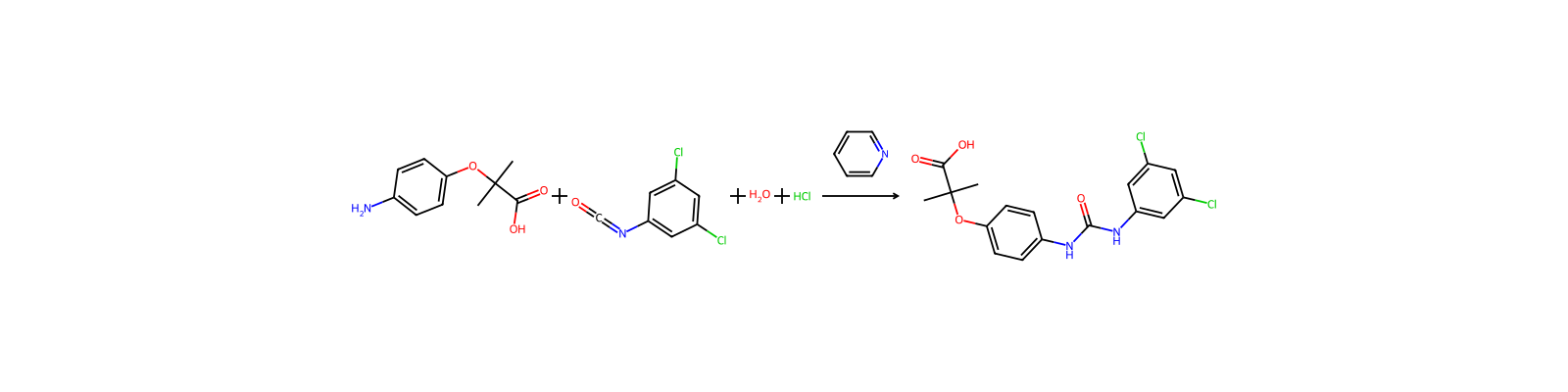
[NH2:1][C:2]1[CH:14]=[CH:13][C:5]([O:6][C:7]([CH3:12])([CH3:11])[C:8]([OH:10])=[O:9])=[CH:4][CH:3]=1.[Cl:15][C:16]1[CH:17]=[C:18]([N:23]=[C:24]=[O:25])[CH:19]=[C:20]([Cl:22])[CH:21]=1.O.Cl>N1C=CC=CC=1>[Cl:15][C:16]1[CH:17]=[C:18]([NH:23][C:24](=[O:25])[NH:1][C:2]2[CH:3]=[CH:4][C:5]([O:6][C:7]([CH3:12])([CH3:11])[C:8]([OH:10])=[O:9])=[CH:13][CH:14]=2)[CH:19]=[C:20]([Cl:22])[CH:21]=1Participants
6




Procedure
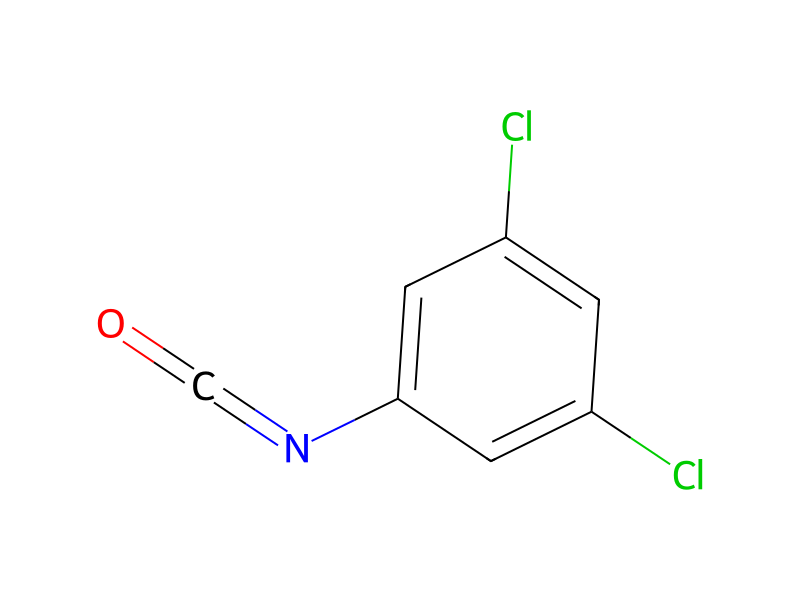
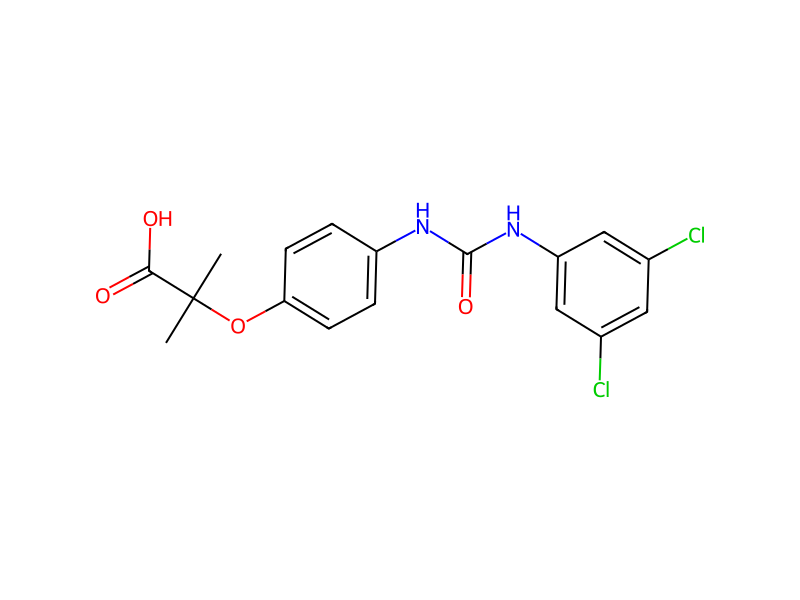
To a stirring solution of 4.95 g (0.025 mole) of 2-(4-aminophenoxy)-2-methylpropionic acid in 50 ml dry pyridine, 4.95 g (0.025 mole) of 3,5-dichlorophenyl isocyanate were added. After 1 hour stirring at room temperature, 150 ml water was added and the mixture was acidified with concentrated HCl. The precipitate was filtered, washed several times with cold water and dried. Recrystallization from aqueous acetone gave small plates 1.81 g (94%) MP 182°-184°.
Workup
- filtrationThe precipitate was filtered
- washwashed several times with cold water
- customdried
- customRecrystallization from aqueous acetone
- customgave small plates 1.81 g (94%) MP 182°-184°
Sources & evidence
- ORD record
- ord-8d94d8709c9f44a4915c2e7a75791515
- Source dataset
- uspto-grants-1992_03
- Patent number
- US05093367
Linked notes
Loading…