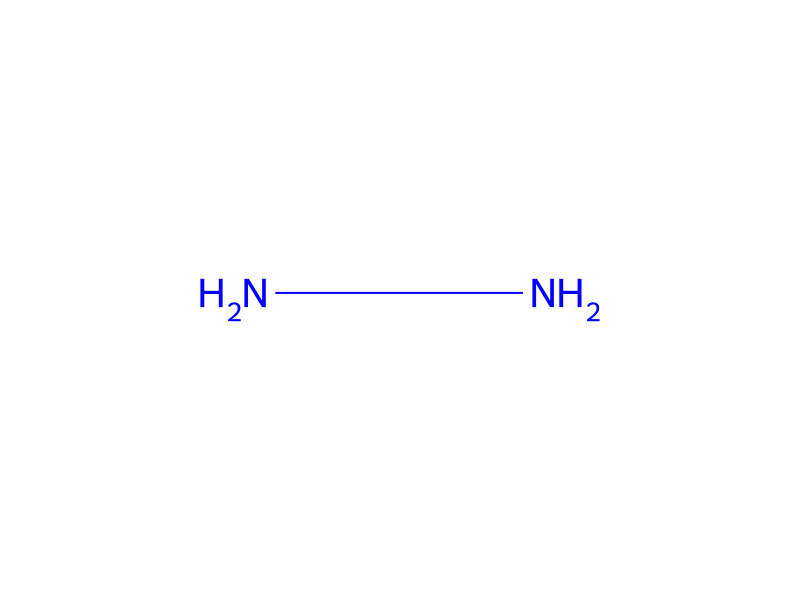
Hydrazine → HCID 10381544, compound
HRID 2375416
Reaction equation

[CH2:1]([O:3][C:4]1[CH:9]=[CH:8][C:7]([N:10]2[C:18]([CH3:19])=[C:17]3[C:12]([C:13]([CH3:21])=[N:14][N:15]=[C:16]3[CH3:20])=[C:11]2[CH3:22])=[C:6]([CH:23]=[CH2:24])[CH:5]=1)[CH3:2].NN>C(O)C>[CH2:1]([O:3][C:4]1[CH:9]=[CH:8][C:7]([N:10]2[C:11]([CH3:22])=[C:12]3[C:17]([C:16]([CH3:20])=[N:15][N:14]=[C:13]3[CH3:21])=[C:18]2[CH3:19])=[C:6]([CH2:23][CH3:24])[CH:5]=1)[CH3:2]Participants
4
Reactant 2

Product 1

Reagents, catalysts & solvents 1

Conditions
- Temperature
- 90 °C
Procedure
To a solution of 6-(4-ethoxy-2-vinyl-phenyl)-1,4,5,7-tetramethyl-6H-pyrrolo[3,4-d]pyridazine (30 mg, 3.0 mmol) in 3 mL of ethanol was added anhydrous hydrazine (20 μL). The resulting reaction solution was refluxed at 90° C. for 90 min. It was allowed to warm to rt and directly condensed in vacuo to afford 6-(4-Ethoxy-2-ethyl-phenyl)-1,4,5,7-tetramethyl-6H-pyrrolo[3,4-d]pyridazine as a light yellow solid: 1H NMR (CDCl3, 500 MHz) δ 7.00 (m, 2H), 6.89 (m, 1H), 4.15 (q, 2H), 2.82 (s, 6H), 2.38 (s, 6H), 2.10 (q, 2H), 1.52 (t, 3H), 1.08 (t, 3H); MS (ESI) 324 (M+H)+.