HomeMCPWorkbenchSkills
HomeWorkbenchNotificationsMe
llms.txt · MCP GuidePrivacy Policy · Terms of Service · Supportv1.8.3
  1. Home
  2. /Reaction

Water → Dimethyl (3-methylbutan-2-ylidene)malonate

HRID 2402349
Print

Reaction equation

HRID 2402349 reaction equation
[C:1]([O:8][CH3:9])(=[O:7])[CH2:2][C:3]([O:5][CH3:6])=[O:4].[CH3:10][CH:11]([CH3:15])[C:12](=O)[CH3:13].N1C=CC=CC=1.O>C(Cl)(Cl)Cl.[Ti](Cl)(Cl)(Cl)Cl>[CH3:10][CH:11]([CH3:15])[C:12](=[C:2]([C:1]([O:8][CH3:9])=[O:7])[C:3]([O:5][CH3:6])=[O:4])[CH3:13]
ParticipantsConditionsProcedureWorkupSources & evidenceReaction notes

Participants

7

Reactant 4

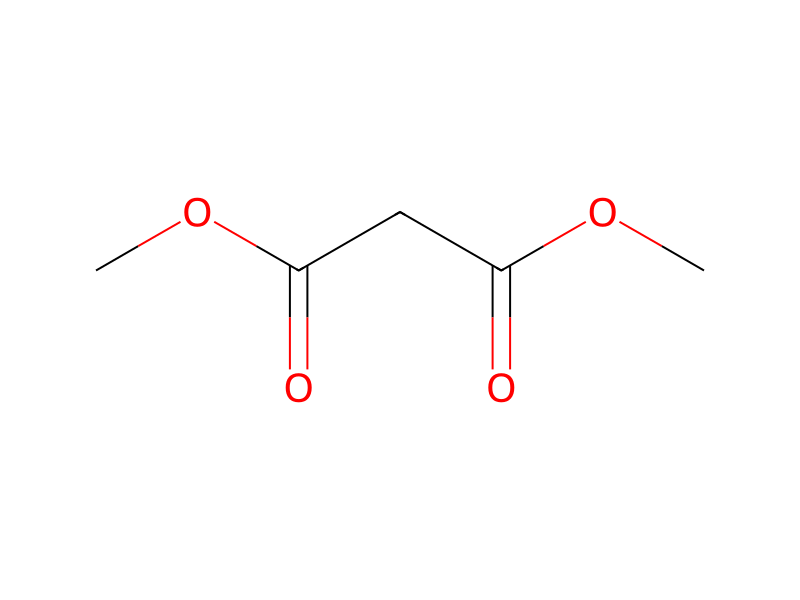
HCID 962WaterHCID 1049PyridineHCID 7943Dimethyl malonateHCID 112513-Methyl-2-butanone

Product 1

HCID 585743Dimethyl (3-methylbutan-2-ylidene)malonate

Reagents, catalysts & solvents 2

HCID 24193Titanium TetrachlorideCatalyst
HCID 6212ChloroformSolvent4×

Conditions

Temperature
0 °C

Procedure

Under argon and at 0° C., 10 g (75.7 mmol) of dimethyl malonate in 20 ml of chloroform were slowly added dropwise to a solution of 16.6 ml (151.4 mmol) of titanium tetrachloride in 60 ml of chloroform. After the addition had ended, the reaction solution was stirred at 0° C. for another 30 min. At 0° C., 6.52 g (75.7 mmol) of 3-methyl-2-butanone in 20 ml of chloroform were then added dropwise. The reaction mixture was slowly warmed to room temperature and stirred at this temperature for 4 h. The reaction solution was then once more cooled to 0° C., and 30.6 ml (378.5 mmol) of pyridine in 20 ml of chloroform were added. After the addition had ended, the solution was warmed to room temperature and stirred at this temperature overnight. The reaction solution was then once more cooled to 0° C., and 50 ml of water were added slowly. The resulting phases were separated, and the aqueous phase was extracted two more times with in each case about 50 ml of dichloromethane. The combined organic phases were washed with saturated sodium bicarbonate solution and with saturated sodium chloride solution, dried over magnesium sulphate and concentrated under reduced pressure. The crude product was purified by chromatography on silica gel (mobile phase cyclohexane/ethyl acetate 20:1). This gave 9.4 g (62% of theory) of the target compound.


Workup

  1. additionAfter the addition
  2. temperatureThe reaction mixture was slowly warmed to room temperature
  3. stirringstirred at this temperature for 4 h
  4. temperatureThe reaction solution was then once more cooled to 0° C.
  5. additionAfter the addition
  6. temperaturethe solution was warmed to room temperature
  7. stirringstirred at this temperature overnight
  8. temperatureThe reaction solution was then once more cooled to 0° C.
  9. customThe resulting phases were separated
  10. extractionthe aqueous phase was extracted two more times with in each case about 50 ml of dichloromethane
  11. washThe combined organic phases were washed with saturated sodium bicarbonate solution and with saturated sodium chloride solution
  12. dry with materialdried over magnesium sulphate
  13. concentrationconcentrated under reduced pressure
  14. customThe crude product was purified by chromatography on silica gel (mobile phase cyclohexane/ethyl acetate 20:1)

Sources & evidence

ORD record
ord-d866729a20224ee2bd6859839e3cb82c
Source dataset
uspto-grants-2014_08
DOI
10.6084/m9.figshare.5104873.v1
Patent number
US08796335B2

Reaction notes

On this pageParticipantsConditionsProcedureWorkupSources & evidenceReaction notes