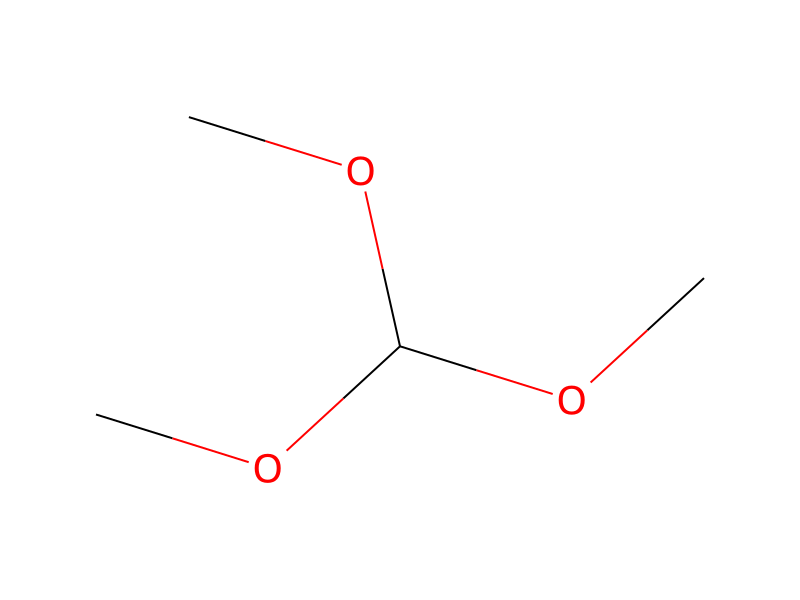
Trimethyl orthoformate → HCID 86686865, compound
HRID 2406258
Reaction equation

Cl.[Cl:2][C:3]1[CH:4]=[C:5]2[C:9](=[CH:10][CH:11]=1)[C@@H:8](N)[C@@H:7]([O:13][CH3:14])[CH2:6]2.ClC1C=C2C(=CC=1)C(=[O:25])CC2.COC(OC)OC.CC1C=CC(S(OI(O)C2C=CC=CC=2)(=O)=O)=CC=1>>[Cl:2][C:3]1[CH:4]=[C:5]2[C:9](=[CH:10][CH:11]=1)[C:8](=[O:25])[CH:7]([O:13][CH3:14])[CH2:6]2Participants
5


Procedure
Scheme 3 describes the preparation of (1R,2S)-5-chloro-2-methoxy-2,3-dihydro-1H-inden-1-amine hydrochloride (20) which is further exemplified in Example 4 below. 5-chloro-2,3-dihydro-1H-inden-1-one (17) was reacted with trimethylorthoformate under acidic conditions, followed by treatment with Koser's reagent [PhI(OH)(OTs)] to give 5-chloro-2-methoxy-2,3-dihydro-1H-inden-1-one (18). The indenone was treated with (R)-tert-butyl sulfinamide in the presence of titanium tetraethoxide to afford the corresponding sulfinamide (19). The reaction was allowed to proceed until less than 5% of the undesired diastereoisomer could be detected by HPLC. The crude sulfinamide was reduced using NaBH4 to afford the primary amine which was treated with hydrochloric acid to afford (1R,2S)-5-chloro-2-methoxy-2,3-dihydro-1H-inden-1-amine hydrochloride (20).