Reaction equation
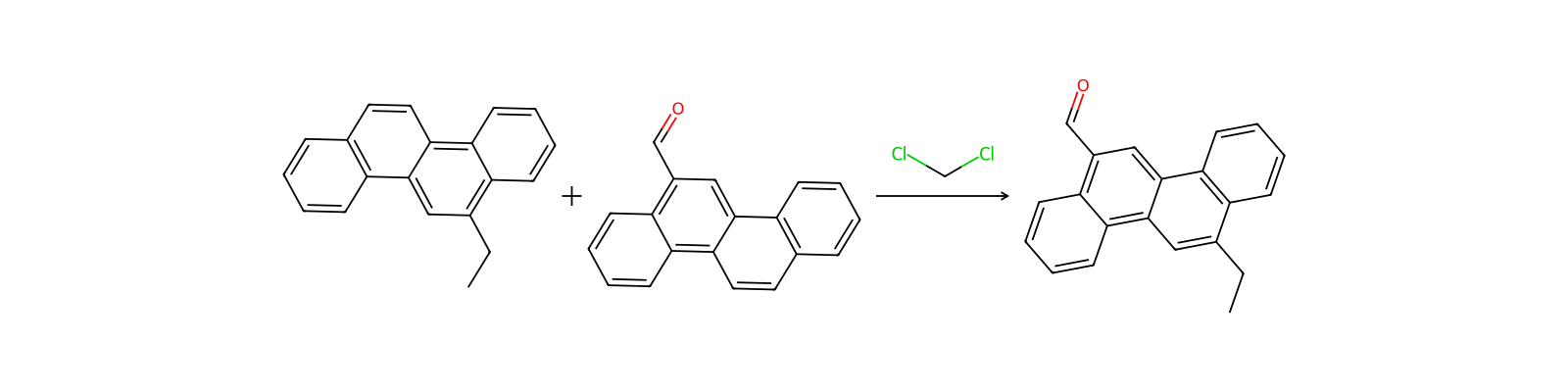
[CH2:1]([C:3]1[CH:4]=[C:5]2[C:14](=[C:15]3[C:20]=1[CH:19]=[CH:18][CH:17]=[CH:16]3)[CH:13]=[CH:12][C:11]1[CH:10]=[CH:9][CH:8]=[CH:7][C:6]2=1)[CH3:2].C1C2C=CC3C(=CC([CH:39]=[O:40])=C4C=3C=CC=C4)C=2C=CC=1>C(Cl)Cl>[CH2:1]([C:3]1[C:20]2[CH:19]=[CH:18][CH:17]=[CH:16][C:15]=2[C:14]2[C:5](=[C:6]3[C:11](=[C:12]([CH:39]=[O:40])[CH:13]=2)[CH:10]=[CH:9][CH:8]=[CH:7]3)[CH:4]=1)[CH3:2]Participants
4
Reactant 2

Product 1

Reagents, catalysts & solvents 1

Procedure
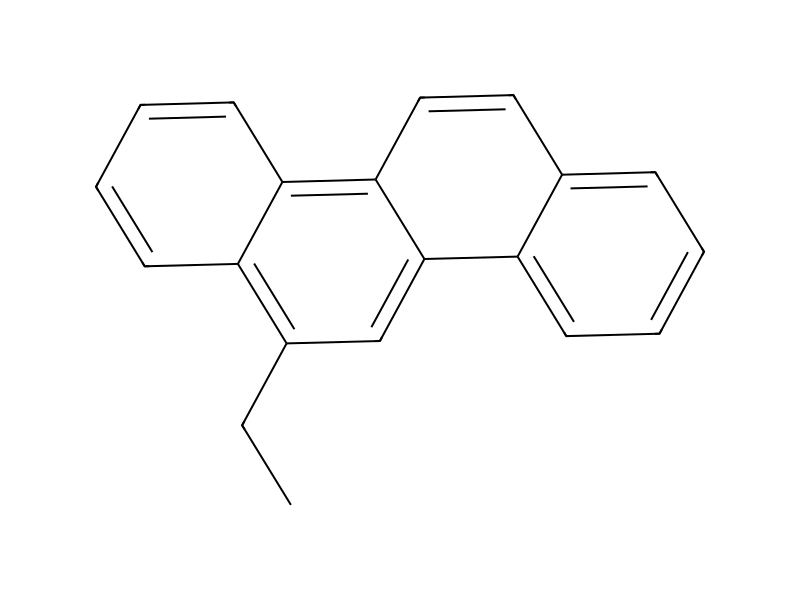
6-Ethylchrysene (Cambridge Chemical, Inc., 60 g, 0.234 mol) was formylated according to the procedure outlined in 1A, except that CH2Cl2 (1 L) was used as the reaction solvent. The crude material was chromatographed on a plug of SiO2 (1 kg) using PhCH3 as the eluting solvent, afforded 50.38 g (76%) of 12-ethyl-6-chrysenecarbaldehyde mp 138°-139°, (C,H).
Workup
- customThe crude material was chromatographed on a plug of SiO2 (1 kg)
Sources & evidence
- ORD record
- ord-28b4537d92374427b349def21a22c385
- Source dataset
- uspto-grants-1988_01
- Patent number
- US04719048
Linked notes
Loading…