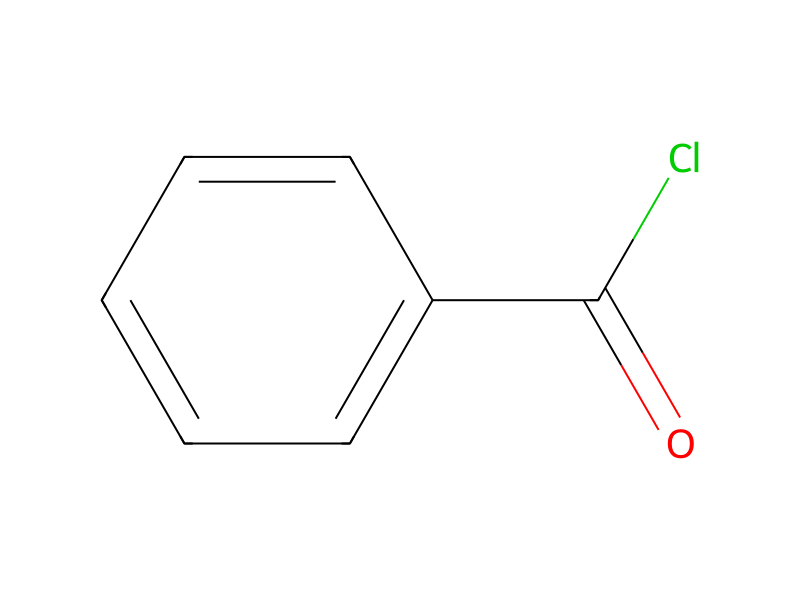
[S-:1][C:2]#[N:3].[NH4+:4].C(Cl)(=O)C1C=CC=CC=1.[Cl:14][C:15]1[CH:24]=[C:23]2[C:18]([C:19]([NH:25][C@H:26]3[CH2:31][CH2:30][C@@H:29](NC4C5C(=CC(Cl)=CC=5)N=CC=4)[CH2:28][CH2:27]3)=[CH:20][CH:21]=[N:22]2)=[CH:17][CH:16]=1.O>CC(C)=O>[Cl:14][C:15]1[CH:24]=[C:23]2[C:18]([C:19]([NH:25][CH:26]3[CH2:31][CH2:30][CH:29]([NH:3][C:2]([NH2:4])=[S:1])[CH2:28][CH2:27]3)=[CH:20][CH:21]=[N:22]2)=[CH:17][CH:16]=1Ammonium thiocyanate (320 mg, 4.2 mmol) was dissolved in 85 mL dry acetone. A solution of benzoyl chloride (590 mg, 4.2 mmol) in 10 mL dry acetone was added dropwise and heated at reflux for 30 minutes. A solution of 23A cis-N,N′-bis(7-chloroquinolin-4-yl)cyclohexane-1,4-diamine (1 g, 3.6 mmol) in 10 mL dry acetone was added dropwise to the refluxing solution. After the addition, the solution was poured into 100 mL of water. The resulting solid was filtered and heated in 30 mL of 10% sodium hydroxide until dissolved. The solution was then allowed to cool and was placed in the freezer overnight. The white solid was filtered and dried under vacumn to give 565 mg, 47% yield. MS ESI(+)Q1MS m/z 334 (M+H)+; 1 H NMR (300 MHz, DMSO) δ ppm 8.38-8.42 (m, 2 H), 8.78 (d, 1 H), 7.44 (dd, 1 H), 6.66-6.69 (m, 2 H), 6.53 (d, 1 H), 4.17 (m, 1 H), 3.61 (m, 1 H), 1.96-2.06 (m, 4H), 1.65-1.84 (m, 8 H).