5-((1H-Pyrrol-2-YL)methyl)-1H-pyrrole-2-carbaldehyde → Dipyrromethane
HRID 2425463
Reaction equation
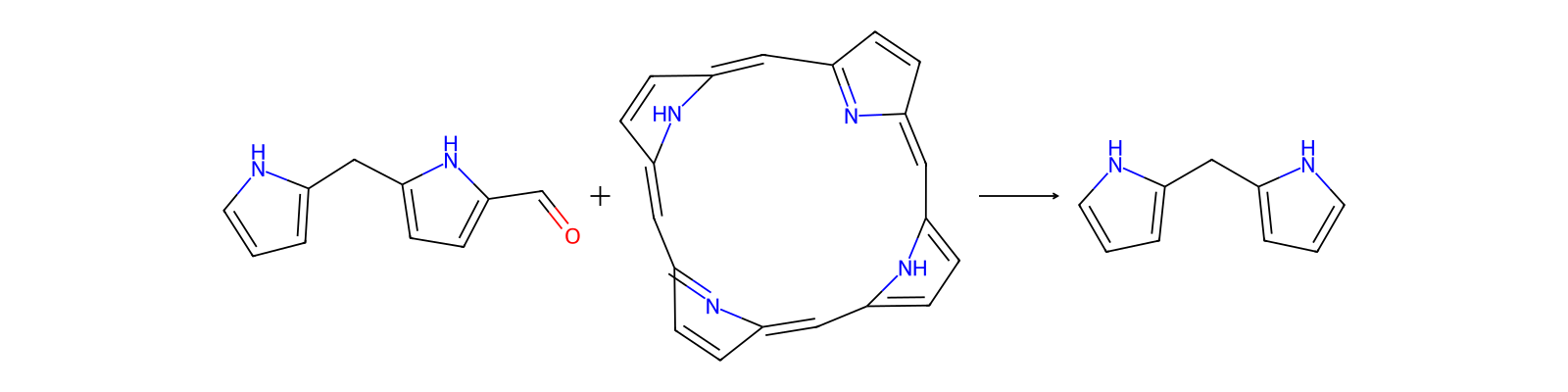
[CH:1]1[CH:5]=[C:4]([CH2:6][C:7]2[NH:11][C:10](C=O)=[CH:9][CH:8]=2)[NH:3][CH:2]=1.C12C=C3N=C(C=C3)C=C3NC(C=C3)=CC3=NC(C=C3)=CC(N1)=CC=2>>[CH:9]1[CH:8]=[C:7]([CH2:6][C:4]2[NH:3][CH:2]=[CH:1][CH:5]=2)[NH:11][CH:10]=1Participants
3


Procedure
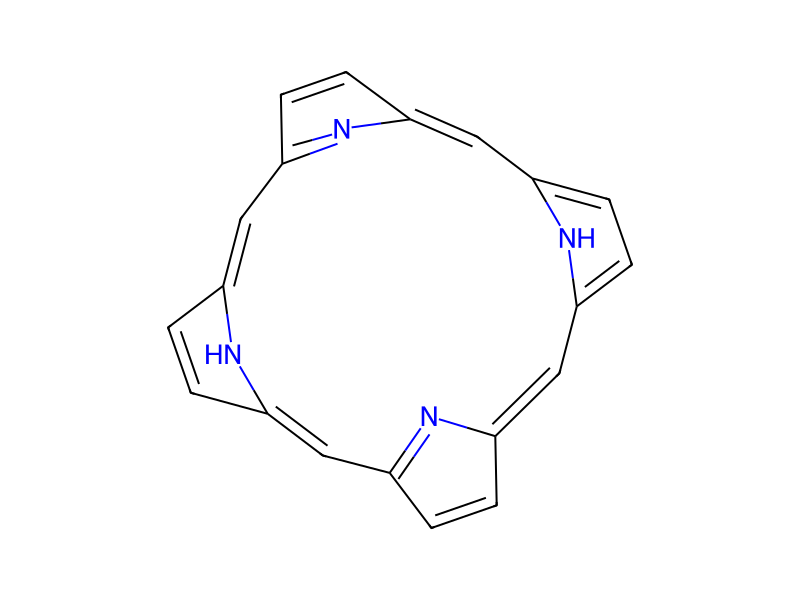
1-Formyldipyrromethane 2 is the key precursor for the porphine synthesis described herein. Formylation of dipyrromethane via Vilsmeier or Grignard reagent mediated syntheses21 results in multiple byproducts, requiring tedious chromatographic separation for the purification of 1-formyldipyrromethane (2). The TLC and 1H NMR analyses of the crude reaction mixture obtained from Vilsmeier formylation of dipyrromethane showed the presence of three components: starting dipyrromethane (3), 1-formyldipyrromethane (2), 1,9-diformyldipyrromethane (4), and an unknown byproduct (tentatively assigned as a 2-formyldipyrromethane) in a ratio of 7:20:4:1. We were able to separate the desired 2 in 46% yield (without using a tin complexation strategy); however, the purification required lengthy column chromatography.