HomeMCPWorkbenchSkills
HomeWorkbenchNotificationsMe
llms.txt · MCP GuidePrivacy Policy · Terms of Service · Supportv1.8.0
  1. Home
  2. /Reaction

Ethanol → N-Acetyl-4-(2,3-dichlorophenyl)-3-trifluoromethylpyrrole

HRID 247101
Notes
Print preview

Reaction equation

HRID 247101 reaction equation
[NH2:1][CH2:2]C(O)=O.[OH-].[K+].[F:8][C:9]([F:25])([F:24])[C:10]([C:12]([C:16]1[CH:21]=[CH:20][CH:19]=[C:18]([Cl:22])[C:17]=1[Cl:23])=[CH:13]OC)=O.[CH2:26]([OH:28])[CH3:27]>>[C:26]([N:1]1[CH:13]=[C:12]([C:16]2[CH:21]=[CH:20][CH:19]=[C:18]([Cl:22])[C:17]=2[Cl:23])[C:10]([C:9]([F:8])([F:24])[F:25])=[CH:2]1)(=[O:28])[CH3:27]
ParticipantsConditionsProcedureWorkupSources & evidenceReaction notes

Participants

5

Reactant 4

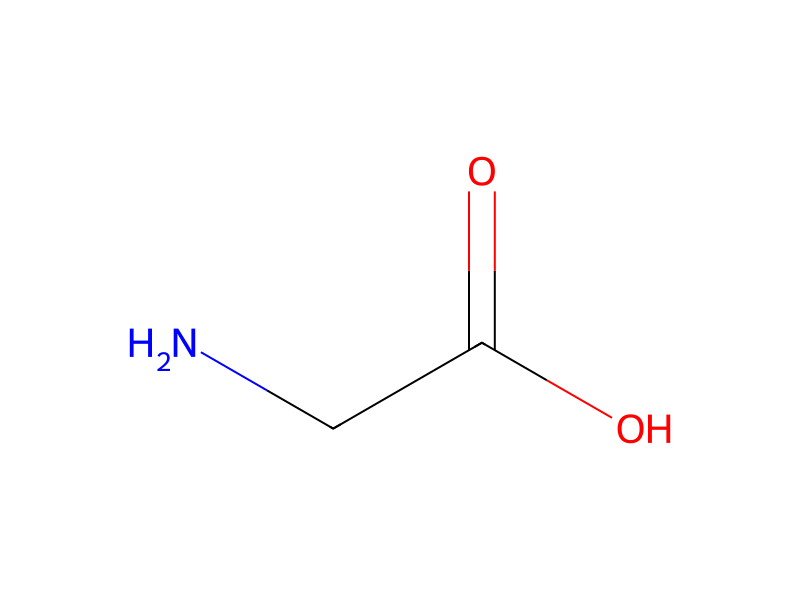
HCID 702EthanolHCID 750GlycineHCID 14797Potassium HydroxideHCID 53936608alpha-Trifluoroacetyl-beta-methoxy-2,3-dichlorostyrene

Product 1

HCID 21245533N-Acetyl-4-(2,3-dichlorophenyl)-3-trifluoromethylpyrrole

Conditions

Temperature
45 °C

Procedure

2.7 g of glycine and 2.0 g of potassium hydroxide are dissolved in 160 ml of ethanol, and the mixture is heated to 45° C. There are then added at this temperature 9.9 g of the α-trifluoroacetyl-β-methoxy-2,3-dichlorostyrene produced according to Example P2, and the reaction mixture is refluxed for 90 minutes. The mixture is subsequently concentrated in vacuo; to the residue are afterwards added 150 ml of acetic anhydride, and the new mixture is heated at 100° C. for 45 minutes. After the evolution of CO2 has subsided, the solvent is removed by evaporation, and the residue is taken up in toluene, and filtered through SiO2. The filtrate is again concentrated by evaporation, and the oily residue is covered with hexane, in the course of which N-acetyl-4-(2,3-dichlorophenyl)-3-trifluoromethylpyrrole precipitates in the form of beige crystals, m.p. 65°-66° C.

Workup

  1. customproduced
  2. temperaturethe reaction mixture is refluxed for 90 minutes
  3. concentrationThe mixture is subsequently concentrated in vacuo
  4. temperaturethe new mixture is heated at 100° C. for 45 minutes
  5. customthe solvent is removed by evaporation
  6. filtrationfiltered through SiO2
  7. concentrationThe filtrate is again concentrated by evaporation
  8. customprecipitates in the form of beige crystals, m.p. 65°-66° C.

Sources & evidence

ORD record
ord-6209147b45b741e0887aff8c8bfc2a97
Source dataset
uspto-grants-1987_11
DOI
10.6084/m9.figshare.5104873.v1
Patent number
US04705801

Reaction notes

Loading…

On this pageParticipantsConditionsProcedureWorkupSources & evidenceReaction notes