Dimethylamine → 2-[2-(Dimethylamino)ethyl]-2,3-dihydro-2,4-dimethylpyrido[3,2-f][1,4]oxazepine-5(4H)-one hydrochloride
Reaction equation

Cl.[Cl:2][CH2:3][CH2:4][C:5]1([CH3:18])[CH2:11][N:10]([CH3:12])[C:9](=[O:13])[C:8]2[CH:14]=[CH:15][CH:16]=[N:17][C:7]=2[O:6]1.[CH3:19][NH:20][CH3:21]>CO>[ClH:2].[CH3:19][N:20]([CH3:21])[CH2:3][CH2:4][C:5]1([CH3:18])[CH2:11][N:10]([CH3:12])[C:9](=[O:13])[C:8]2[CH:14]=[CH:15][CH:16]=[N:17][C:7]=2[O:6]1Participants
4
Reactant 2
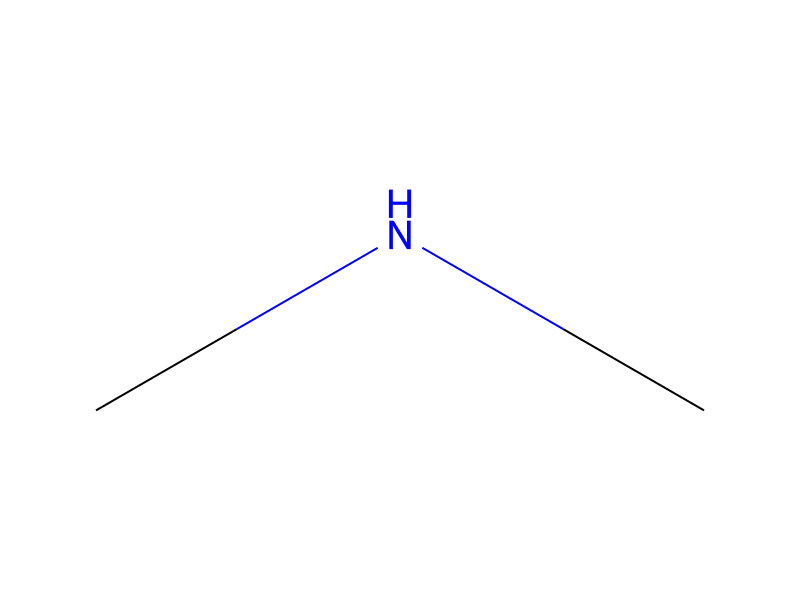

Product 1

Reagents, catalysts & solvents 1

Procedure
To 4.5 g (0.015 mole) of 2-(2-chloroethyl)-2,3-dihydro-2,4-dimethypyrido[3,2-f]-1,4-oxazepin-5(4H)-one hydrochloride in 15 ml of methanol was added 40 ml of dimethylamine. The flask was sealed tightly and left standing at room temperature for 8 days. The methanol and dimethylamine were removed by rotary evaporation (70° C.; 30 mm). The residue was taken up in 150 ml of chloroform, washed with 2×50 ml dil aqueous sodium hydroxide, dried over anhydrous sodium sulfate, filtered and concentrated by rotary evaporation (70° C.; 30 mm). The syrupy residue was treated with hydrogen chloride in isopropyl alcohol, which afforded 3.5 g (67%) of white crystals, m.p. 188°.varies.90° C.