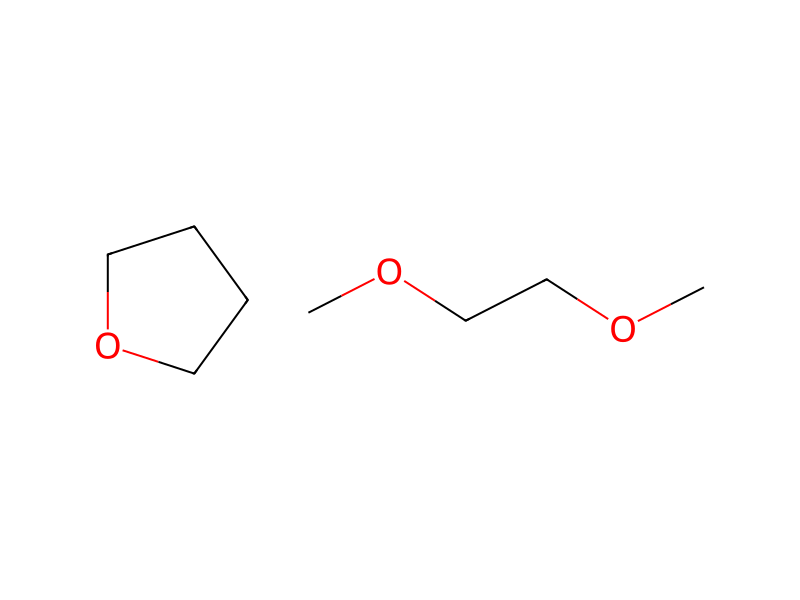
The following products are charged in order into a 250 ml glass flask equipped with a thermometer, magnetic stirrer and reflux cooler: 1.888 g (70 mmoles) of active aluminium metal having the characteristics described in Example 1, AlCl3 (5.6 g; 42 mmoles), mesitylene (43 g; 360 mmoles) and VOCl3 (6.1 g; 35 mmoles), with a molar ratio V:Al:AlCl3 equal to 1:2:1.2. A strong hexothermal reaction takes place. After 1 hour of stirring at room temperature, the mixture is heated for 3 hours to 160°-170° C., and a dark reddish-brown suspension is obtained. After cooling to room temperature, 50 ml of a mixture of tetrahydrofuran-dimethoxyethane 18.85 (v/v) are added to this suspension and vigorous stirring is maintained at room temperature for 3 hours. After filtration, the filtrate is dried (0.1 Torr; 50° C.) and the residue is treated with heptane (50 ml). The resulting solution is filtered, concentrated and cooled to -80° C. 3.6 g of vanadium bis-mesitylene are obtained corresponding to a yield of 35%.