Reaction equation
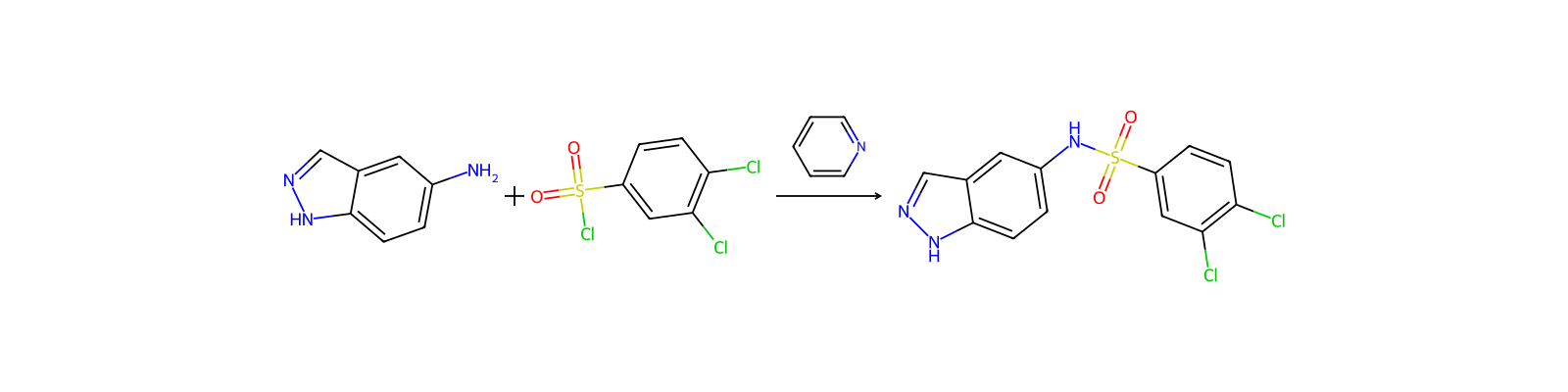
[NH2:1][C:2]1[CH:3]=[C:4]2[C:8](=[CH:9][CH:10]=1)[NH:7][N:6]=[CH:5]2.[Cl:11][C:12]1[CH:13]=[C:14]([S:19](Cl)(=[O:21])=[O:20])[CH:15]=[CH:16][C:17]=1[Cl:18]>N1C=CC=CC=1>[Cl:11][C:12]1[CH:13]=[C:14]([S:19]([NH:1][C:2]2[CH:3]=[C:4]3[C:8](=[CH:9][CH:10]=2)[NH:7][N:6]=[CH:5]3)(=[O:20])=[O:21])[CH:15]=[CH:16][C:17]=1[Cl:18]Participants
4
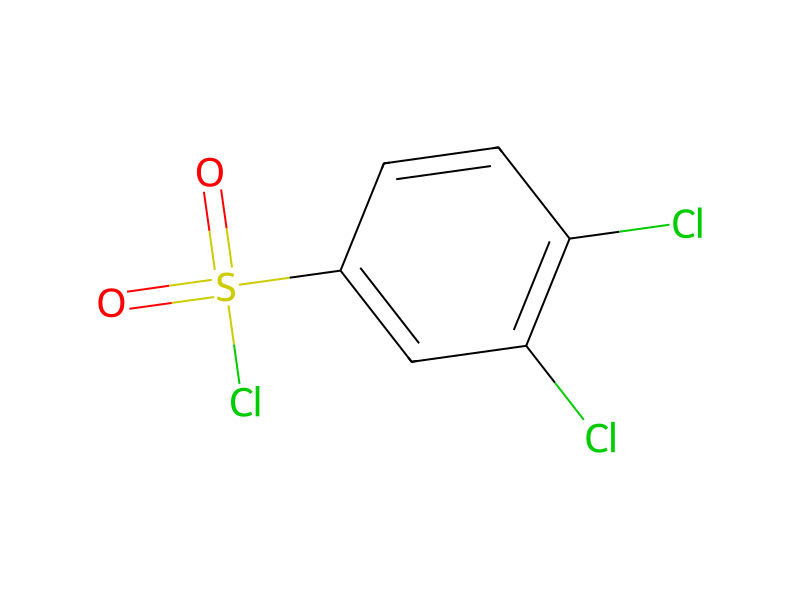
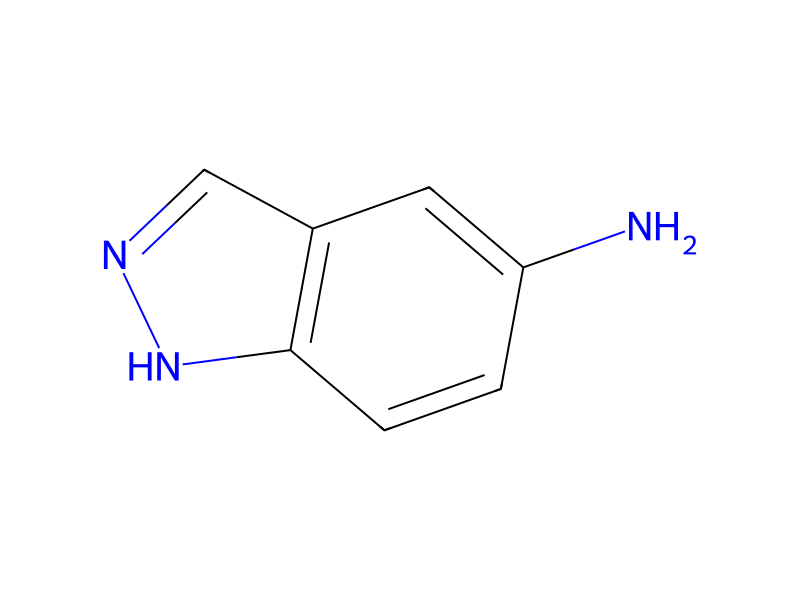
Reactant 2
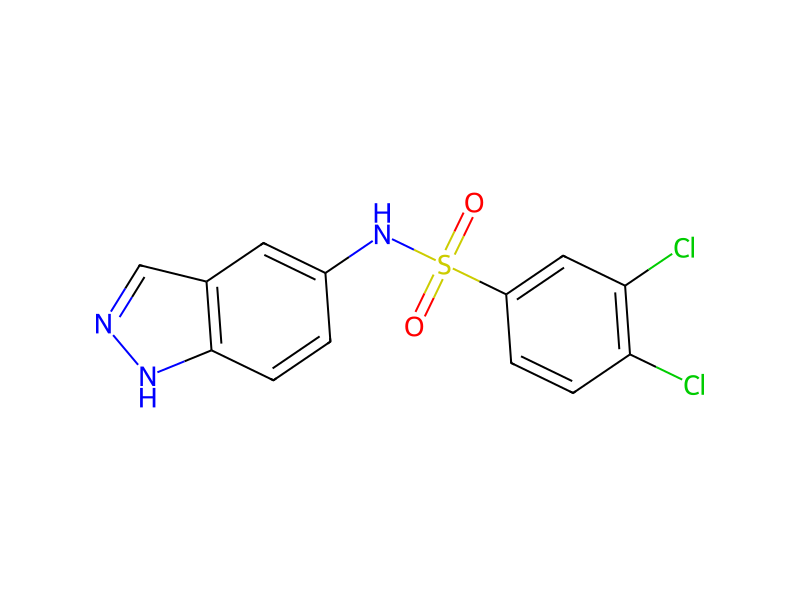
Product 1
Reagents, catalysts & solvents 1

Procedure
3,4-Dichloro-N-(1H-indazol-5-yl)benzenesulfonamide can be obtained as described in Example 2 from 1 g of 5-amino-1H-indazole, 20 ml of pyridine and 1.84 g of 3,4-dichlorobenzenesulfonyl chloride. 0.55 g of 3,4-dichloro-N-(1H-indazol-5-yl)benzenesulfonamide is thus obtained in the form of a green solid melting at 209° C. (analysis C13H9Cl2N3O2S % calculated C, 45.63; H, 2.65; Cl, 20.72; N, 12.28; O, 9.35; S, 9.37. % found C, 45.87; H, 2.72; Cl, 21.10; N, 12.27; S, 9.21).
Sources & evidence
- ORD record
- ord-af023ee423194ec1abb7f225a7034e30
- Source dataset
- uspto-grants-2005_02
- Patent number
- US06858638B2
Linked notes
Loading…