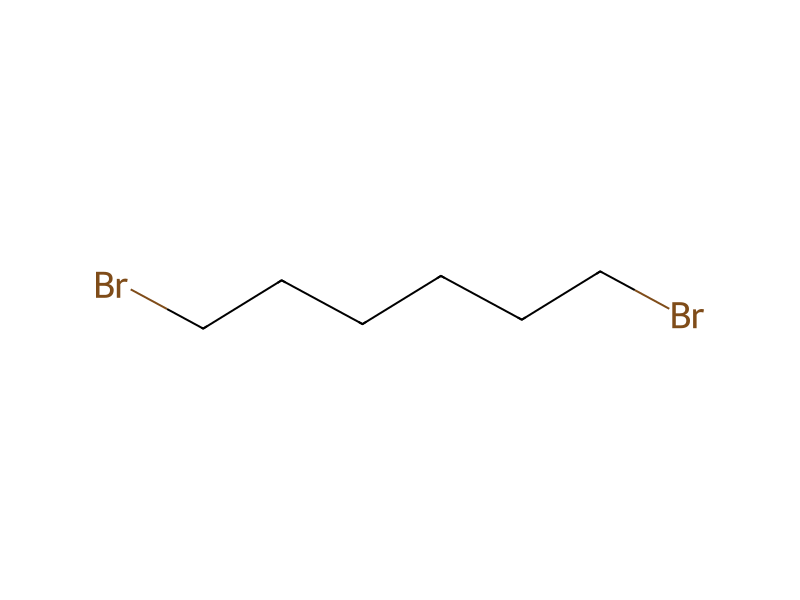
[CH2:1]([O:8][C:9](=[O:18])[NH:10][C@H:11]1[CH2:16][CH2:15][C@H:14]([OH:17])[CH2:13][CH2:12]1)[C:2]1[CH:7]=[CH:6][CH:5]=[CH:4][CH:3]=1.[Br:19][CH2:20][CH2:21][CH2:22][CH2:23][CH2:24][CH2:25]Br.[OH-].[Na+]>S([O-])(O)(=O)=O.C([N+](CCCC)(CCCC)CCCC)CCC.C(Cl)Cl>[CH2:1]([O:8][C:9](=[O:18])[NH:10][C@H:11]1[CH2:16][CH2:15][C@H:14]([O:17][CH2:25][CH2:24][CH2:23][CH2:22][CH2:21][CH2:20][Br:19])[CH2:13][CH2:12]1)[C:2]1[CH:3]=[CH:4][CH:5]=[CH:6][CH:7]=1To 15.0 g (60 mmol) trans-4-Hydroxy-cyclohexylcarbamic acid benzyl ester suspended in 183 ml (1.2 mol, 20 eq) 1,6-Dibromohexane, 6.1 g (18 mmol, 0.3 eq) tetrabutyl-ammoniumhydrogensulfate and 183 ml 50% aqueous NaOH were added. The mixture was stirred at RT for 4 days, CH2Cl2 was added and the layers were separated. The inorganic layer was extracted with CH2Cl2, the combined organic layers were washed with brine and dried over Na2SO4. The excess of dibromide was removed in vacuo and the residue was purified by column chromatography on silica gel with hexane:EtOAc 1:1 as eluent yielding 3.4 g (14%) trans-[4-(6-Bromo-hexyloxy)-cyclohexyl]-carbamic acid benzyl ester as white solid, MS: 412 (MH30, 1Br) and 11.2 g (32%) trans-(6-Bromo-hexyl)-[4-(6-bromo-hexyloxy)-cyclohexyl]-carbamic acid benzyl ester as yellow oil, MS: 574 (MH+, 2Br).