Reaction equation

COc1cc(N)ccc1-n1cnc(C)c1.Clc1ncccn1>CC(=O)O.CC(=O)O.COCCOC.O=C([O-])[O-].[Cs+].[Cs+].[Pd].c1ccc(-c2ccccc2P(C2CCCCC2)C2CCCCC2)cc1>COc1cc(Nc2ncccn2)ccc1-n1cnc(C)c1Participants
Reactant 2

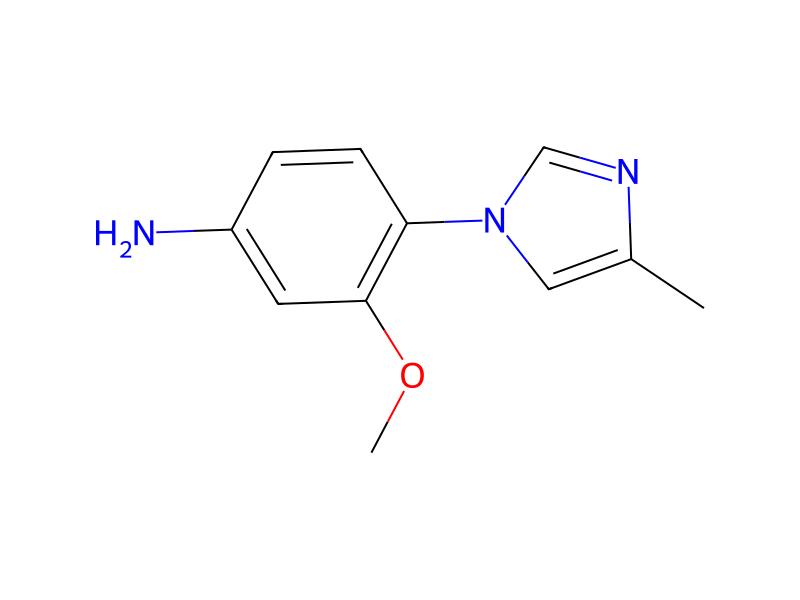
Product 1

Reagents, catalysts & solvents 4

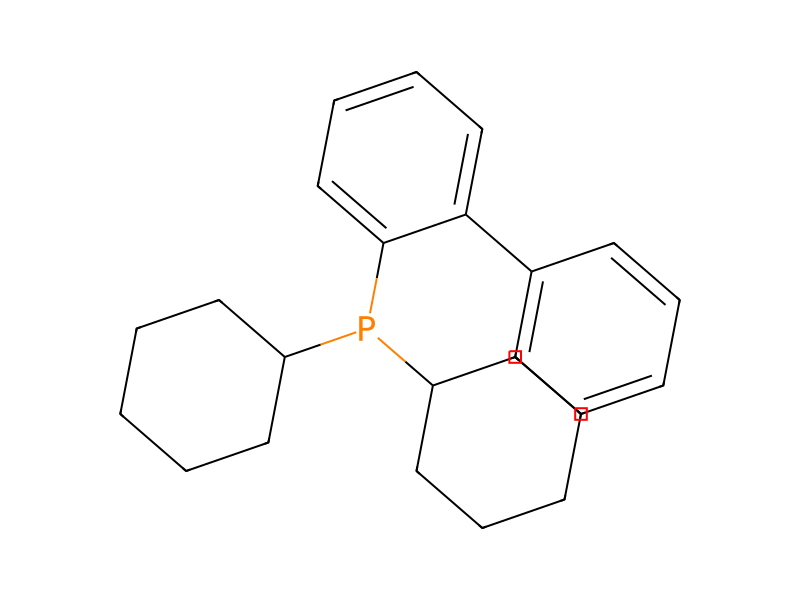
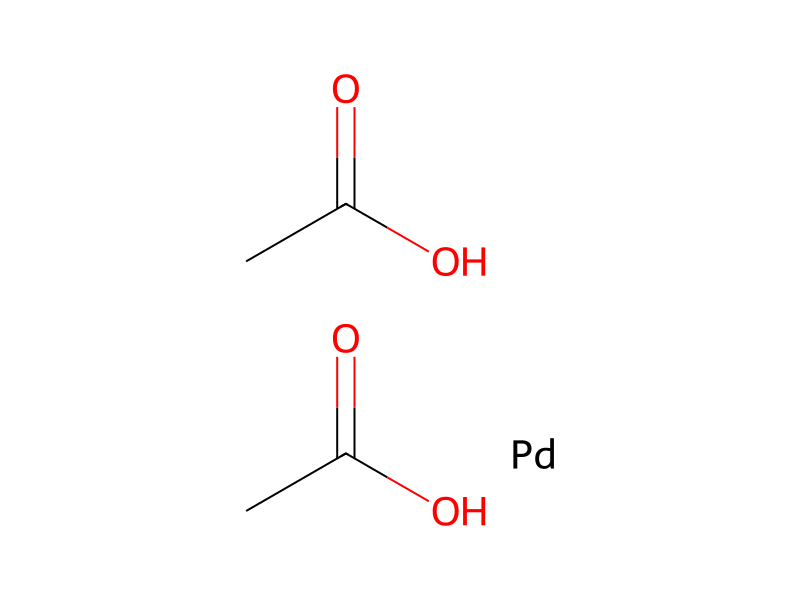

Conditions
- Temperature
- 100 °C
Procedure
2-Chloropyrimidine (0.056 g, 0.49 mmol), 3-methoxy-4-(4-methyl-1H-imidazol-1-yl)aniline (0.100 g, 0.49 mmol), Palladium acetate (0.011 g, 0.05 mmol), 2-(Dicyclohexylphosphino)biphenyl (0.017 g, 0.05 mmol) and Cesium carbonate (0.481 g, 1.48 mmol) were placed in a microwave vial. The mixture was capped and flushed with argon. 1,2-dimethoxyethane (5 mL) was added and the mixture was run in a microwave for 60 minutes at 100°C. Very little product. Added 0.1 eq ligand and palladium acetate, flushed with argon and run in the microwave at 100°C for 60 min. No change. Seems as if the 2-chloropyrimidine is not very soluble in DME. Added 1.5 mL DMF and the reaction was run again in the microwave for 60 minutes. The reaction mixture was filtrated through Celite and washed with dichloromethane. The filtrate was concentrated and the crude product was purified by preparative chromatography. The productcontaining fractions were pooled, concentrated and the residue was partitioned between sat. NaHCO3 (aq) and dichloromethane. The organic layer was separated by a Phase Separator and concentrated giving N-(3-methoxy-4-(4-methyl-1H-imidazol-1-yl)phenyl)pyrimidin-2-amine (0.026 g, 18.78 %).
Sources & evidence
- ORD record
- ord-20ba80f324544fc48cbce515702585f3
- Source dataset
- 750 AstraZeneca ELN dataset
- Original link
- View source
Linked notes
Loading…