Reaction equation
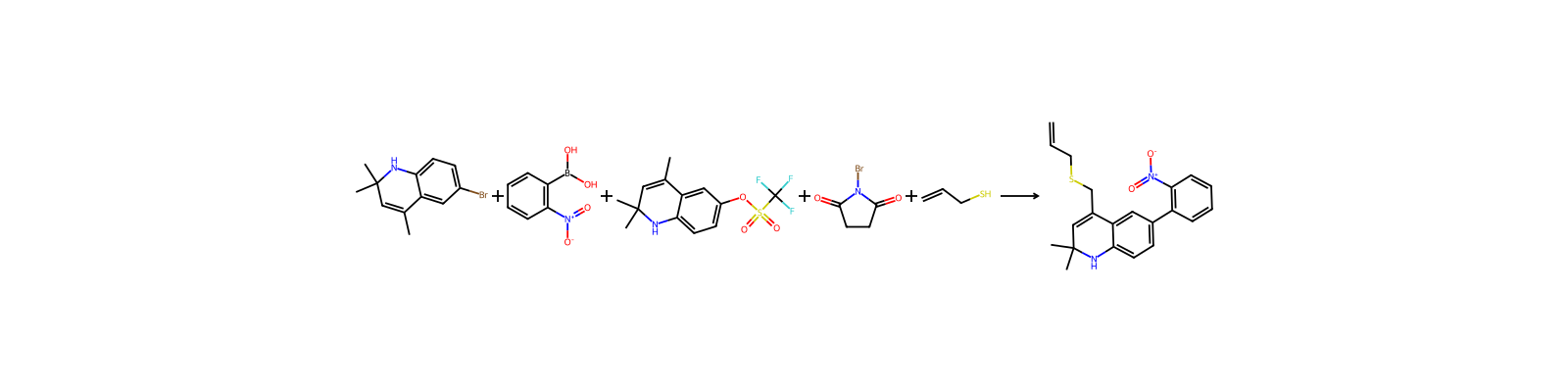
Br[C:2]1[CH:3]=[C:4]2[C:9](=[CH:10][CH:11]=1)[NH:8][C:7]([CH3:13])([CH3:12])[CH:6]=[C:5]2[CH3:14].[N+:15]([C:18]1[CH:23]=[CH:22][CH:21]=[CH:20][C:19]=1B(O)O)([O-:17])=[O:16].CC1(C)C=C(C)C2C(=CC=C(OS(C(F)(F)F)(=O)=O)C=2)N1.C1C(=O)N(Br)C(=O)C1.[CH2:56]([SH:59])[CH:57]=[CH2:58]>>[CH2:56]([S:59][CH2:14][C:5]1[C:4]2[C:9](=[CH:10][CH:11]=[C:2]([C:19]3[CH:20]=[CH:21][CH:22]=[CH:23][C:18]=3[N+:15]([O-:17])=[O:16])[CH:3]=2)[NH:8][C:7]([CH3:13])([CH3:12])[CH:6]=1)[CH:57]=[CH2:58]Participants
6
Reactant 5




Product 1

Procedure
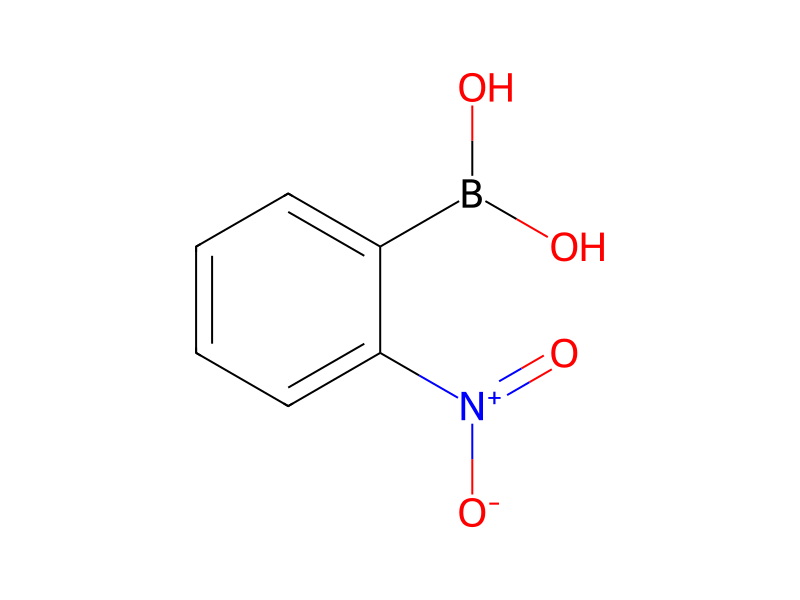
6-Bromo-2,2,4-trimethyl-1,2-dihydroquinoline was coupled with 2-nitrophenylboronic acid using the procedure described in Example 7 for trifluoromethanesulfonic acid 2,2,4-trimethyl-1,2-dihydroquinolin-6-yl ester. The resulting intermediate was brominated with NBS, followed by the coupling reaction with allyl mercaptan as described in Example 7, to provide 15 mg of the title compound as an oil.
Sources & evidence
- ORD record
- ord-620b59c3289f49d2a64264d11b6dd951
- Source dataset
- uspto-grants-2005_02
- Patent number
- US06858627B2
Linked notes
Loading…