Reaction equation

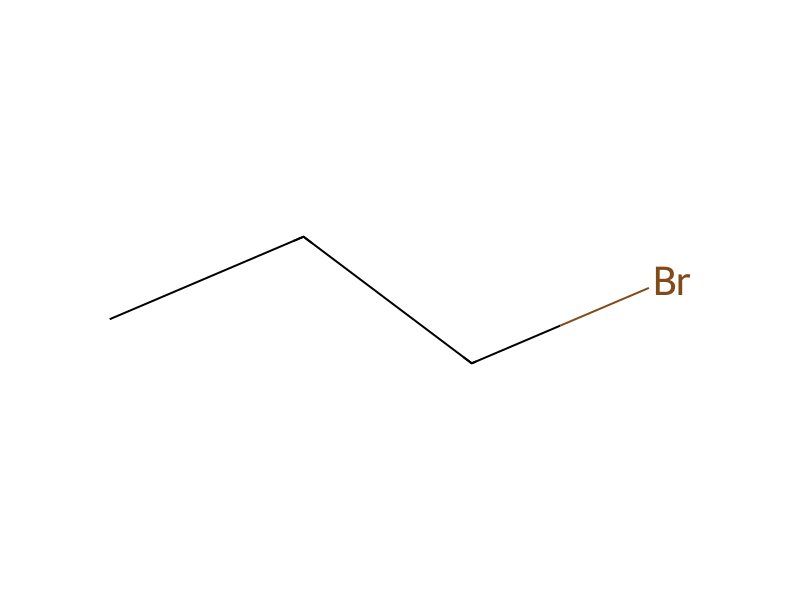
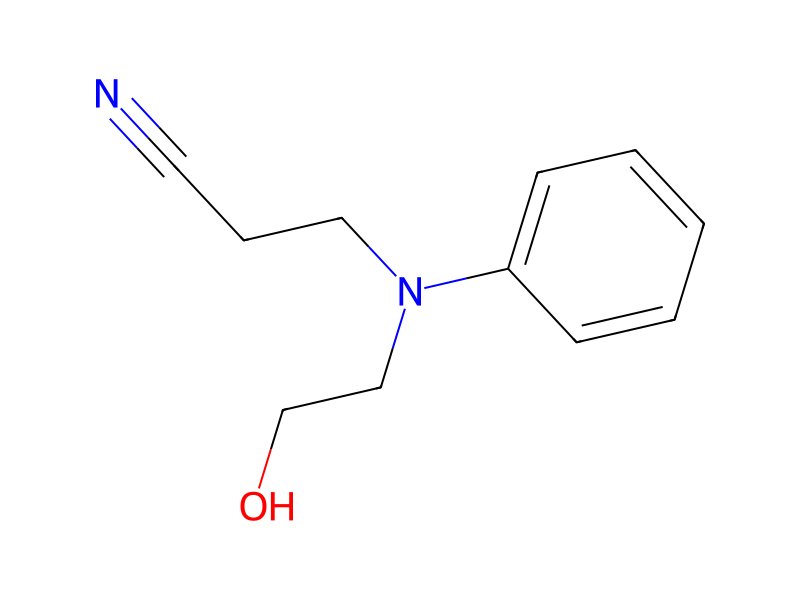
[O-:1][C:2]#[N:3].[K+].S1(C[CH2:10][CH2:9][CH2:8]1)(=O)=O.BrCCC.[C:16]([CH2:18][CH2:19][N:20]([CH2:27][CH2:28][OH:29])[C:21]1[CH:26]=[CH:25][CH:24]=[CH:23][CH:22]=1)#[N:17]>O>[C:16]([CH2:18][CH2:19][N:20]([CH2:27][CH2:28][O:29][C:2](=[O:1])[NH:3][CH2:8][CH2:9][CH3:10])[C:21]1[CH:26]=[CH:25][CH:24]=[CH:23][CH:22]=1)#[N:17]Participants
6




Conditions
- Temperature
- 50 °C
Procedure
To a mixture of 4 g. (.05 mole) of potassium cyanate and 25 ml. of sulfolane at 90° C. are added dropwise 9 ml. (12.3 g, 0.1 mole) of 1-bromopropane over a one-hour period. After 10 minutes of stirring at the same temperature, a solution of 6 g. (0.027 mole) of N-(2-cyanoethyl)-N-(2-hydroxyethyl)aniline in 5 ml. sulfolane is added. The resulting mixture is stirred at 90°-100° C. for three hours and then allowed to cool to 50° C. The mixture is poured into 1 liter of water under agitation, and the resulting layers separated. TLC of the organic layer in 4:1 benzene: acetone shows the absence of starting alcohol with the product of the above formula.
Workup
- additionTo a mixture of 4 g
- stirringThe resulting mixture is stirred at 90°-100° C. for three hours
- customthe resulting layers separated
Sources & evidence
- ORD record
- ord-31cafcba60664a8b99c5337a02869b22
- Source dataset
- uspto-grants-1979_04
- Patent number
- US04147716
Linked notes
Loading…