Reaction equation

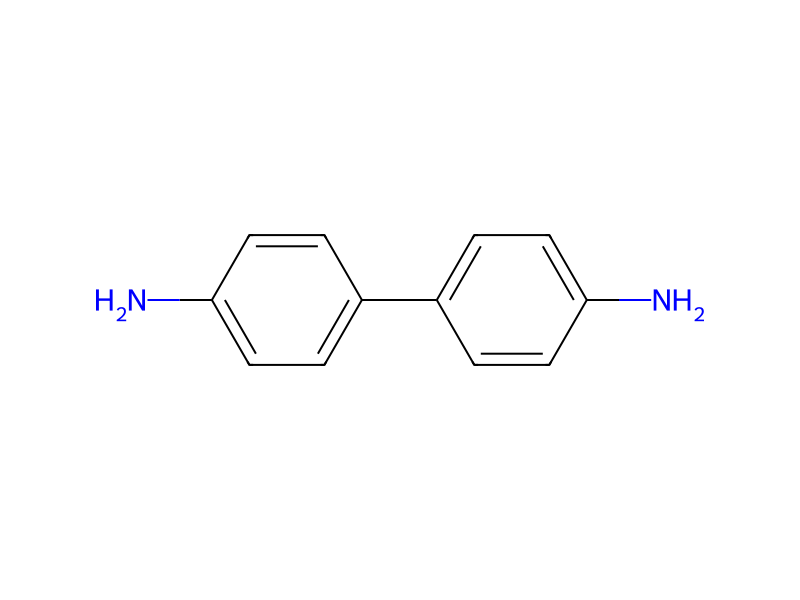
C(O)C.[H][H].[N+:6]([C:9]1[CH:14]=[CH:13][C:12]([C:15]2[CH:20]=[CH:19][C:18]([N+:21]([O-])=O)=[CH:17][CH:16]=2)=[CH:11][CH:10]=1)([O-])=O>[Pd].C1C=CC=CC=1>[NH2:6][C:9]1[CH:10]=[CH:11][C:12]([C:15]2[CH:20]=[CH:19][C:18]([NH2:21])=[CH:17][CH:16]=2)=[CH:13][CH:14]=1Participants
7





Procedure
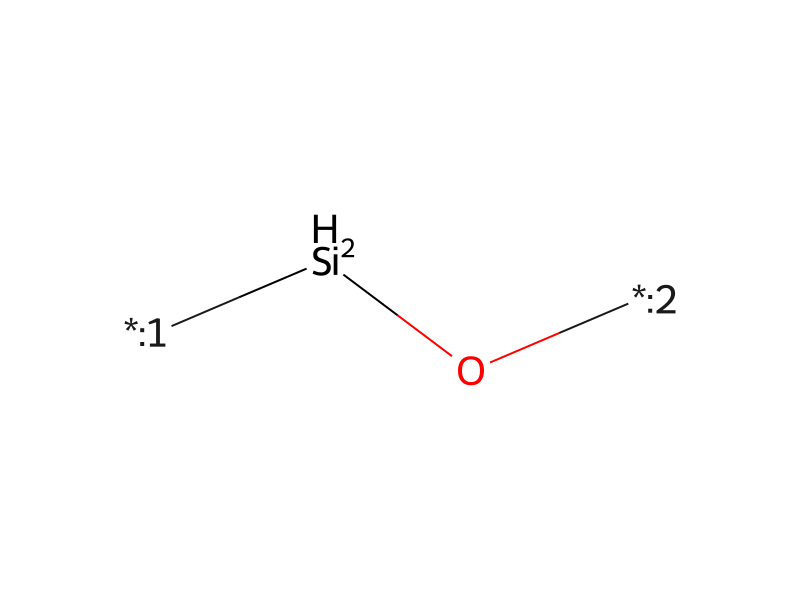
270 mg of 5%-Pd/C was suspended in 14 mL of a 1:1 mixed solvent of ethanol and benzene. While passing hydrogen through the system, a solution was added that consisted of 3.21 g of the 4,4'-dinitrobiphenyl-containing polysiloxane (average value of n: 14.4) synthesized in Reference Example 2 dissolved in 14 mL of the same mixed solvent. Hydrogen was injected into the system for 3 hours while stirring. The catalyst was then filtered off and the solvent was distilled under reduced pressure to give 3.00 g of the 4,4'-diaminobiphenyl-terminated polysiloxane as a viscous yellow liquid.
Workup
- additiona solution was added
- customsynthesized in Reference Example 2
- filtrationThe catalyst was then filtered off
- distillationthe solvent was distilled under reduced pressure
Sources & evidence
- ORD record
- ord-4959a58077c74bddb6fa89c41a33e44e
- Source dataset
- uspto-grants-1996_06
- Patent number
- US05527862
Linked notes
Loading…