Bromide ion → Benzenamine, hydrobromide (1:1)
HRID 261305
Reaction equation

[Br-].[NH2:2][C:3]1[CH:8]=[CH:7][CH:6]=[CH:5][CH:4]=1.[Br:9][CH:10]1[CH2:15][CH2:14][O:13][C:11]1=[O:12]>>[C:3]1([NH:2][CH:10]2[CH2:15][CH2:14][O:13][C:11]2=[O:12])[CH:8]=[CH:7][CH:6]=[CH:5][CH:4]=1.[BrH:9].[NH2:2][C:3]1[CH:8]=[CH:7][CH:6]=[CH:5][CH:4]=1Participants
5



Procedure
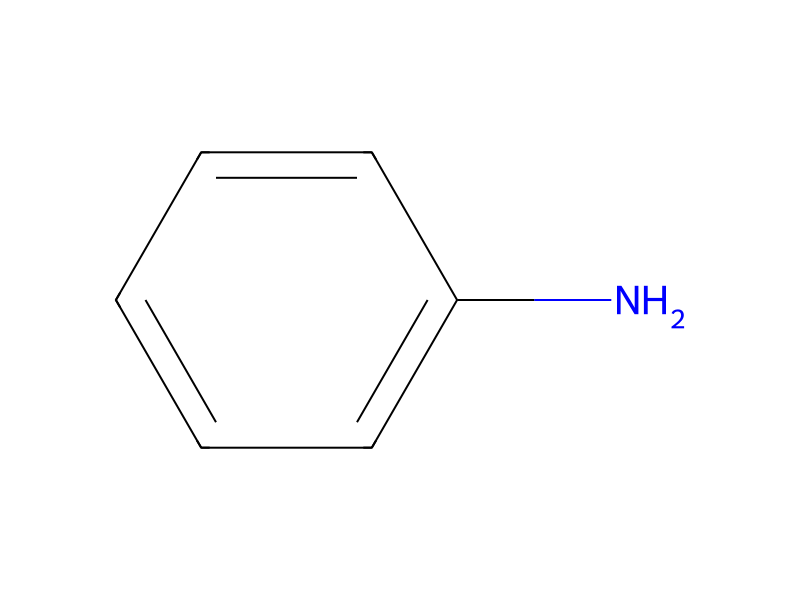
Frankel et al [Israel J. Chem. 1, 379-84 (1963)] found that carbonyl attack on, and resulting ring opening of, alpha-bromo-gamma-butyrolactone by aniline is favored over bromide displacement (alkylation) at high temperature (100° C. vs. 0° ). In Frankel, an excess of aniline was contacted with alpha-bromo-gamma-butyrolactone to give alpha-phenylamino-gamma-butyrolactone after aniline hydrobromide salt was removed. The alpha-phenylamino-gamma-butyrolactone was stirred with a 10% aqueous solution of sodium hydroxide resulting in hydrolysis or fission of the lactone ring to yield alpha-phenylamino-gamma-hydroxy butyranilide.