2,5-Dimethoxytetrahydrofuran → Cohrhuugbltlpt-uhfffaoysa-
Reaction equation

Cl.[NH2:2][CH2:3][CH2:4][CH2:5][C:6]([O:8][CH2:9][CH3:10])=[O:7].CO[CH:13]1[CH2:17][CH2:16][CH:15](OC)O1>C(O)(=O)C>[N:2]1([CH2:3][CH2:4][CH2:5][C:6]([O:8][CH2:9][CH3:10])=[O:7])[CH:13]=[CH:17][CH:16]=[CH:15]1Participants
4
Reactant 2
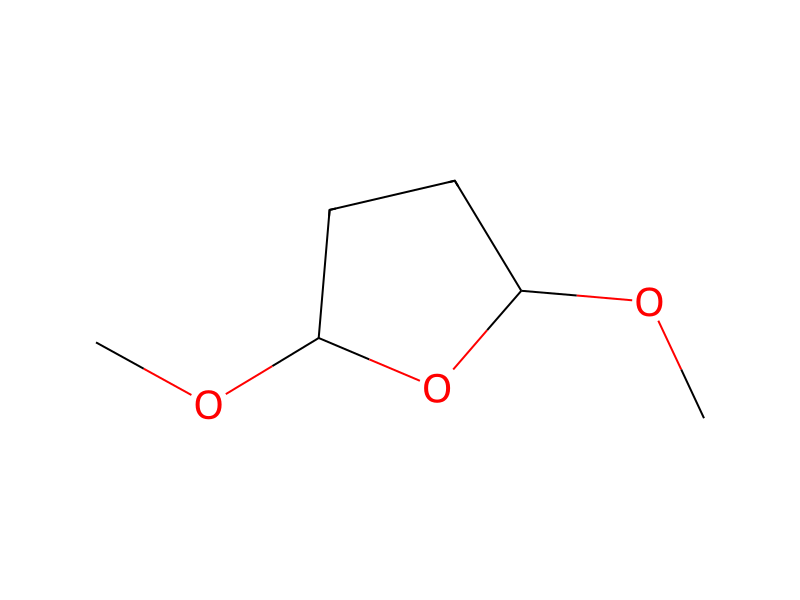

Product 1

Reagents, catalysts & solvents 1

Procedure
Ethyl 4-aminobutanoate hydrochloride (0.2 mole) is added to 300 ml glacial acetic acid containing (0.3 mole) sodium acetate. The mixture is heated until the solution becomes clear and then 2,5-dimethoxy tetrahydrofuran (about 0.2 mole) is added as quickly as possible. The solution is refluxed for an additional two minutes and the acetic acid is flash evaporated. The residue is distilled to give ethyl 4-(1-pyrryl)butanoate. The acid is obtained by hydrolyzing the ester in alcoholic sodium hydroxide followed by neutralization with hydrochloric acid.