Reaction equation
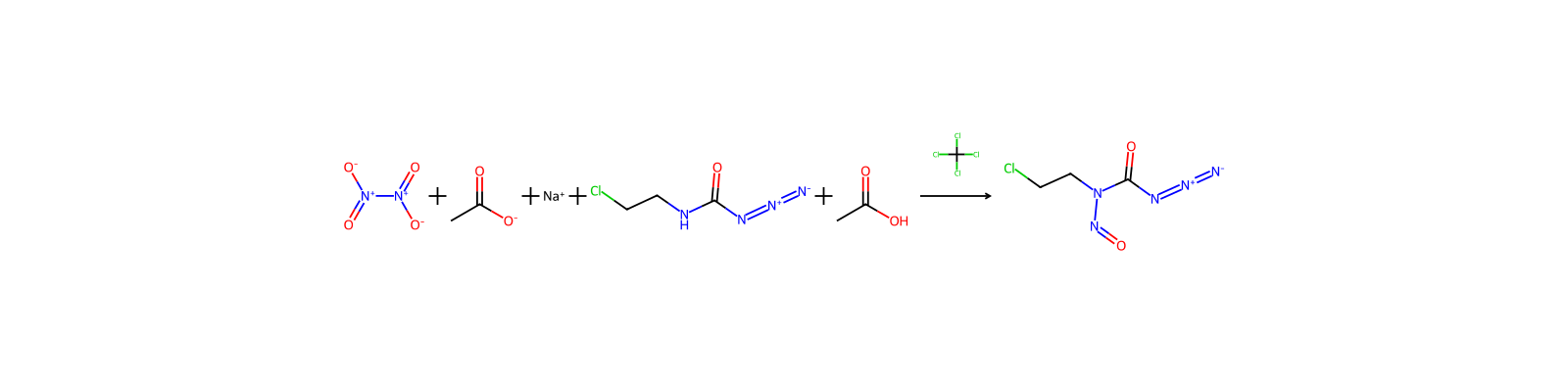
[N+:1]([O-])([N+]([O-])=O)=[O:2].C([O-])(=O)C.[Na+].[Cl:12][CH2:13][CH2:14][NH:15][C:16]([N:18]=[N+:19]=[N-:20])=[O:17].CC(O)=O>C(Cl)(Cl)(Cl)Cl>[Cl:12][CH2:13][CH2:14][N:15]([N:1]=[O:2])[C:16]([N:18]=[N+:19]=[N-:20])=[O:17]Participants




Conditions
- Temperature
- 0 °C
Procedure
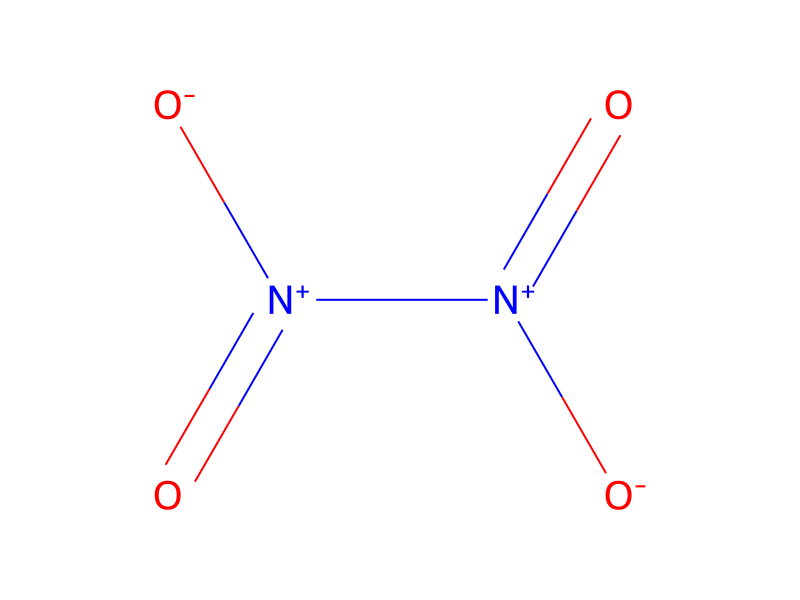
Nitrogen tetroxide (0,3 mole) was slowly added to a suspension of anhydrous sodium acetate (0.6 mole) in 300 ml of carbon tetrachloride at -10° C. After warming to 0° C., 2-chloroethylcarbamoyl azide (0.2) was slowly added with a spatula to the stirred suspension. A white precipitate was formed (AcOH). After 15 minutes, the reaction mixture was poured into ice water. The separated organic phase was extracted twice with 50 ml of a cold solution of NaHCO3 (1 molar) and was then washed neutral with 2×50 ml of ice cold water saturated with NaCl. It was then dried over anhydrous sodium sulfate. No attempt was made to isolate N-(chloroethyl)-N-nitrosocarbamoyl azide as it is potentially explosive. The NMR spectroscopic examination of the CCl4 solution (internal standard TMS) showed the complete absence of an NH-- signal and showed a pattern which is typical for the A2B2 system of the nitrosated 2-chloroethylamino group. δ=3.50 ppm (t, 2H, --CH 2 --N--NO); 4.15 ppm (t, 2H, Cl--CH2 --).
Workup
- extractionThe separated organic phase was extracted twice with 50 ml of a cold solution of NaHCO3 (1 molar)
- washwas then washed neutral with 2×50 ml of ice cold water saturated with NaCl
- dry with materialIt was then dried over anhydrous sodium sulfate
Sources & evidence
- ORD record
- ord-e26a4b1e2fa54e428ff48ca16023fbdb
- Source dataset
- uspto-grants-1979_04
- Patent number
- US04150146
Linked notes
Loading…