Reaction equation
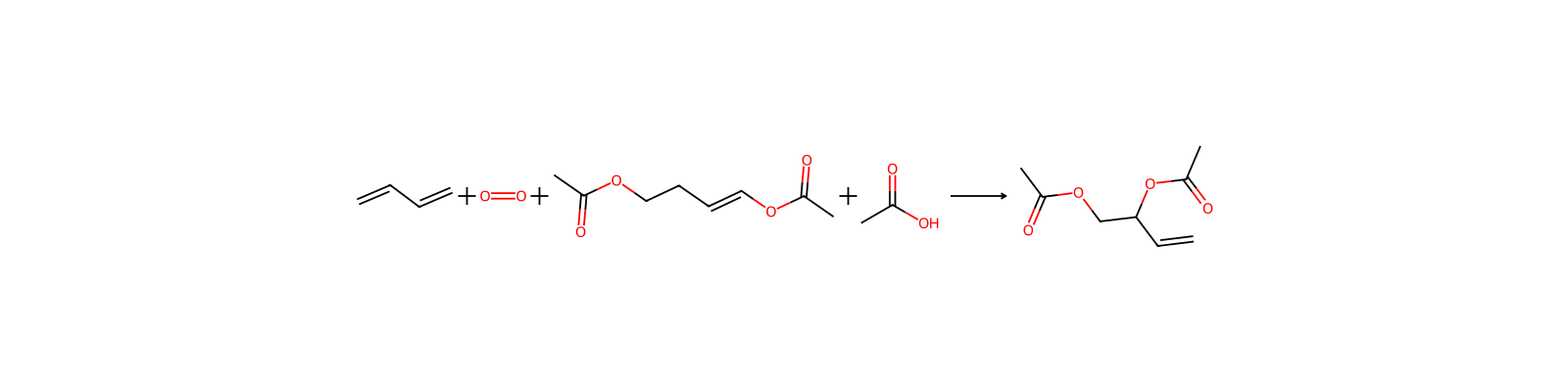
C=CC=C.O=O.C(O[CH:11]=[CH:12][CH2:13][CH2:14][O:15][C:16](=[O:18])[CH3:17])(=O)C.[C:19]([OH:22])(=[O:21])[CH3:20]>>[C:19]([O:22][CH:13]([CH2:14][O:15][C:16](=[O:18])[CH3:17])[CH:12]=[CH2:11])(=[O:21])[CH3:20]Participants
5




Procedure
From the upper part of the reactor, which was the same reactor as used in the acetoxylation process in Example 1 and temperature of heating medium in the jacket was kept at 87° C., were fed butadiene at 1.7 kg/h, acetic acid at 19.1 kg/h and nitrogen gas containing 5 mol % oxygen at 40 Nm3 /h and reacted under the same reaction conditions as in the acetoxylation process in Example 1. As the result, 2100 kg of reaction products of a composition containing 13.10% of 1,4-diacetoxybutene, and 1.15% of 3,4-diacetoxybutene were produced.
Workup
- temperatureof heating medium in the jacket
- customwas kept at 87° C.
- customreacted under the same reaction conditions as in the acetoxylation process in Example 1
- customAs the result, 2100 kg of reaction products of a composition
Sources & evidence
- ORD record
- ord-18110fea45644057a04debaded7bcb7b
- Source dataset
- uspto-grants-1979_04
- Patent number
- US04150239
Linked notes
Loading…