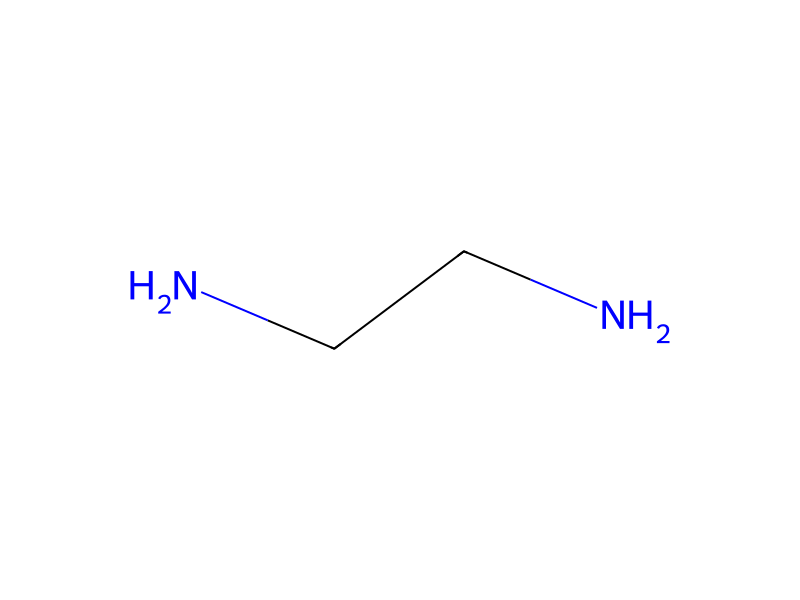
Add ethylene diamine (200 mL, 3000 mmol) and toluene (1200 mL) to a 3 L flask and cool to <5° C. Add a solution of 3-(4-Nitro-phenyl)-propionaldehyde (63 g, 280 mmol) in toluene (300 mL) via addition funnel over 45 minutes with vigorous stirring. Remove the cooling bath and heat to reflux to remove water by azeotropic distillation (Dean Stark trap). Concentrate the reaction under reduced pressure to an oil. Dilute the crude oil with methanol (450 mL) and cool to 0° C. Add sodium borohydride (13 g, 340 mmol) in 1-2 g portions with stirring, holding the temperature below 5° C. Stir the reaction for 20 minutes at 5° C. and then allow the reaction to warm to room temperature and stir for an additional 30 minutes. Cool to <0° C. and add water and dichloromethane. Separate the layers and extract the aqueous layer with dichloromethane. Combine the organic layers and wash with brine and dry over MgSO4. Filter the slurry and concentrate under reduced pressure to a red oil (73 g). The title compound was used without purification. 1H NMR (CDCl3, 500.0 MHz): δ 8.12 (d, 2H, J=8 Hz), 7.32 (d, 2H, J=8 Hz), 2.74-2.81 (m, 4H), 2.61-2.67 (m, 4H), 1.84 (p, 2H, J=7.5 Hz), 1.57 (br s, 2H).