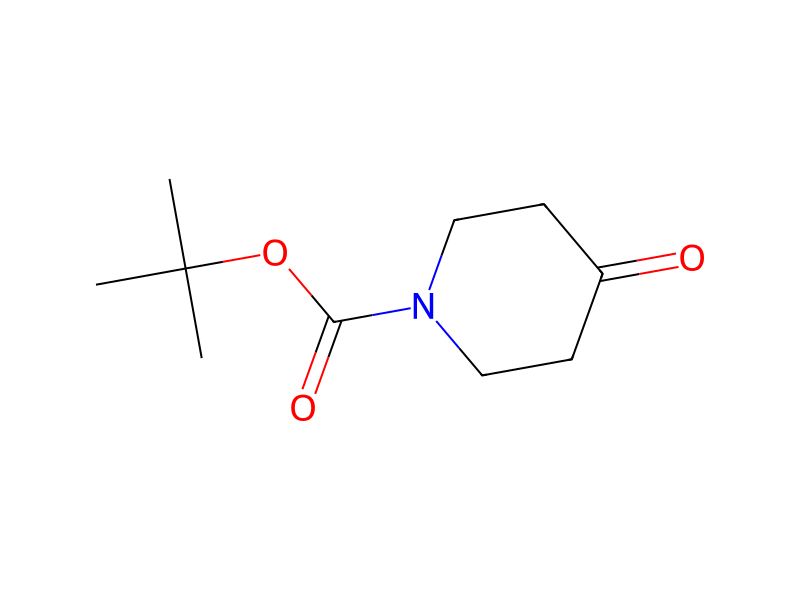
Br[C:2]1[CH:7]=[C:6]([C:8]([F:11])([F:10])[F:9])[CH:5]=[CH:4][N:3]=1.C([Li])CCC.[O:17]=[C:18]1[CH2:23][CH2:22][N:21]([C:24]([O:26][C:27]([CH3:30])([CH3:29])[CH3:28])=[O:25])[CH2:20][CH2:19]1>C(Cl)Cl>[OH:17][C:18]1([C:2]2[CH:7]=[C:6]([C:8]([F:11])([F:10])[F:9])[CH:5]=[CH:4][N:3]=2)[CH2:19][CH2:20][N:21]([C:24]([O:26][C:27]([CH3:30])([CH3:29])[CH3:28])=[O:25])[CH2:22][CH2:23]1To a slightly cloudy solution of 2-bromo-4-(trifluoromethyl)pyridine (4.0 g, 14.2 mmol) in dry methylene chloride (52.7 mL) cooled at −78° C. was added a 1.6 M solution of n-butyllithium in hexanes (9.65 mL). After being stirred for 40 min at −78° C., a solution of tert-butyl 4-oxo-1-piperidinecarboxylate (2.59 g, 12.9 mmol) in dry methylene chloride (10.0 mL) was added dropwise. The reaction was stirred at −78° C. for 1 h and quenched with aqueous NH4Cl. THF was removed by rotary evaporation. The aqueous layer was extracted with methylene chloride three times. The combined organic layers were dried, filtered and concentrated. The residue was purified by column chromatography on silica gel (30:70 EtOAc/hexanes) to give 2.63 g (59%) of desired product as a brown oil. LC-MS calculated for C16H21F3N2O3: (M+H) 347; found 247.0 (M-Boc+1).
Loading…