3-Benzyl-7-chloroquinoline-2-carbaldehyde → 1-(3-Benzyl-7-chloroquinolin-2-yl)-2-methylpropan-1-ol
HRID 271832
Reaction equation

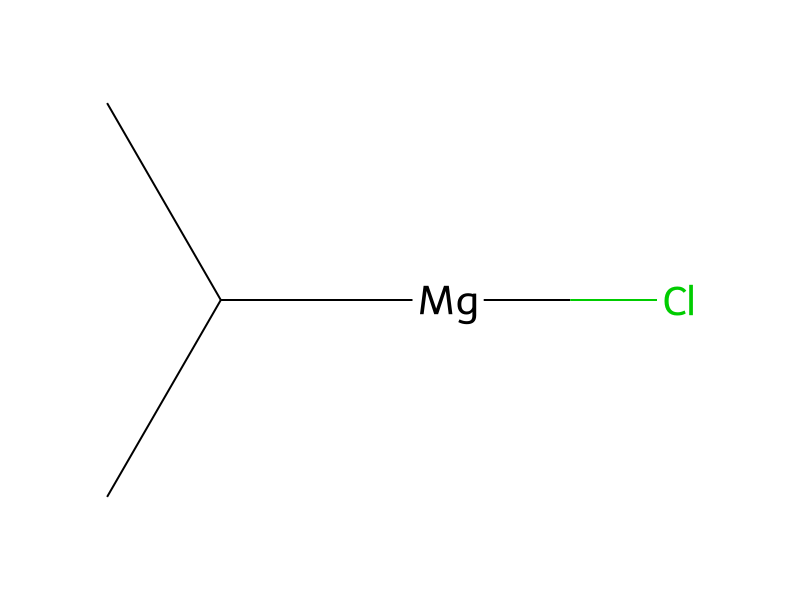
[CH2:1]([C:8]1[C:9]([CH:19]=[O:20])=[N:10][C:11]2[C:16]([CH:17]=1)=[CH:15][CH:14]=[C:13]([Cl:18])[CH:12]=2)[C:2]1[CH:7]=[CH:6][CH:5]=[CH:4][CH:3]=1.[CH:21]([Mg]Cl)([CH3:23])[CH3:22]>C(Cl)Cl>[CH2:1]([C:8]1[C:9]([CH:19]([OH:20])[CH:21]([CH3:23])[CH3:22])=[N:10][C:11]2[C:16]([CH:17]=1)=[CH:15][CH:14]=[C:13]([Cl:18])[CH:12]=2)[C:2]1[CH:3]=[CH:4][CH:5]=[CH:6][CH:7]=1Participants
4
Reactant 2

Product 1

Reagents, catalysts & solvents 1

Procedure
To a solution of 3-benzyl-7-chloroquinoline-2-carbaldehyde (1.23 g, 4.4 mmol) in anhydrous DCM (12 ml) at −78° C., was added isopropylmagnesium chloride (6.6 m, 13.2 mmol). The resulting solution was allowed to warm to ambient temperature over one hour. The reaction mixture was then quenched with saturated NH4Cl and extracted with DCM (3×). The combined organic layers were washed with brine, dried over MgSO4, and the solvent was removed in vacuo. The crude product was subjected to flash column chromatography using an ISCO purification system. Elution in hexanes with a gradient of ethyl acetate (0-100%) yielded 1-(3-benzyl-7-chloroquinolin-2-yl)-2-methylpropan-1-ol 25 (0.44 g, 1.3 mmol, 30%) as a red oil.