Reaction equation

[NH4+:1].[NH4+].[O-:3][Mo:4]([O-])(=O)=O.[Mo:8](=O)(=O)=[O:9]>O>[NH3:1].[NH3:1].[NH3:1].[NH3:1].[NH3:1].[NH3:1].[OH2:3].[OH2:9].[OH2:3].[OH2:3].[OH2:3].[OH2:3].[OH2:3].[OH2:3].[OH2:3].[OH2:3].[OH2:3].[OH2:3].[OH2:3].[OH2:3].[OH2:3].[OH2:3].[OH2:3].[OH2:3].[OH2:3].[OH2:3].[OH2:3].[OH2:3].[OH2:3].[OH2:3].[Mo:4].[Mo:8].[Mo:4].[Mo:4].[Mo:4].[Mo:4].[Mo:4]Participants
4
Reactant 2

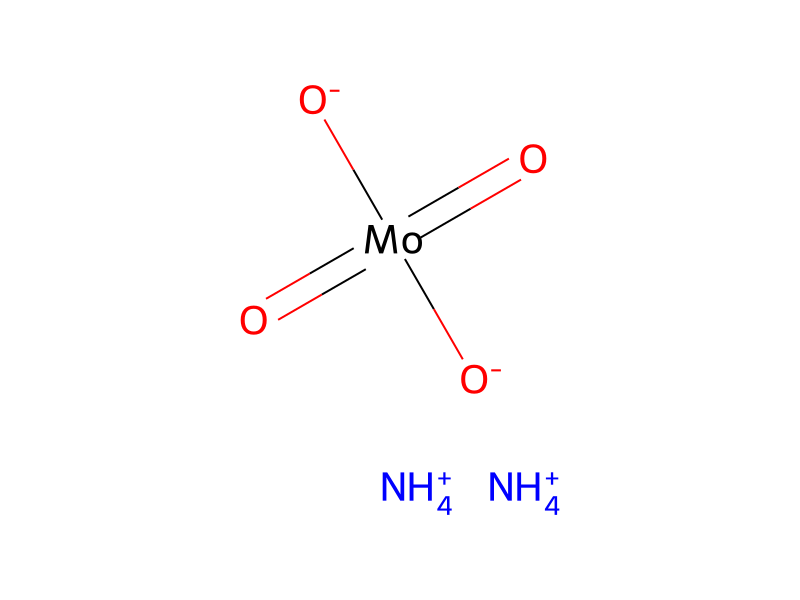
Product 1

Reagents, catalysts & solvents 1

Procedure
4H2O (AHM) was dissolved in 15 g of fresh deionized water. 25 g of the activated carbon was impregnated with this solution to incipient wetness. It was left at room temperature with occasional stirring for 2 hours. It was then heated slowly at 0.3° C./min to 115° C. in a temperature programmable forced air circulation oven, was left at that temperature for 24 hours, and then cooled slowly to room temperature in about 3 hours time. The resulting material is referred to as catalyst C1. The Mo in catalyst C1 exists probably as partially decomposed ammonium molybdate. If all the AHM would have decomposed to Mo trioxide, it would contain 16.2% by weight molybdenum trioxide, the balance being carbon support.
Workup
- waitIt was left at room temperature
- temperatureIt was then heated slowly at 0.3° C./min to 115° C. in a temperature programmable
- waitwas left at that temperature for 24 hours
Sources & evidence
- ORD record
- ord-351e05a9223f4161b4b74c03f5898157
- Source dataset
- uspto-grants-1995_02
- Patent number
- US05389241
Linked notes
Loading…