Reaction equation

[NH2:1][C:2]1([CH2:8]O)[CH2:7][CH2:6][CH2:5][CH2:4][CH2:3]1.O=S(Cl)Cl.[CH3:14][C:15]1[CH:20]=[C:19]([N+:21]([O-:23])=[O:22])[CH:18]=[CH:17][C:16]=1[N:24]=[C:25]=[S:26]>O1CCOCC1>[CH3:14][C:15]1[CH:20]=[C:19]([N+:21]([O-:23])=[O:22])[CH:18]=[CH:17][C:16]=1[N:24]=[C:25]1[S:26][CH2:8][C:2]2([CH2:7][CH2:6][CH2:5][CH2:4][CH2:3]2)[NH:1]1Participants
5
Reactant 3

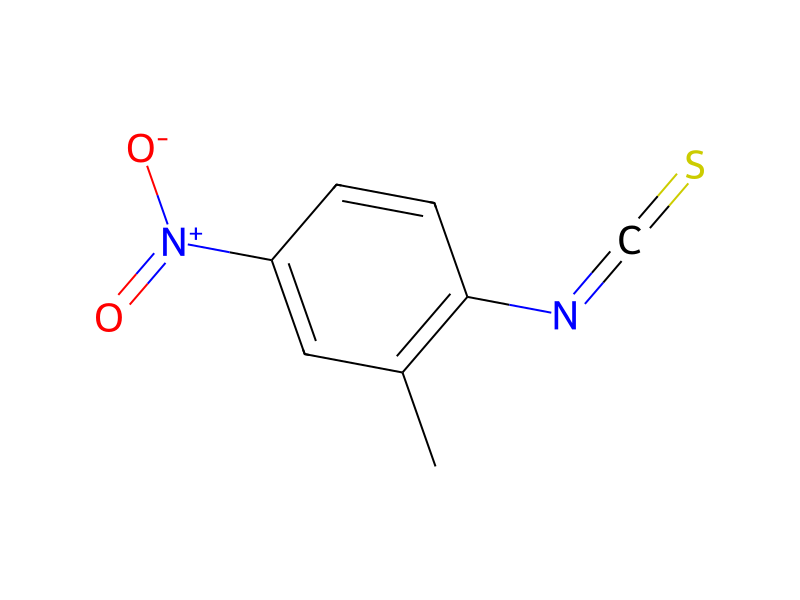

Product 1

Reagents, catalysts & solvents 1

Procedure
1-Amino-1-(hydroxymethyl)cyclohexane (Method B1a) was dissolved in p-dioxane (80 mL) then treated with SOCl2 followed by 2-methyl-4-nitrophenyl isothiocyanate in a manner analogous to Method C2a to give 2-(2-methyl-4-nitrophenylimino)-3-thia-1-azaspiro[4.5]decane (20%), which was reacted with isobutyl bromide in a manner analogous to Method D2a to yield 1-isobutyl-2-(2-methyl-4-nitrophenylimino)-3-thia-1-azaspiro[4.5]decane (0.026 g, 2%): TLC (20% EtOAc/hex) Rf0.69.
Sources & evidence
- ORD record
- ord-6de06910f7ed412493207b0bc47ac210
- Source dataset
- uspto-grants-2002_03
- Patent number
- US06353006B1
Linked notes
Loading…