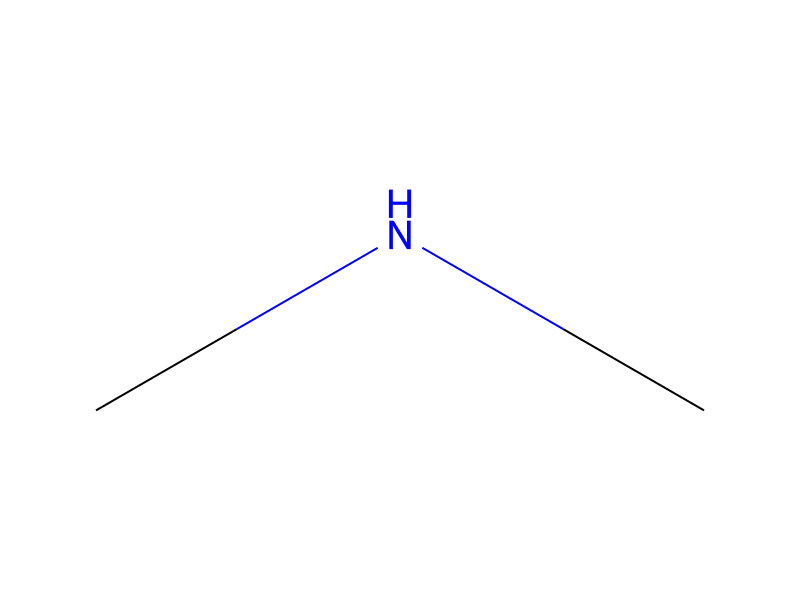
[CH3:1][NH:2][CH3:3].C(=O)([O-])[O-].[Na+].[Na+].[Br:10][CH2:11][CH2:12][C:13]([C:23]1[CH:28]=[CH:27][CH:26]=[CH:25][CH:24]=1)([C:17]1[CH:22]=[CH:21][CH:20]=[CH:19][CH:18]=1)[C:14](Cl)=[O:15]>O.C1(C)C=CC=CC=1>[Br-:10].[CH3:1][N+:2]([CH3:3])=[C:14]1[C:13]([C:23]2[CH:28]=[CH:27][CH:26]=[CH:25][CH:24]=2)([C:17]2[CH:22]=[CH:21][CH:20]=[CH:19][CH:18]=2)[CH2:12][CH2:11][O:15]1In 100 mL of water were suspended 8 g (90 mmol) of a 50% aqueous solution of dimethylamine and 18 g (170 mmol) of sodium carbonate, followed by cooling to 0 to 5° C. A solution obtained by dissolving 23 g (68 mmol) of the 4-bromo-2,2-diphenylbutyric chloride mentioned above in 100 mL of toluene was then added dropwise. After stirring for 2 hours, the water layer taken out from the reaction mixture was washed with toluene. The resulting water layer was extracted with chloroform. The extract was washed with water and then dried. The residue obtained by concentrating the solvent under reduced pressure was crystallized from methyl isobutyl ketone, whereby 11 g (yield: 46.8%) of dimethyl(tetrahydro-3,3-diphenyl-2-furylidene)ammonium bromide was obtained.