Reaction equation
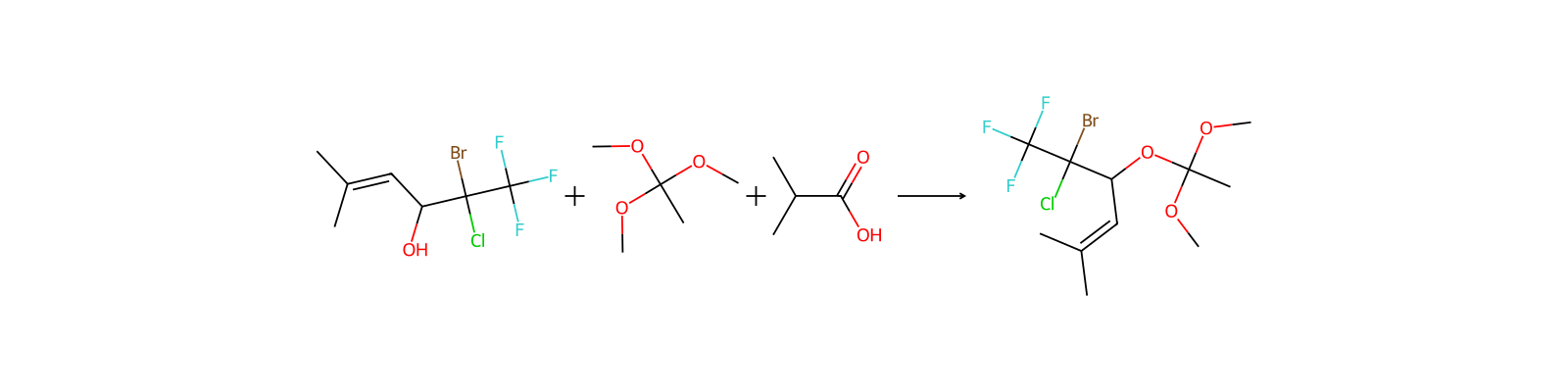
[Br:1][C:2]([Cl:13])([C:9]([F:12])([F:11])[F:10])[CH:3]([OH:8])[CH:4]=[C:5]([CH3:7])[CH3:6].[C:14](OC)([O:18][CH3:19])([O:16][CH3:17])[CH3:15].C(O)(=O)C(C)C>>[Br:1][C:2]([Cl:13])([C:9]([F:10])([F:11])[F:12])[CH:3]([O:8][C:14]([O:18][CH3:19])([O:16][CH3:17])[CH3:15])[CH:4]=[C:5]([CH3:7])[CH3:6]Participants
4


Conditions
- Temperature
- 111 °C
Procedure
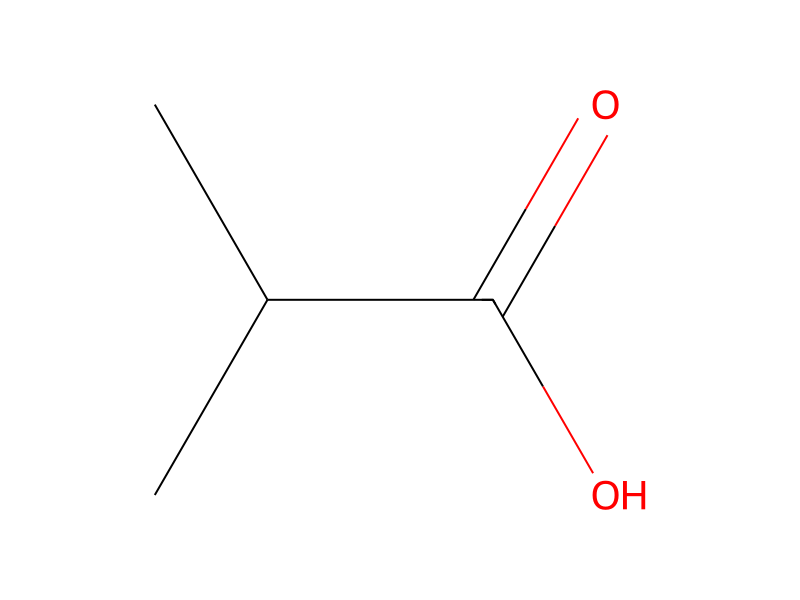
5-Bromo-5-chloro-4-hydroxy-2-methyl-6,6,6-trifluorohex-2-ene (10.0 g), trimethyl orthoacetate (48.0 g) and isobutyric acid (0.29 g) were charged to a round-bottomed flask fitted with: nitrogen inlet/bubbler, thermometer and Dean and Stark received packed with 5A molecular seives. The mixture was heated with agitation to reflux and distillates collected until reaction mass temperature increased to 111° C. (ca. 1 hr). Once the reaction was complete, the residual trimethyl orthoacetate was removed by distillation under vacuum (ca. 50° C. @ 50 mmHg) to give the product, 5-bromo-5-chloro-4-(1,1-dimethoxyethoxy)-2-methyl-6,6,6-trifluorohex-2-ene, as an orange oil (10.9 g, 85% yield).
Workup
- customfitted with: nitrogen inlet/bubbler
- temperatureThe mixture was heated with agitation
- temperatureto reflux
- distillationdistillates collected until reaction mass temperature
- customthe residual trimethyl orthoacetate was removed by distillation under vacuum (ca. 50° C. @ 50 mmHg)
Sources & evidence
- ORD record
- ord-5232ccbb96cf4bf19ed922c74f60ad33
- Source dataset
- uspto-grants-1998_03
- Patent number
- US05731475
Linked notes
Loading…