Reaction equation
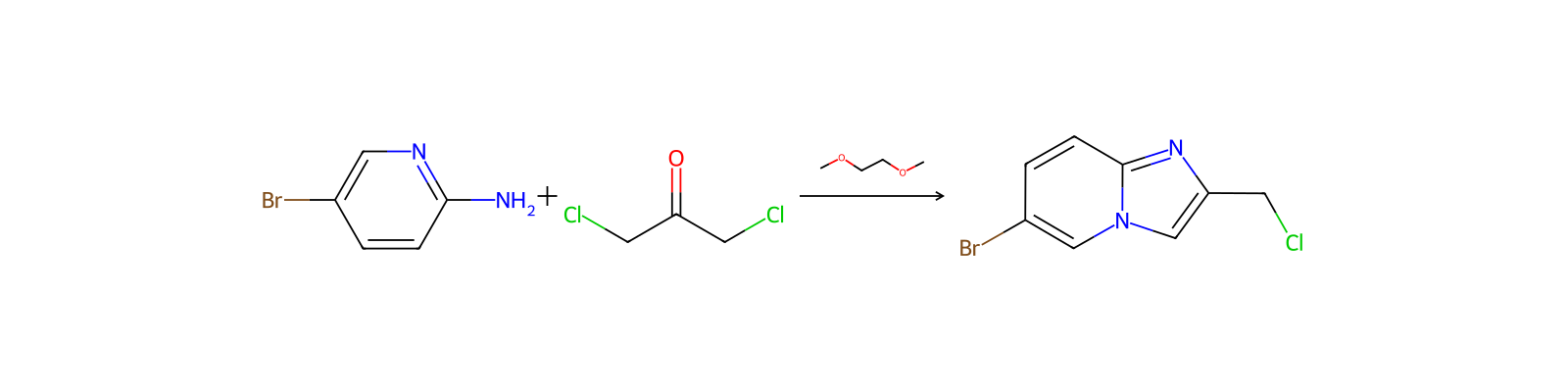
[NH2:1][C:2]1[CH:7]=[CH:6][C:5]([Br:8])=[CH:4][N:3]=1.[Cl:9][CH2:10][C:11]([CH2:13]Cl)=O>COCCOC>[Br:8][C:5]1[CH:6]=[CH:7][C:2]2[N:3]([CH:13]=[C:11]([CH2:10][Cl:9])[N:1]=2)[CH:4]=1Participants
4
Reactant 2

Product 1

Reagents, catalysts & solvents 1

Procedure
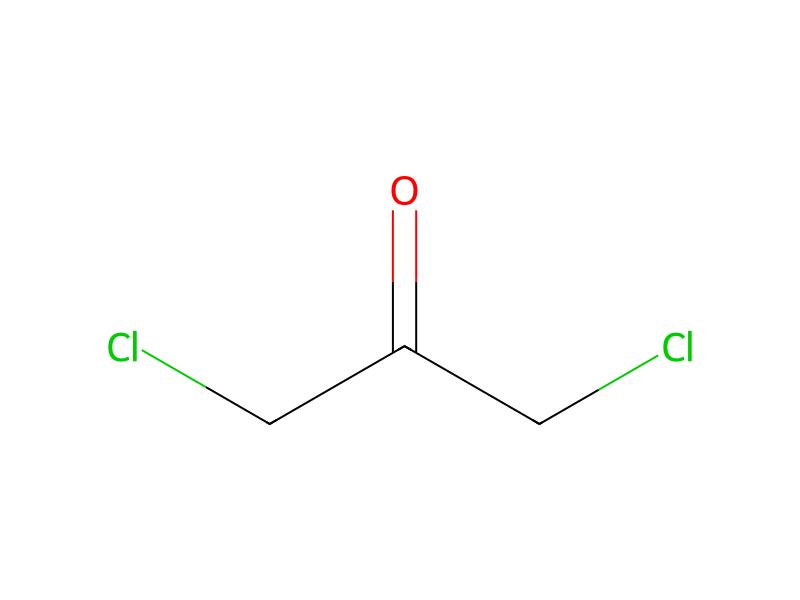
A mixture of 2-amino-5-bromopyridine (10.0 g). 1,3-dichloroacetone (7.71 g) and 1,2-dimethoxyethane (40 ml) was stirred at room temperature for 4 hours. The precipitated crystals were collected by filtration, to which ethanol (100 ml) was added and heated under reflux. The reaction mixture was concentrated, diluted with saturated aqueous sodium bicarbonate, and extracted with ethyl acetate. The ethyl acetate layer was washed with water, dried (MgSO4), and concentrated under reduced pressure to give crystals of 6-bromo-2-chloromethylimidazo-[1,2-a]pyridine (1.48 g, 10%). Recrystallization from ethyl acetate-hexane gave colorless needles, mp 129-130° C.
Workup
- filtrationThe precipitated crystals were collected by filtration, to which ethanol (100 ml)
- additionwas added
- temperatureheated
- temperatureunder reflux
- concentrationThe reaction mixture was concentrated
- additiondiluted with saturated aqueous sodium bicarbonate
- extractionextracted with ethyl acetate
- washThe ethyl acetate layer was washed with water
- dry with materialdried (MgSO4)
- concentrationconcentrated under reduced pressure
Sources & evidence
- ORD record
- ord-fb4cf1708f384c6ea2674a91b781cbde
- Source dataset
- uspto-grants-2001_04
- Patent number
- US06211215B1
Linked notes
Loading…