Reaction equation

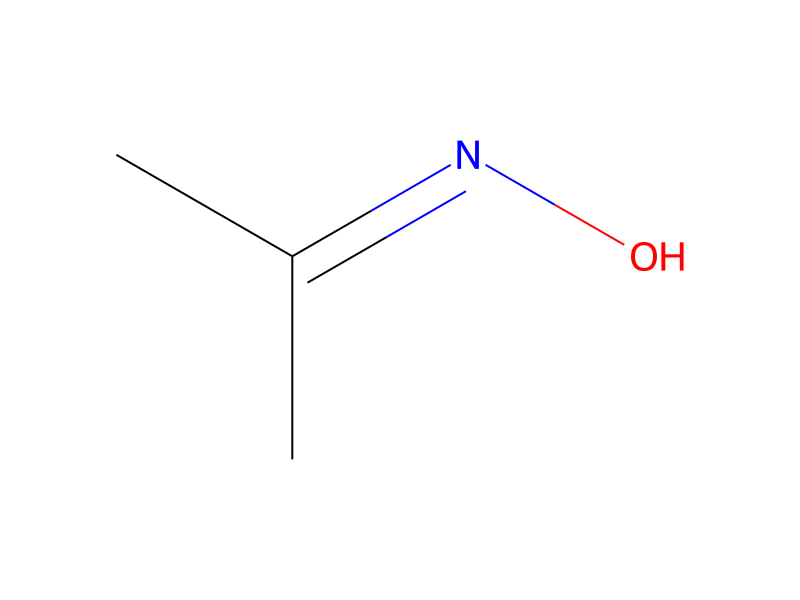
CO[C:3]([C:5]12[CH2:12][CH2:11][CH2:10][N:9]1[CH2:8][CH2:7][CH2:6]2)=[O:4].[CH3:13][C:14](=[N:16]O)[CH3:15].C([Li])CCC>>[CH3:15][C:14]1[CH:13]=[C:3]([C:5]23[CH2:12][CH2:11][CH2:10][N:9]2[CH2:8][CH2:7][CH2:6]3)[O:4][N:16]=1Participants
4



Procedure
8-(Methoxycarbonyl)-hexahydro-1H-pyrrolizine (from step 1d, 1.56 g, 9.22 mmol), acetone oxime (1.45 g, 19.8 mmol) and n-butyllithium (2.5M in hexane, 16 mL, 39.6 mmol) were combined in a similar fashion as that outlined by J. Saunders et at., J. Med. Chem. 1990, 33: 1128. The crude material was chromatographed (silica gel; CHCl3 /MeOH, 99:1) to afford a yellow oil (199 mg, 11%). MS (CI/NH3) m/e: 193 (M+H)+. 1H NMR (CDCl3, 300 MHz) δ1.76-1.92 (m, 6H), 2.14-2.29 (m, 2H), 2.24 (s, 3H), 2.61-2.69 (m, 2H), 3.13-3.32 (m, 2H), 5.95 (s, 1H).
Workup
- customThe crude material was chromatographed (silica gel; CHCl3 /MeOH, 99:1)
Sources & evidence
- ORD record
- ord-0a13f316069a49f782b0a73c4007b4d6
- Source dataset
- uspto-grants-1998_03
- Patent number
- US05733912
Linked notes
Loading…