HomeMCPWorkbenchSkills
HomeWorkbenchNotificationsMe
llms.txt · MCP GuidePrivacy Policy · Terms of Service · Supportv1.8.0
  1. Home
  2. /Reaction

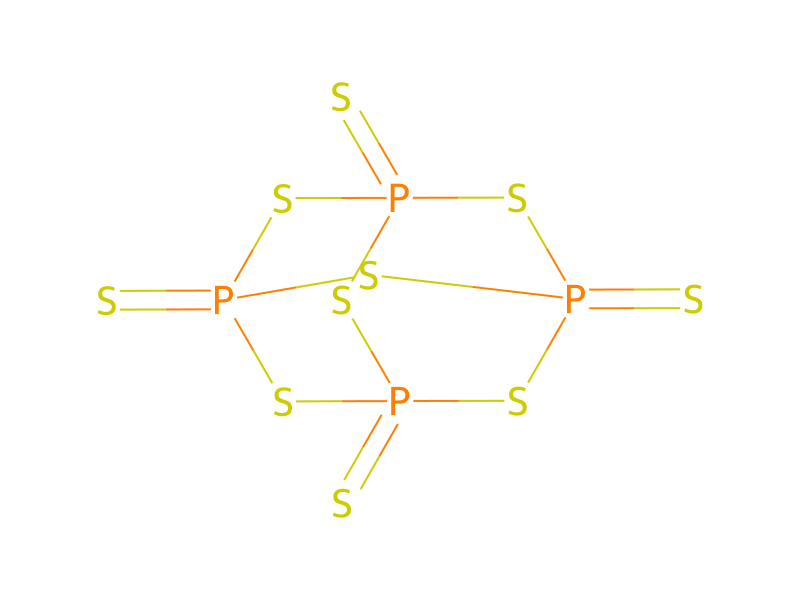
Phosphorus sulfide (P2S5) → 3-(1,3,4-Thiadiazol-2-yl)pyridine

HRID 329609
Notes
Print preview

Reaction equation

HRID 329609 reaction equation
[CH:1]([NH:3][NH:4][C:5](=O)[C:6]1[CH:11]=[CH:10][CH:9]=[N:8][CH:7]=1)=O.P12(SP3(SP(SP(S3)(S1)=S)(=S)S2)=S)=[S:14]>N1C=CC=CC=1>[N:8]1[CH:9]=[CH:10][CH:11]=[C:6]([C:5]2[S:14][CH:1]=[N:3][N:4]=2)[CH:7]=1
ParticipantsConditionsProcedureWorkupSources & evidenceReaction notes

Participants

4

Reactant 2

HCID 14817Phosphorus sulfide (P2S5)HCID 20705884N'-formylnicotinic acid hydrazide

Product 1

HCID 198712843-(1,3,4-Thiadiazol-2-yl)pyridine

Reagents, catalysts & solvents 1

HCID 1049PyridineSolvent

Conditions

Temperature
110 °C

Procedure

To a solution of 22 g of N'-formylnicotinic acid hydrazide in 150 ml of pyridine are added, in portions, 28 g of phosphorus pentasulfide. During this addition the temperature rises to 65° C. After 5 minutes the mixture is heated to 110° C. and stirred for 2 hours at this temperature. The pyridine is then distilled off in a water jet vacuum. The residue is taken up in chloroform and the solution is extracted with a 5% sodium hydroxide solution and water. The organic phase is dried and the solvent is removed by evaporation, affording 2-(3-pyridyl)-1,3,4-thiadiazole as a pale yellow powder with a melting point of 78°-79° C.

Workup

  1. additionDuring this addition the temperature
  2. customrises to 65° C
  3. distillationThe pyridine is then distilled off in a water jet vacuum
  4. extractionthe solution is extracted with a 5% sodium hydroxide solution and water
  5. customThe organic phase is dried
  6. customthe solvent is removed by evaporation

Sources & evidence

ORD record
ord-6c2ef5ef940e475d947c2b1a5a122d4a
Source dataset
uspto-grants-1990_01
DOI
10.6084/m9.figshare.5104873.v1
Patent number
US04892880

Reaction notes

Loading…

On this pageParticipantsConditionsProcedureWorkupSources & evidenceReaction notes