Reaction equation

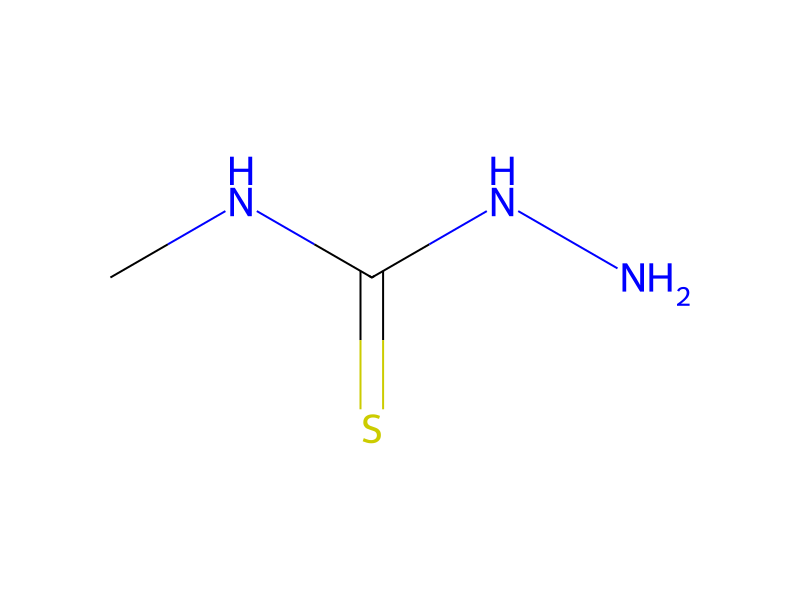
[CH2:1]([N:3]([C:8]1[CH:13]=[CH:12][CH:11]=[C:10]([C:14]2[N:15]=[N:16][C:17](Cl)=[CH:18][CH:19]=2)[CH:9]=1)[C:4](=[O:7])[CH2:5][CH3:6])[CH3:2].[CH3:21][NH:22][C:23](=S)[NH:24][NH2:25]>C(O)C>[CH2:1]([N:3]([C:8]1[CH:13]=[CH:12][CH:11]=[C:10]([C:14]2[CH:19]=[CH:18][C:17]3[N:16]([C:23]([NH:22][CH3:21])=[N:24][N:25]=3)[N:15]=2)[CH:9]=1)[C:4](=[O:7])[CH2:5][CH3:6])[CH3:2]Participants
4



Procedure
A solution of 5.0 g N-ethyl-N[3-(6-chloro-3-pyridazinyl)phenyl]propanamide and 3.8 g of 4-methylthiosemicarbazide in 200 ml ethanol was refluxed for 18 hours. The mixture was then treated and the product chromatographed as described for Example 70. Recrystallization of the product from acetone-hexane afforded 0.5 g orange crystals, mp 172°°-173° C.
Workup
- additionThe mixture was then treated
- customthe product chromatographed
- customRecrystallization of the product from acetone-hexane
Sources & evidence
- ORD record
- ord-cab3b685061b4ca1a5c4e32016c5df61
- Source dataset
- uspto-grants-1990_01
- Patent number
- US04892873
Linked notes
Loading…