HomeMCPWorkbenchSkills
HomeWorkbenchNotificationsMe
llms.txt · MCP GuidePrivacy Policy · Terms of Service · Supportv1.8.3
  1. Home
  2. /Reaction

1,4-Dioxane → tert-Butyl 6-nitro-3',6'-dihydro-[3,4'-bipyridine]-1'(2'H)-carboxylate

HRID 337273
Print

Reaction equation

HRID 337273 reaction equation
Br[C:2]1[CH:3]=[CH:4][C:5]([N+:8]([O-:10])=[O:9])=[N:6][CH:7]=1.CC1(C)C(C)(C)OB([C:19]2[CH2:24][CH2:23][N:22]([C:25]([O:27][C:28]([CH3:31])([CH3:30])[CH3:29])=[O:26])[CH2:21][CH:20]=2)O1.O1CCOCC1>Cl[Pd](Cl)([P](C1C=CC=CC=1)(C1C=CC=CC=1)C1C=CC=CC=1)[P](C1C=CC=CC=1)(C1C=CC=CC=1)C1C=CC=CC=1.O>[C:28]([O:27][C:25]([N:22]1[CH2:21][CH:20]=[C:19]([C:2]2[CH:7]=[N:6][C:5]([N+:8]([O-:10])=[O:9])=[CH:4][CH:3]=2)[CH2:24][CH2:23]1)=[O:26])([CH3:31])([CH3:29])[CH3:30]
ParticipantsConditionsProcedureWorkupSources & evidenceReaction notes

Participants

6

Reactant 3

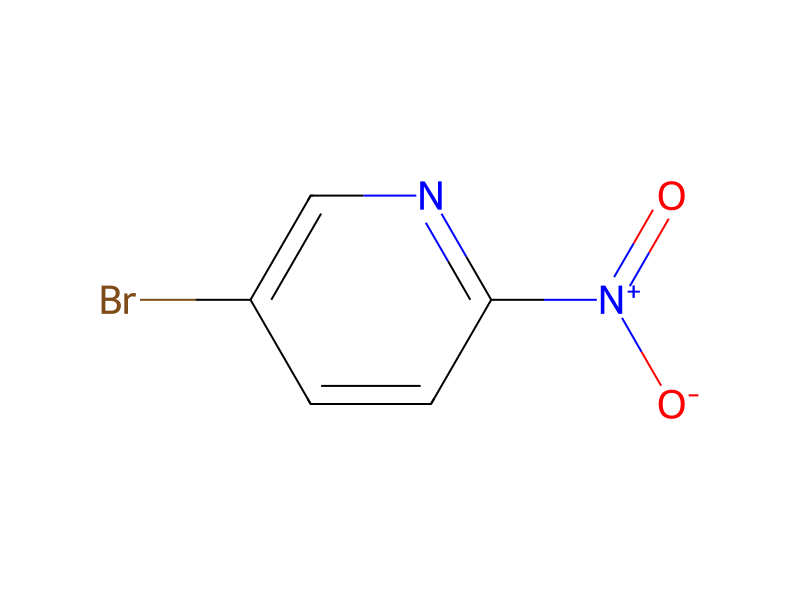
HCID 312751,4-DioxaneHCID 8176205-Bromo-2-nitropyridineHCID 4642098Tert-butyl 4-(4,4,5,5-tetramethyl-1,3,2-dioxaborolan-2-yl)-1,2,3,6-tetrahydropyridine-1-carboxylate

Product 1

HCID 49840377tert-Butyl 6-nitro-3',6'-dihydro-[3,4'-bipyridine]-1'(2'H)-carboxylateYield 48.7%

Reagents, catalysts & solvents 2

HCID 178418476
HCID 178418476, compound
Catalyst
HCID 962WaterSolvent2×

Conditions

Temperature
80 °C

Procedure

In a 500 mL round-bottomed flask, 5-bromo-2-nitropyridine (6.56 g, 32.3 mmol, Eq: 1) and tert-butyl 4-(4,4,5,5-tetramethyl-1,3,2-dioxaborolan-2-yl)-5,6-dihydropyridine-1(2H)-carboxylate (10 g, 32.3 mmol, Eq: 1.00) were combined with dioxane (160 ml) to give a light yellow solution. Cs2 CO3 (21.1 g, 64.7 mmol, Eq: 2) and water (6 ml) were added. The reaction mixture was degassed with argon before bis(triphenylphosphine)palladium(II) dichloride (2.27 g, 3.23 mmol, Eq: 0.1) was added. The reaction mixture was heated to 80° C. and stirred for 15 h. The reaction mixture was poured into 500 mL H2O and extracted with EtOAc (3×200 mL). The combined extracts were washed with brine, dried over MgSO4, filtered and concentrated in vacuo. The crude material was purified by flash chromatography (silica gel, 220 g, 10% to 40% EtOAc in hexanes) to afford a pink solid. The resulting solid was triturated with ether to afford the desired product as a solid (4.8 g). The filtrate from the trituration and mixed fractions from the first chromatography were combined and purified by flash chromatography (silica gel, 220 g, 20% to 40% EtOAc in hexanes) affording additional product (2.2 g). 1H NMR (400 MHz, CHLOROFORM-d) δ ppm 1.52 (s, 9 H) 2.59 (d, J=1.52 Hz, 2 H) 3.72 (t, J=5.56 Hz, 2 H) 4.19 (d, J=3.03 Hz, 2 H) 6.35 (br. s., 1 H) 7.97 (dd, J=8.46, 2.40 Hz, 1 H) 8.27 (d, J=8.34 Hz, 1 H) 8.67 (d, J=2.27 Hz, 1 H).


Workup

  1. customto give a light yellow solution
  2. additionwas added
  3. extractionextracted with EtOAc (3×200 mL)
  4. washThe combined extracts were washed with brine
  5. dry with materialdried over MgSO4
  6. filtrationfiltered
  7. concentrationconcentrated in vacuo
  8. customThe crude material was purified by flash chromatography (silica gel, 220 g, 10% to 40% EtOAc in hexanes)
  9. customto afford a pink solid
  10. customThe resulting solid was triturated with ether

Sources & evidence

ORD record
ord-dd661156a4384d39817fb547bfcab1ed
Source dataset
uspto-grants-2014_11
DOI
10.6084/m9.figshare.5104873.v1
Patent number
US08889682B2

Reaction notes

On this pageParticipantsConditionsProcedureWorkupSources & evidenceReaction notes