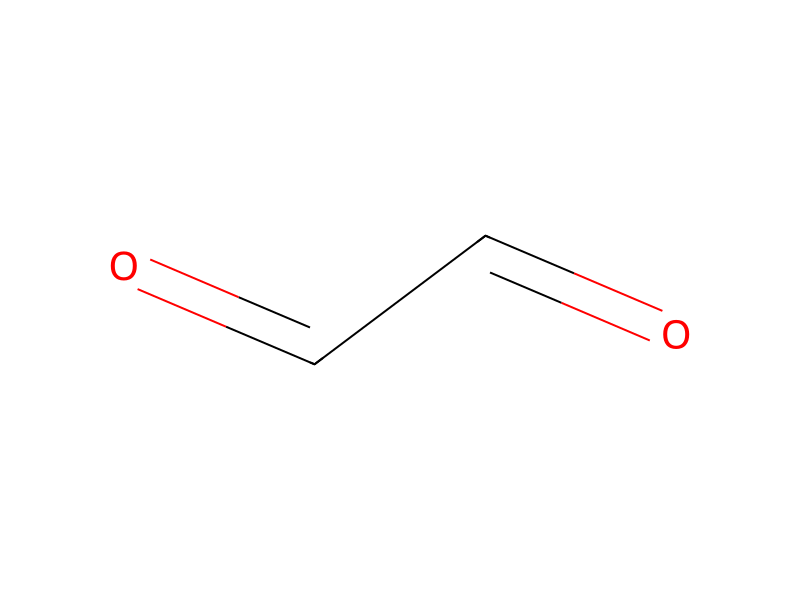
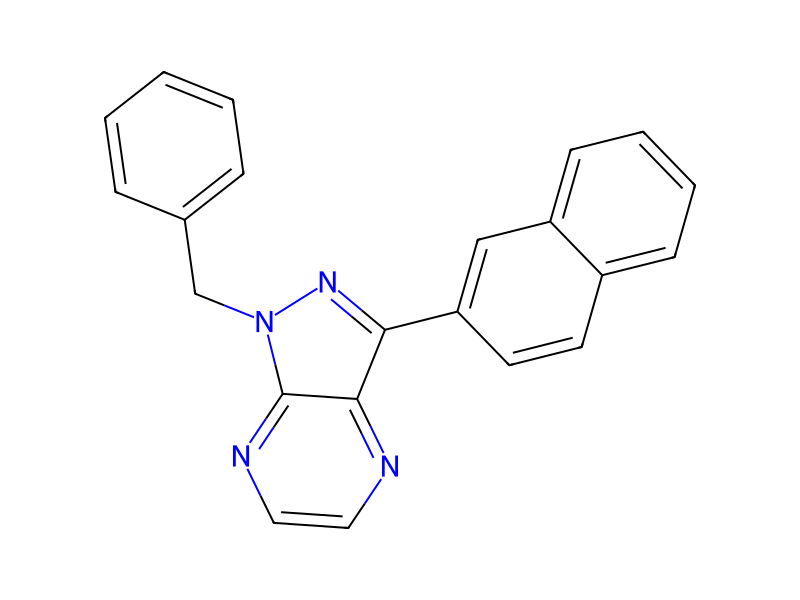
Glyoxal → 1-Benzyl-3-(naphthalen-2-yl)-1H-pyrazolo[3,4-b]pyrazine
Reaction equation
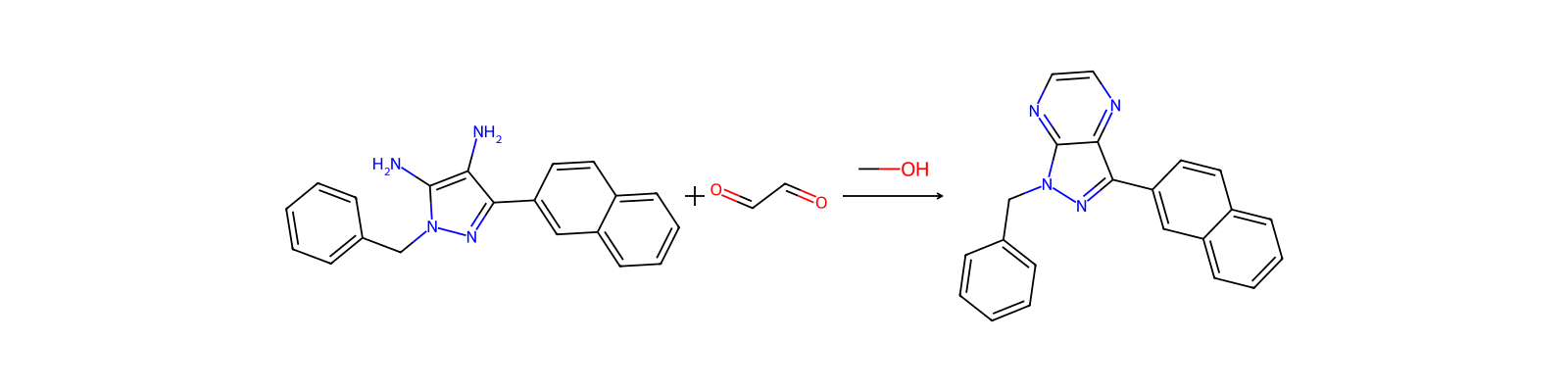
[CH2:1]([N:8]1[C:12]([NH2:13])=[C:11]([NH2:14])[C:10]([C:15]2[CH:24]=[CH:23][C:22]3[C:17](=[CH:18][CH:19]=[CH:20][CH:21]=3)[CH:16]=2)=[N:9]1)[C:2]1[CH:7]=[CH:6][CH:5]=[CH:4][CH:3]=1.[CH:25]([CH:27]=O)=O>CO>[CH2:1]([N:8]1[C:12]2=[N:13][CH:25]=[CH:27][N:14]=[C:11]2[C:10]([C:15]2[CH:24]=[CH:23][C:22]3[C:17](=[CH:18][CH:19]=[CH:20][CH:21]=3)[CH:16]=2)=[N:9]1)[C:2]1[CH:3]=[CH:4][CH:5]=[CH:6][CH:7]=1Participants
4
Reactant 2
Product 1
Reagents, catalysts & solvents 1

Procedure
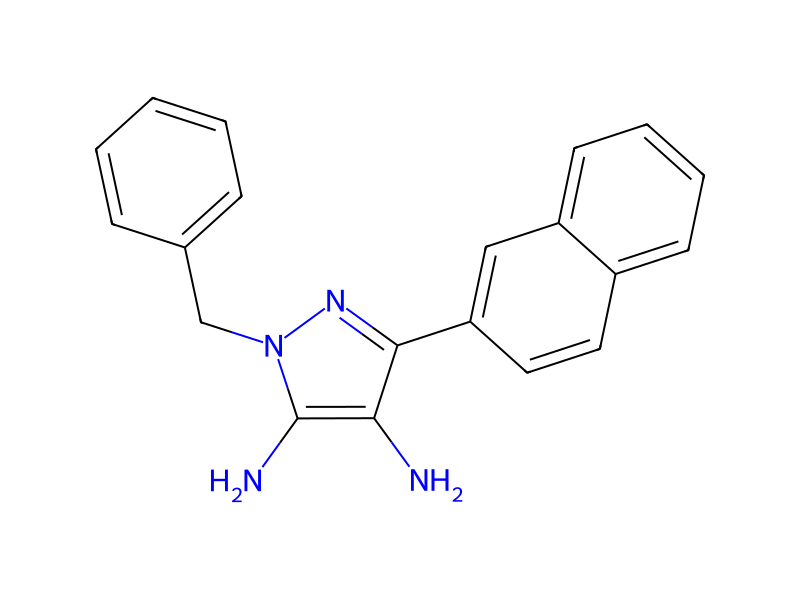
190 mg of 2-benzyl-5-(naphthalen-2-yl)-2H-pyrazole-3,4-diamine was dissolved in 10 mL of methanol, added with 100 μl of 40% glyoxal aqueous solution, and stirred at room temperature for 5 hours. The reaction solution was partitioned between water and ethyl acetate, and the organic layer was extracted and washed with water. The organic layer was dried over magnesium sulfate, the solvent was evaporated, and the residue was purified by silica gel column chromatography (ethyl acetate:hexane=1:5), to afford 180 mg of the title compound as a pale yellow powder.