Reaction equation

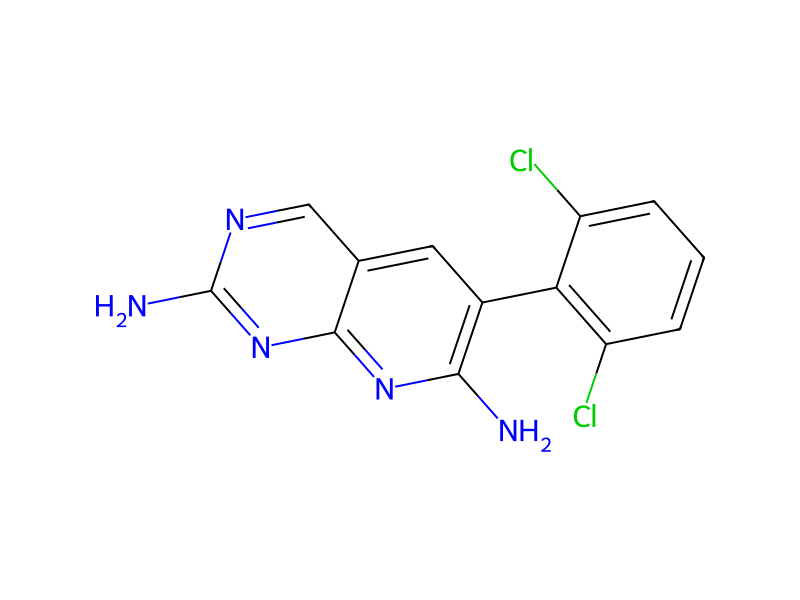
[NH2:1][C:2]1[N:3]=[CH:4][C:5]2[CH:11]=[C:10]([C:12]3[C:17]([Cl:18])=[CH:16][CH:15]=[CH:14][C:13]=3[Cl:19])[C:9]([NH2:20])=[N:8][C:6]=2[N:7]=1.[CH2:21]([N:23]=[C:24]=[O:25])[CH3:22]>>[NH2:1][C:2]1[N:3]=[CH:4][C:5]2[CH:11]=[C:10]([C:12]3[C:17]([Cl:18])=[CH:16][CH:15]=[CH:14][C:13]=3[Cl:19])[C:9]([NH:20][C:24]([NH:23][CH2:21][CH3:22])=[O:25])=[N:8][C:6]=2[N:7]=1Participants
3


Procedure
2,7-Diamino-6-(2,6-dichlorophenyl)-pyrido[2,3-d]pyrimidine was reacted with ethyl isocyanate according to the general procedure of Example 2. The crude product was purified by radial chromatography eluting with a gradient of 70% ethyl acetate/30% chloroform to 100% chloroform to give the title compound, 1-[2-amino-6-(2,6-dichlorophenyl)-pyrido[2,3-d]pyrimidin-7-yl]-3-ethylurea, mp 185°-187° C.
Workup
- customThe crude product was purified by radial chromatography
- washeluting with a gradient of 70% ethyl acetate/30% chloroform to 100% chloroform
Sources & evidence
- ORD record
- ord-364ed88f220643f79ef9dda9075acba3
- Source dataset
- uspto-grants-1998_03
- Patent number
- US05733913
Linked notes
Loading…