HomeMCPWorkbenchSkills
HomeWorkbenchNotificationsMe
llms.txt · MCP GuidePrivacy Policy · Terms of Service · Supportv1.8.0
  1. Home
  2. /Reaction

2,4,6-Trimethylpyridine → 1-(4-Bromo-2-nitrophenyl)-1,2,3,4-tetrahydroquinoline

HRID 34390
Notes
Print preview

Reaction equation

HRID 34390 reaction equation
Br[C:2]1[CH:7]=[CH:6][C:5]([Br:8])=[CH:4][C:3]=1[N+:9]([O-:11])=[O:10].[NH:12]1[C:21]2[C:16](=[CH:17][CH:18]=[CH:19][CH:20]=2)[CH2:15][CH2:14][CH2:13]1.N1C(C)=CC(C)=CC=1C>CC1C=CC=C(C)C=1C>[Br:8][C:5]1[CH:6]=[CH:7][C:2]([N:12]2[C:21]3[C:16](=[CH:17][CH:18]=[CH:19][CH:20]=3)[CH2:15][CH2:14][CH2:13]2)=[C:3]([N+:9]([O-:11])=[O:10])[CH:4]=1
ParticipantsProcedureWorkupSources & evidenceReaction notes

Participants

5

Reactant 3

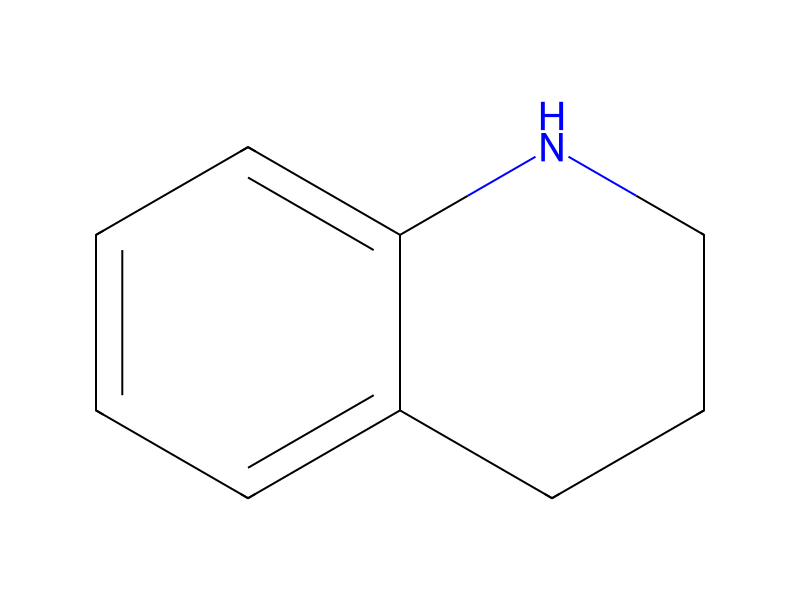
HCID 79532,4,6-TrimethylpyridineHCID 694601,2,3,4-TetrahydroquinolineHCID 770041,4-Dibromo-2-nitrobenzene

Product 1

HCID 138129271-(4-Bromo-2-nitrophenyl)-1,2,3,4-tetrahydroquinolineYield 18%

Reagents, catalysts & solvents 1

HCID 106861,2,3-TrimethylbenzeneSolvent

Procedure

A stirred mixture, under nitrogen, of 2,5-dibromonitrobenzene (140.5 g, 0.50 mole), 1,2,3,4-tetrahydroquinoline (133.2 g, 1.00 mole) and symmetrical collidine (121.2 g 1.00 mole) in 1,2,3-trimethylbenzene (500 ml) as solvents was heated at 160°-165° C. for 7 days. The mixture was cooled to room temperature, filtered, and the filtrate was concentrated in vacuo (100° C.). The residue was taken up in dichloromethane (1.5 1) and the solution was extracted three times with dilute hydrochloric acid, once with dilute sodium hydroxide solution, three times with water, dried over anhydrous sodium sulfate and concentrated. This residue was dissolved in 1:1 hexane:toluene (250 ml) and adsorbed on a chromatography column containing 3 kg of silica el. Elution with 1:1 hexane:toluene gave 30 g (18%) of product, as an oil. A portion of the oil was Kugelrohr distilled at an oven-temperature of 163°-165° C. (0.1 mm Hg) to provide the analytical sample.

Workup

  1. filtrationfiltered
  2. concentrationthe filtrate was concentrated in vacuo (100° C.)
  3. extractionthe solution was extracted three times with dilute hydrochloric acid
  4. dry with materialonce with dilute sodium hydroxide solution, three times with water, dried over anhydrous sodium sulfate
  5. concentrationconcentrated
  6. dissolutionThis residue was dissolved in 1:1 hexane
  7. additioncontaining 3 kg of silica el
  8. washElution with 1:1 hexane

Sources & evidence

ORD record
ord-1e47a9ff0f4d46808118082466f52e38
Source dataset
uspto-grants-1988_08
DOI
10.6084/m9.figshare.5104873.v1
Patent number
US04761412

Reaction notes

Loading…

On this pageParticipantsProcedureWorkupSources & evidenceReaction notes