HomeMCPWorkbenchSkills
HomeWorkbenchNotificationsMe
llms.txt · MCP GuidePrivacy Policy · Terms of Service · Supportv1.8.3
  1. Home
  2. /Reaction

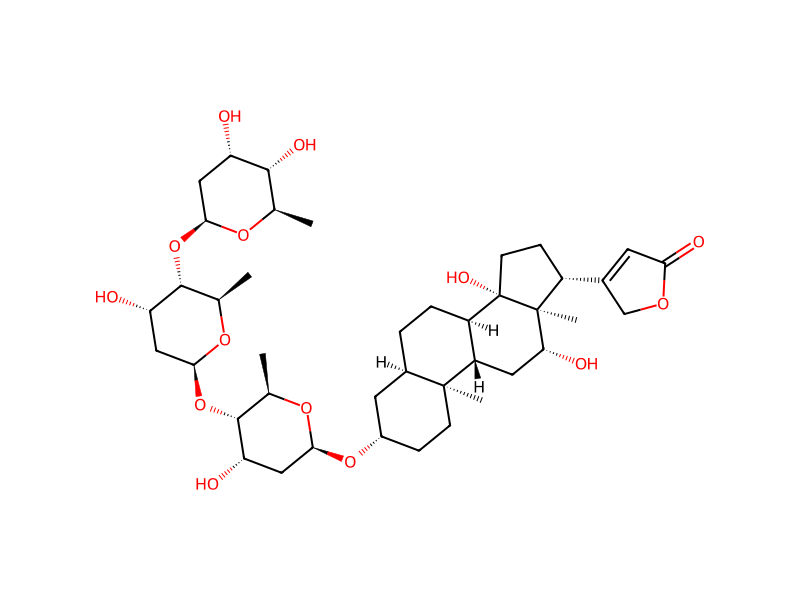
Methanol → Digoxin dialdehyde

HRID 344785
Print

Reaction equation

HRID 344785 reaction equation
[CH3:1][C@H:2]1[O:7][C@@H:6]([O:8][C@H:9]2[C@@H:14]([OH:15])[CH2:13][C@H:12]([O:16][C@H:17]3[C@@H:22]([OH:23])[CH2:21][C@H:20]([O:24][C@@H:25]4[CH2:30][C@H:29]5[CH2:31][CH2:32][C@H:33]6[C@@:38]7([OH:48])[CH2:39][CH2:40][C@H:41]([C:42]8[CH2:47][O:46][C:44](=[O:45])[CH:43]=8)[C@@:37]7([CH3:49])[C@H:36]([OH:50])[CH2:35][C@@H:34]6[C@@:28]5([CH3:51])[CH2:27][CH2:26]4)[O:19][C@@H:18]3[CH3:52])[O:11][C@@H:10]2[CH3:53])[CH2:5][C@H:4]([OH:54])[C@@H:3]1[OH:55].I([O-])(=O)(=O)=O.[Na+].I([O-])(=O)(=O)=O.CO>C(Cl)(Cl)Cl.CO>[CH3:52][C@H:18]1[O:19][C@@H:20]([O:24][C@@H:25]2[CH2:30][C@H:29]3[CH2:31][CH2:32][C@H:33]4[C@@:38]5([OH:48])[CH2:39][CH2:40][C@H:41]([C:42]6[CH2:47][O:46][C:44](=[O:45])[CH:43]=6)[C@@:37]5([CH3:49])[C@H:36]([OH:50])[CH2:35][C@@H:34]4[C@@:28]3([CH3:51])[CH2:27][CH2:26]2)[CH2:21][C@H:22]([OH:23])[C@@H:17]1[O:16][C@@H:12]1[O:11][C@H:10]([CH3:53])[C@@H:9]([O:8][CH:6]([O:7][CH:2]([CH:3]=[O:55])[CH3:1])[CH2:5][CH:4]=[O:54])[C@@H:14]([OH:15])[CH2:13]1
ParticipantsProcedureWorkupSources & evidenceReaction notes

Participants

6

Reactant 4

HCID 887MethanolHCID 167232PeriodateHCID 2724385Digoxin2×HCID 23667635Sodium periodate

Product 1

HCID 101931782Digoxin dialdehyde

Reagents, catalysts & solvents 1

HCID 21584188
Chloroform methanol
Solvent
2×

Procedure

Digoxin (0.4985 g, 0.64 mmole) was dissolved in 10 ml of chloroform/methanol (3/1.5) and placed into a 100 ml two-necked flask. Sodium periodate (0.3102 g, 1.4 mmoles) was dissolved in 4 ml distilled water and placed into a pressure equalized addition funnel. The periodate solution was slowly added to the flask while stirring and under nitrogen. A white precipitate was immediately formed and the reaction was complete within 15 minutes after addition of the periodate. Reaction progress was monitored by TLC (E. M. Merck, pre-coated TLC sheets, silica gel 60 F254 0.2 mm thickness) in chloroform/methanol 10/1 by volume [Rf 0.16=dialdehyde, one homogeneous spot; Rf 0.07=Digoxin. Both spots became dark brownish when sprayed the TLC plate with methanol/concentrated sulfuric acid (9/1 by volume) and placed in 100° C. oven). The reaction mixture was evaporated on a rotatory evaporator and brought up in 30 ml of chloroform and 3 ml of water. The cloudy solution was extracted and the aqueous layer washed three times with 10 ml chloroform. The organic phases were combined (60 ml) and dried over magnesium sulfate. The organic solvents were evaporated to dryness. A light yellow brownish oily material was left. This material was used immediately in the next reaction.

Workup

  1. customplaced into a 100 ml two-necked flask
  2. distillationdistilled water
  3. additionaddition funnel
  4. additionThe periodate solution was slowly added to the flask
  5. customA white precipitate was immediately formed
  6. customReaction progress
  7. customplaced in 100° C.
  8. customThe reaction mixture was evaporated on a rotatory evaporator
  9. extractionThe cloudy solution was extracted
  10. washthe aqueous layer washed three times with 10 ml chloroform
  11. dry with materialdried over magnesium sulfate
  12. customThe organic solvents were evaporated to dryness
  13. waitA light yellow brownish oily material was left
  14. customThis material was used immediately in the next reaction

Sources & evidence

ORD record
ord-0aaded1f79c647e1a9540c83c1cf08c0
Source dataset
uspto-grants-1991_10
DOI
10.6084/m9.figshare.5104873.v1
Patent number
US05053497

Reaction notes

On this pageParticipantsProcedureWorkupSources & evidenceReaction notes