Reaction equation
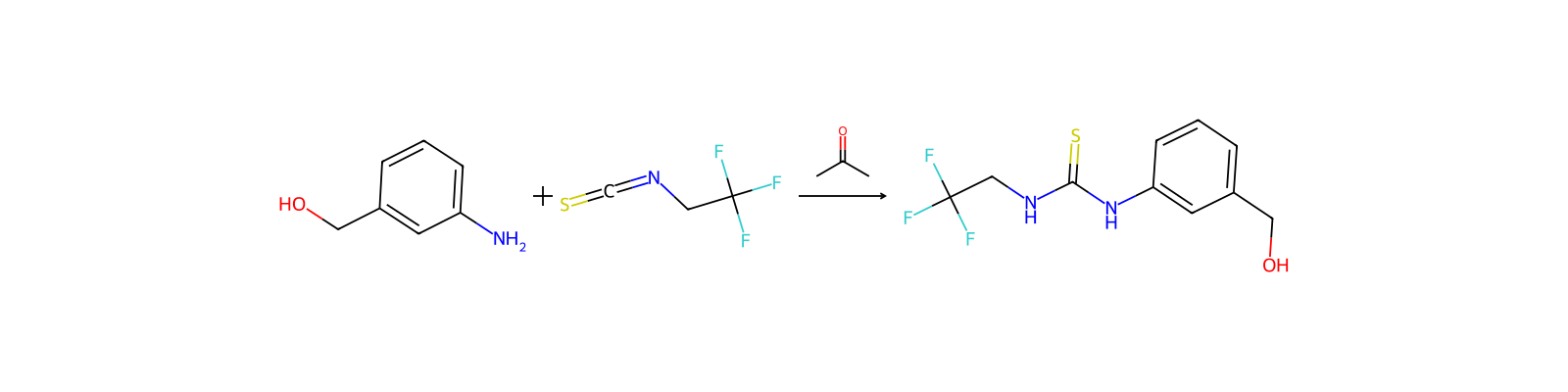
[NH2:1][C:2]1[CH:3]=[C:4]([CH:7]=[CH:8][CH:9]=1)[CH2:5][OH:6].[F:10][C:11]([F:17])([F:16])[CH2:12][N:13]=[C:14]=[S:15]>CC(C)=O>[OH:6][CH2:5][C:4]1[CH:3]=[C:2]([NH:1][C:14]([NH:13][CH2:12][C:11]([F:17])([F:16])[F:10])=[S:15])[CH:9]=[CH:8][CH:7]=1Participants
4
Reactant 2
Product 1
Reagents, catalysts & solvents 1

Procedure
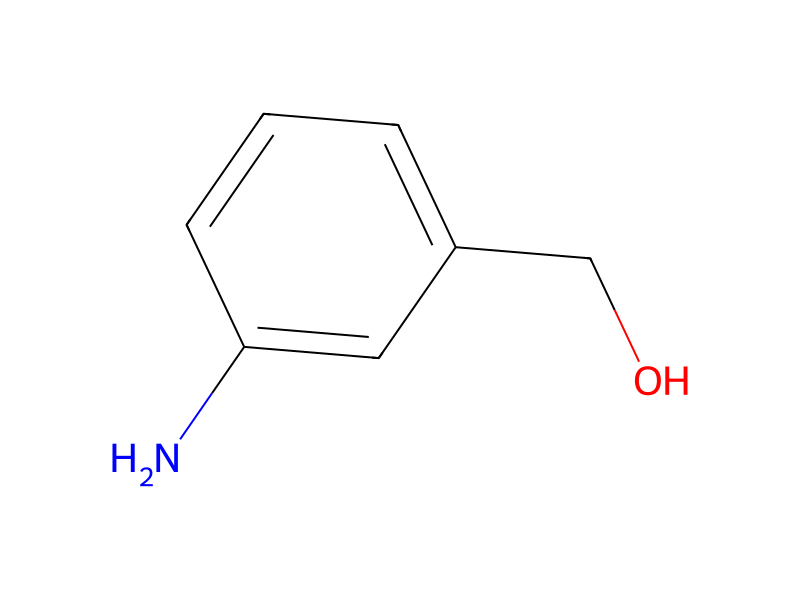
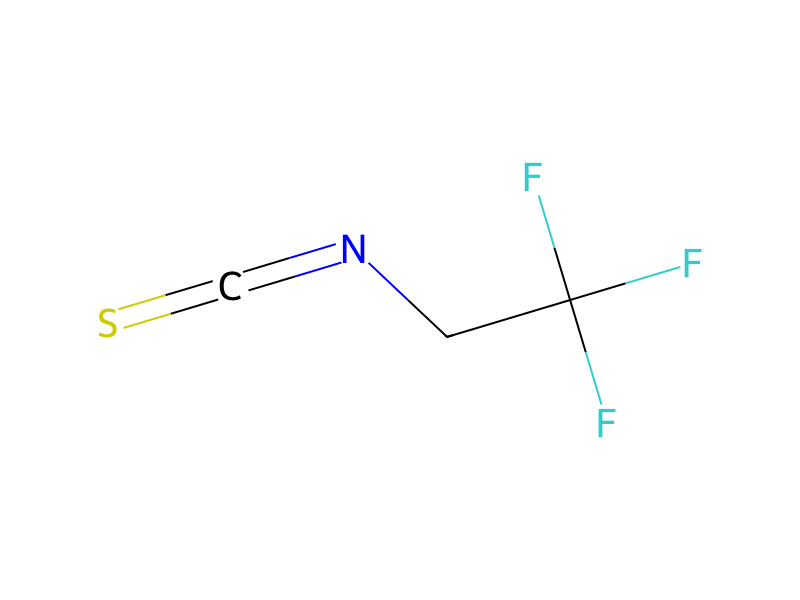
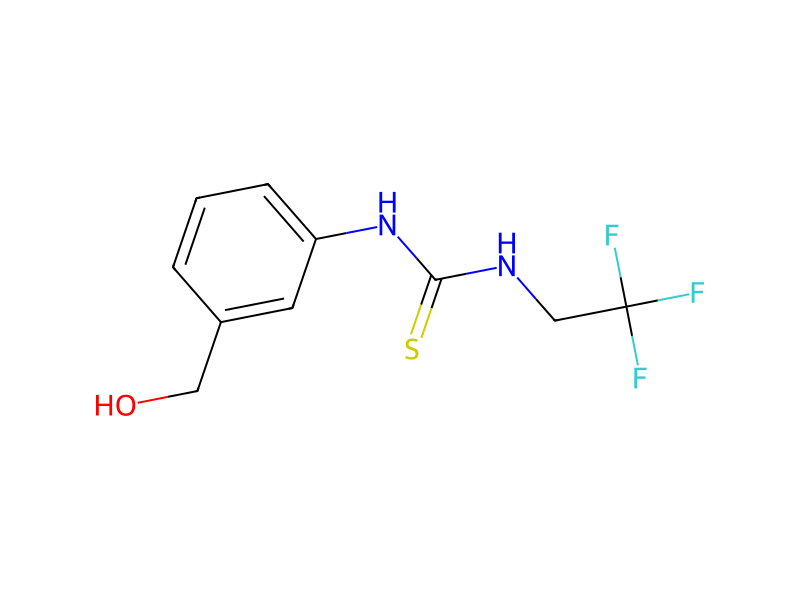
m-Aminobenzyl alcohol (0.123 g.) and 2,2,2-trifluoroethylisothiocyanate (0.141 g.) were heated under reflux in acetone (5 ml.) for 2 hours. Volatile material was evaporated in vacuo and the crude residue was fractionated on a silica gel column (20 cm.×1 cm. diameter) eluted with ethyl acetate to give 1-(3-hydroxymethylphenyl)-3-(2,2,2-trifluoroethyl)thiourea. The n.m.r. spectrum in CDCl3 using tetramethylsilane as internal standard (δ=0) had the following resonances (δ): 7.2 (4H, multiplet); 4.6 (2H, singlet); 4.3 (2H, multiplet).
Workup
- customVolatile material was evaporated in vacuo
- washeluted with ethyl acetate
Sources & evidence
- ORD record
- ord-a8255db0fab5427fa49e131da1c87698
- Source dataset
- uspto-grants-1988_08
- Patent number
- US04762932
Linked notes
Loading…