Reaction equation

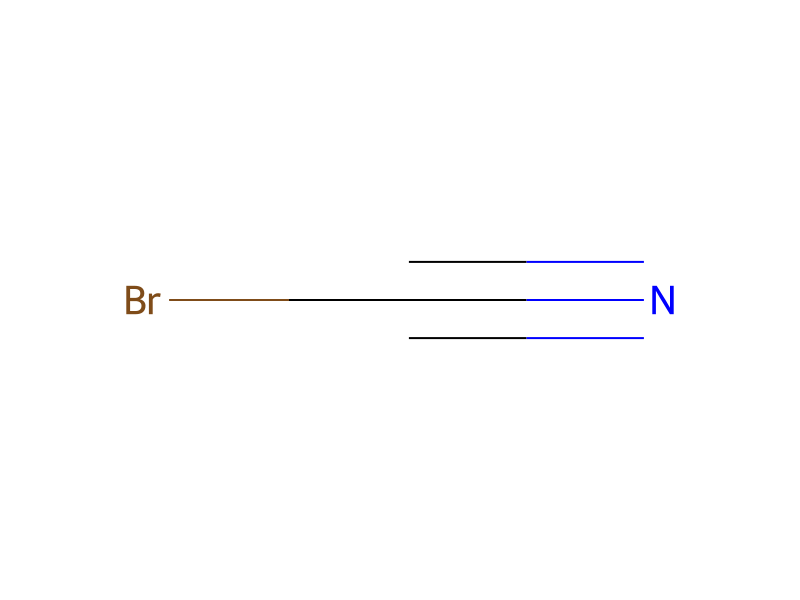
[N:1]#[C:2]Br.[CH:4]1[C:14]2[C:13]3[CH:15]=[CH:16][CH:17]=[CH:18][C:12]=3[CH2:11][NH:10][CH2:9][C:8]=2[CH:7]=[CH:6][CH:5]=1>C(Cl)(Cl)Cl>[CH:4]1[C:14]2[C:13]3[CH:15]=[CH:16][CH:17]=[CH:18][C:12]=3[CH2:11][N:10]([C:2]#[N:1])[CH2:9][C:8]=2[CH:7]=[CH:6][CH:5]=1Participants
4
Reactant 2

Product 1

Reagents, catalysts & solvents 1

Procedure
A solution of 1.91 g of cyanogen bromide in 20 ml of chloroform is added dropwise at 5°-10° C. within 25 minutes to a solution, cooled to 5° C., of 7 g of 6,7-dihydro-5H-dibenz[c,e]azepine in 50 ml of chloroform. The reaction mixture is stirred for a further 1 hour and then a small amount of the hydrobromide salt of the still unreacted azepine is filtered off. The filtrate is washed three times with water, dried over anhydrous sodium sulphate and evaporated. There is obtained solid 5,7-dihydro-6H-dibenz[c,e]azepine-6-carbonitrile, m.p. 123°-126° C.
Workup
- filtrationa small amount of the hydrobromide salt of the still unreacted azepine is filtered off
- washThe filtrate is washed three times with water
- dry with materialdried over anhydrous sodium sulphate
- customevaporated
Sources & evidence
- ORD record
- ord-ec01c07dd42e42d19e85933e8284aee8
- Source dataset
- uspto-grants-1988_08
- Patent number
- US04766115
Linked notes
Loading…