Reaction equation

[C:1]([NH2:9])(=[O:8])[C:2]1[CH:7]=[CH:6][CH:5]=[CH:4][CH:3]=1.[NH2:10][CH2:11][CH2:12][CH2:13]N>>[NH2:10][CH2:11][CH2:12][CH2:13][NH:9][C:1](=[O:8])[C:2]1[CH:7]=[CH:6][CH:5]=[CH:4][CH:3]=1Participants
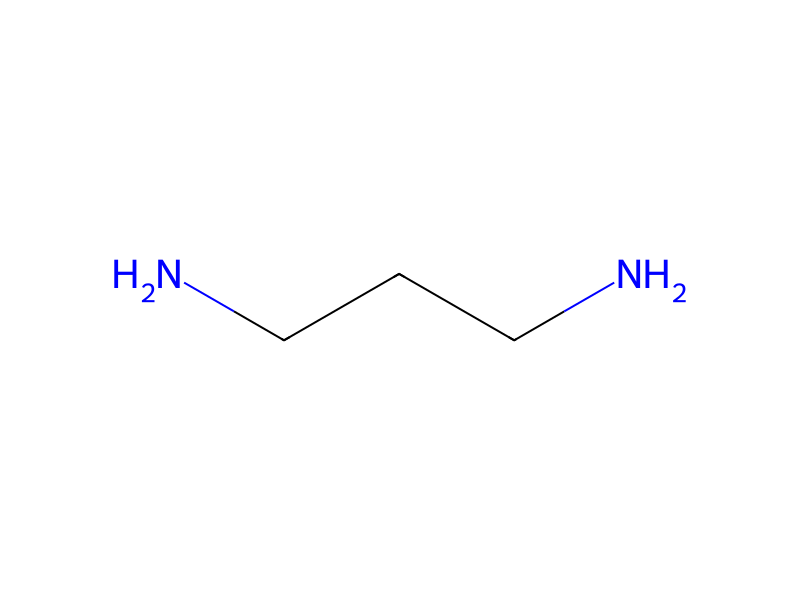
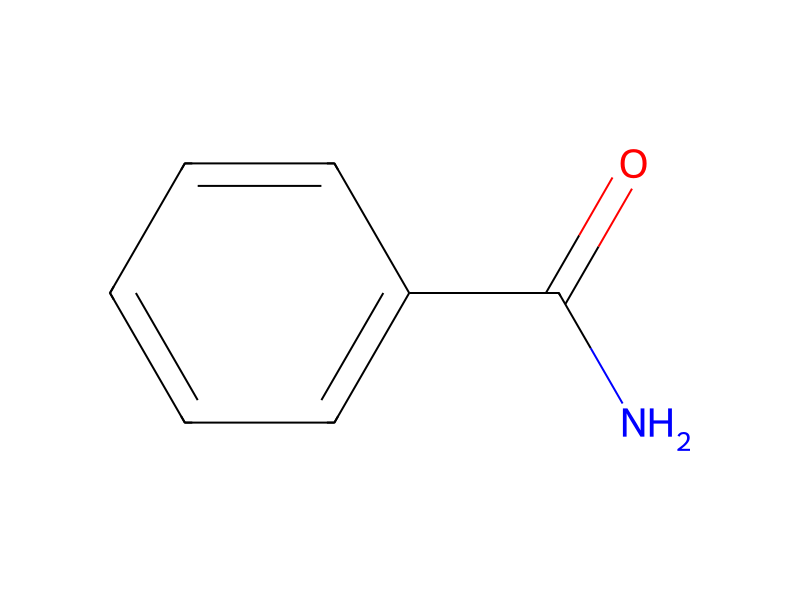

Conditions
- Temperature
- 150 °C
Procedure
Benzamide (25 g, 0.20 mol) and 1,3-diaminopropane (45.9 g, 0.60 mol) were combined in a Parr vessel and heated to 150° C. for 15 hours. The vessel was cooled and the reaction mixture was concentrated under vacuum to remove excess diamine. The residue was dissolved in water (500 mL) and concentrated hydrochloric acid was added to adjust the pH to <1. The resulting precipitate (starting benzamide and diacylated product) was removed by filtration. The filtrate was washed with dichloromethane. The aqueous layer was made strongly basic by the addition of 50% sodium hydroxide and then it was extracted with dichloromethane (4×300 mL). The extracts were combined, washed with brine (300 mL), dried over sodium sulfate and then concentrated under vacuum to provide 11.9 g of N-(3-aminopropyl)benzamide as an oil.
Workup
- temperatureThe vessel was cooled
- concentrationthe reaction mixture was concentrated under vacuum
- customto remove excess diamine
- dissolutionThe residue was dissolved in water (500 mL)
- additionconcentrated hydrochloric acid was added
- customThe resulting precipitate (starting benzamide and diacylated product) was removed by filtration
- washThe filtrate was washed with dichloromethane
- additionThe aqueous layer was made strongly basic by the addition of 50% sodium hydroxide
- extractionit was extracted with dichloromethane (4×300 mL)
- washwashed with brine (300 mL)
- dry with materialdried over sodium sulfate
- concentrationconcentrated under vacuum
Sources & evidence
- ORD record
- ord-4b0fa44ee2b241e295a9ce7801e17bdd
- Source dataset
- uspto-grants-2004_06
- Patent number
- US06756382B2
Linked notes
Loading…