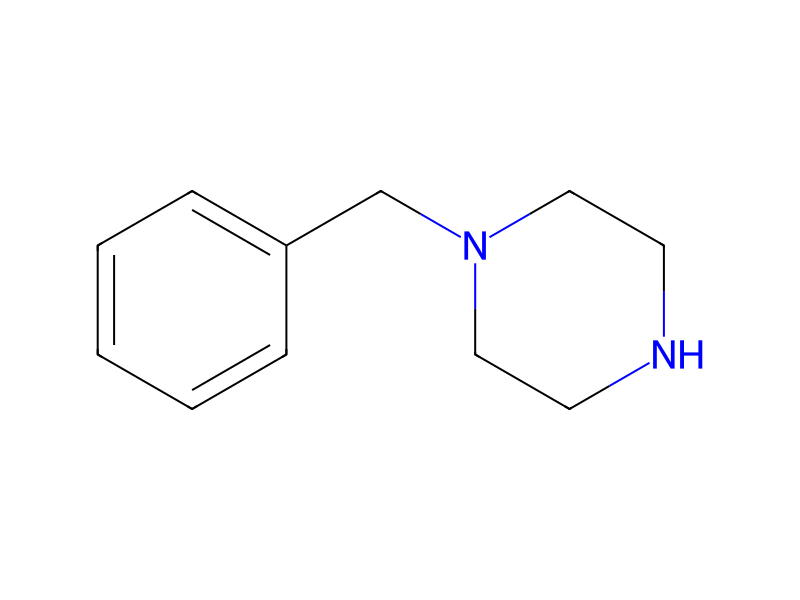
1-Benzylpiperazine → 6-(4-Benzyl-1-piperazinylcarbonyl)-3,4-dihydrocarbostyril
HRID 358491
Reaction equation

[NH:1]1[C:11]2[C:6](=[CH:7][C:8]([C:12]([OH:14])=O)=[CH:9][CH:10]=2)[CH2:5][CH2:4][C:2]1=[O:3].C1(=O)NC(=O)CC1.[CH2:22]([N:29]1[CH2:34][CH2:33][NH:32][CH2:31][CH2:30]1)[C:23]1[CH:28]=[CH:27][CH:26]=[CH:25][CH:24]=1>O>[CH2:22]([N:29]1[CH2:34][CH2:33][N:32]([C:12]([C:8]2[CH:7]=[C:6]3[C:11](=[CH:10][CH:9]=2)[NH:1][C:2](=[O:3])[CH2:4][CH2:5]3)=[O:14])[CH2:31][CH2:30]1)[C:23]1[CH:24]=[CH:25][CH:26]=[CH:27][CH:28]=1Participants
4
Reactant 2

Product 1

Reagents, catalysts & solvents 1

Procedure
127 Milligrams of succinimide 3,4-dihydrocarbostyril-6-carboxylate and 93 mg of benzylpiperazine were dissolved in 2 ml of dimethylformaide and the mixture was stirred at room temperature for 24 hours. Water was added to the reaction mixture and extracted with chloroform, the chloroform layer was washed with water and a saturated sodium chloride aqueous solution. After drying the chloroform layer with anhydrous sodium sulfate, chloroform was removed by distillation under a reduced pressure, then acetone was added to the thus obtained residue to crystallize the product. Recrystallize from ethanol to obtain 130 mg of 6-(4-benzyl-1-piperazinylcarbonyl)-3,4-dihydrocarbostyril. Colorless needle-like crystals. Melting point: 198°-200° C.