Reaction equation

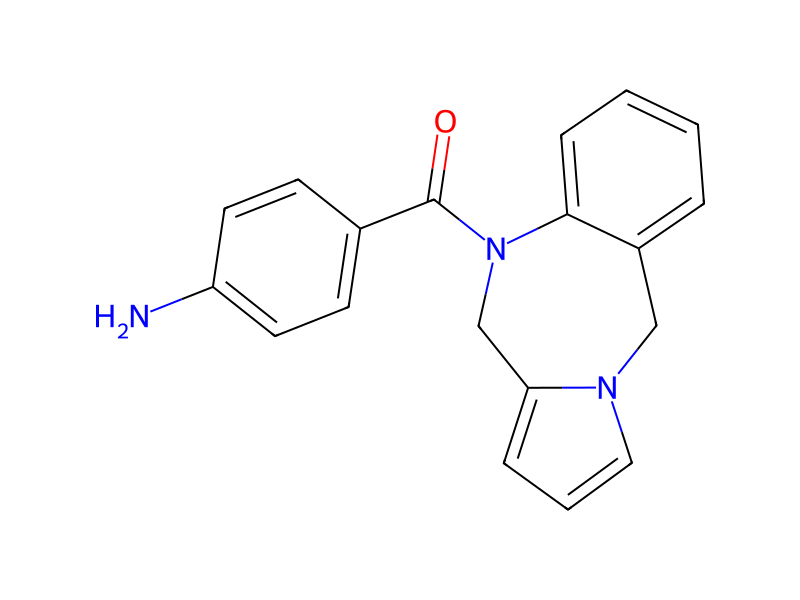
[NH2:1][C:2]1[CH:23]=[CH:22][C:5]([C:6]([N:8]2[C:14]3[CH:15]=[CH:16][CH:17]=[CH:18][C:13]=3[CH2:12][N:11]3[CH:19]=[CH:20][CH:21]=[C:10]3[CH2:9]2)=[O:7])=[CH:4][CH:3]=1.[O:24]1[CH2:28][CH2:27][CH2:26][CH:25]1[C:29](Cl)=[O:30]>>[CH:21]1[CH:20]=[CH:19][N:11]2[CH2:12][C:13]3[CH:18]=[CH:17][CH:16]=[CH:15][C:14]=3[N:8]([C:6]([C:5]3[CH:22]=[CH:23][C:2]([NH:1][C:29]([CH:25]4[CH2:26][CH2:27][CH2:28][O:24]4)=[O:30])=[CH:3][CH:4]=3)=[O:7])[CH2:9][C:10]=12Participants
3


Procedure
As described for Example 8, 0.500 g of 10,11-dihydro-10-(4-aminobenzoyl)-5H-pyrrolo[2,1-c][1,4]benzodiazepine is reacted with 0.267 g of tetrahydrofurane-2-carbonyl chloride to give a glass which is crystallized from ethyl acetate to give 0.22 g of crystals, m.p. 208°-214° C.
Workup
- customto give a glass which
- customis crystallized from ethyl acetate
Sources & evidence
- ORD record
- ord-ae040de2c66a4ae688eaef7fb08c8c28
- Source dataset
- uspto-grants-1998_03
- Patent number
- US05733905
Linked notes
Loading…