Reaction equation

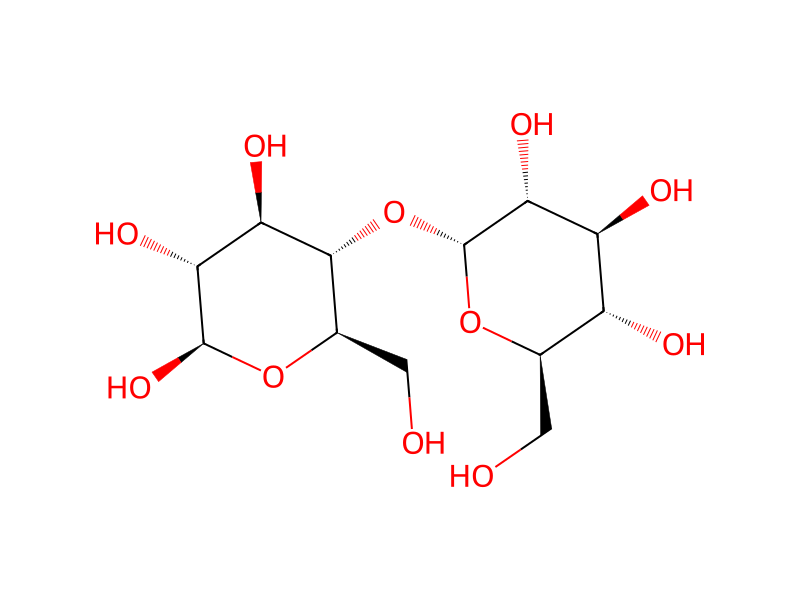
[CH2:1]([OH:23])[C@H:2]1[O:7][C@H:6]([O:8][C@H:9]2[C@H:14]([OH:15])[C@@H:13]([OH:16])[C@H:12]([OH:17])[O:11][C@@H:10]2[CH2:18][OH:19])[C@H:5]([OH:20])[C@@H:4]([OH:21])[C@@H:3]1[OH:22].[H][H]>[Ni]>[CH2:1]([OH:23])[C@H:2]1[O:7][C@H:6]([O:8][C@@H:9]([C@H:14]([OH:15])[C@@H:13]([OH:16])[CH2:12][OH:17])[C@H:10]([OH:11])[CH2:18][OH:19])[C@H:5]([OH:20])[C@@H:4]([OH:21])[C@@H:3]1[OH:22]Participants
4


Reagents, catalysts & solvents 1

Procedure
A commercially available aqueous solution of high purity maltose having the same sugar composition used in the first step of Example 5 was adjusted to have a concentration of 35%, and then reduced by Raney nickel catalyst, imposed a hydrogen pressure of 100 kg/cm2, under a condition at a temperature of 120° C. for a reaction time of 90 minutes, to obtain aqueous solution of maltitol. The sugar composition in the solid component of the resulting aqueous solution of maltitol was that maltitol was 85.0%, sorbitol was 0.5%, oligosaccharide alcohol which was equal or more than DP3 was 14.5%.
Sources & evidence
- ORD record
- ord-7648d082c3004717a408b9a70df78451
- Source dataset
- uspto-grants-1999_02
- Patent number
- US05873943
Linked notes
Loading…