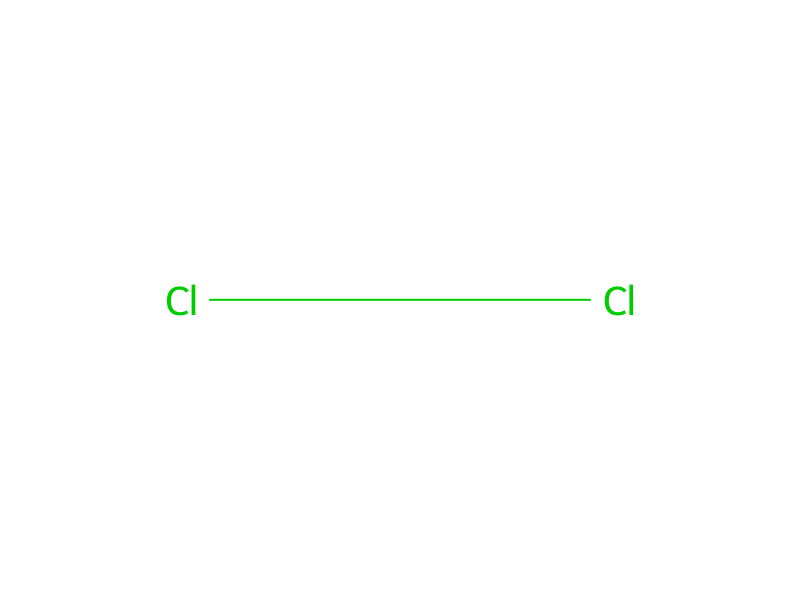
[Cl:1]Cl.[Cl:3][C:4]1[CH:5]=[C:6]([CH:10]=[CH:11][C:12]=1[CH3:13])[C:7]([Cl:9])=[O:8].[Cl-].[Cl-].[Cl-].[Al+3]>ClCCl>[Cl:3][C:4]1[CH:5]=[C:6]([CH:10]=[C:11]([Cl:1])[C:12]=1[CH3:13])[C:7]([Cl:9])=[O:8]A jacketed kettle was equipped with a chiller, overhead stirrer, thermometer, and connections to a chlorine tank and a caustic scrubber. The kettle was charged with the previously prepared 3-chloro-4-methylbenzoyl chloride (1 part) and dichloromethane (6.8 parts). Aluminum trichloride (0.8 parts) was added, and the resulting red-brown mixture was cooled with agitation to 3°-5°--C. Chlorine (0.37 parts) was introduced at a sufficient rate to keep the reaction temperature below 10°--C. The reactor was held at 0°-5°--C. for 6 hours. The reaction mixture was purged with nitrogen and slowly quenched by transfering into an agitated and chilled hydrochloric acid solution (4.4 parts) while maintaining the temperature below 5°--C. Agitation was stopped and the lower organic layer was recovered. The solvent was removed by distillation.