Reaction equation

[CH2:1]([NH2:4])[CH2:2][NH2:3].[CH2:5]([O:9][C:10]1[CH:15]=[CH:14][CH:13]=[CH:12][C:11]=1[Cl:16])[CH:6]1[O:8][CH2:7]1>C(O)C>[Cl:16][C:11]1[CH:12]=[CH:13][CH:14]=[CH:15][C:10]=1[O:9][CH2:5][CH:6]([OH:8])[CH2:7][NH:3][CH2:2][CH2:1][NH2:4]Participants
4
Reactant 2
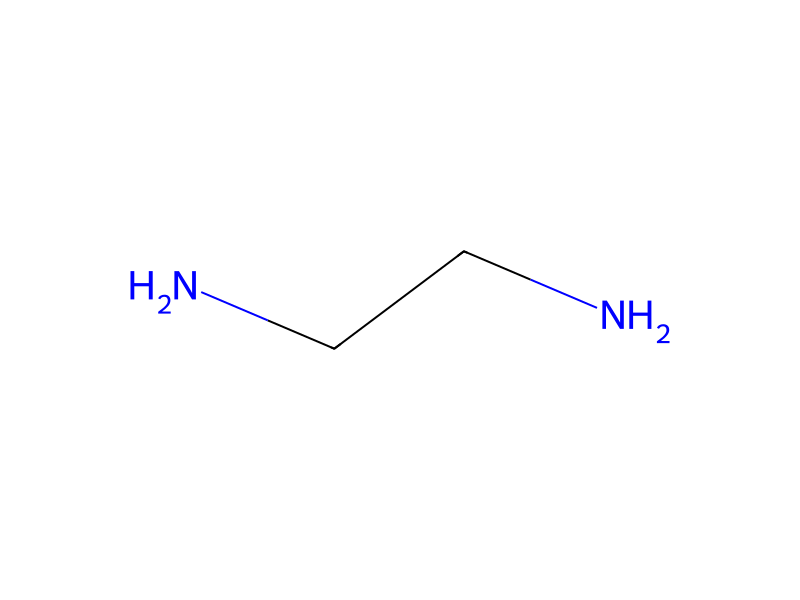

Product 1

Reagents, catalysts & solvents 1

Procedure
120 g of ethylenediamine are dissolved in 150 ml of ethanol. A solution of 20 g of o-chlorophenyl glycidyl ether ##STR18## in 40 ml of ethanol is added to the above solution, and the mixture is heated under reflux for 20 hours. Excess ethylenediamine and ethanol are then distilled off in vacuo, and the residue is then distilled in vacuo. The N-[3-(o-chlorophenoxy)-2-hydroxy-propyl]-ethylenediamine is thus obtained as an oil which can be distilled at a boiling point of 190° C./0.4 mm. The 4,5-dichloro-pyridazin-3-one used as the starting material is prepared in a known manner by the reaction of muccochloric acid with hydrazine (for example according to K. Dury, Angew. Chemie 77, page 282 (1965).
Workup
- temperaturethe mixture is heated
- temperatureunder reflux for 20 hours
- distillationExcess ethylenediamine and ethanol are then distilled off in vacuo
- distillationthe residue is then distilled in vacuo
Sources & evidence
- ORD record
- ord-9cae3f62934f4295907cc695825102e2
- Source dataset
- uspto-grants-1985_07
- Patent number
- US04532239
Linked notes
Loading…