HomeMCPSkillsWorkbenchOpenChem
HomeWorkbenchNotificationsMe
llms.txt · skill.md · MCP GuidePrivacy Policy · Terms of Service · Supportv1.8.5
  1. Home
  2. /Reaction

2-Aminophenol → 2-(2H-Benzotriazole-2-yl)phenol

HRID 372150
Print

Reaction equation

[H][H].N[C:4]1[CH:19]=[CH:18][C:7]2=[N:8][N:9]([C:11]3[CH:16]=[CH:15][CH:14]=[CH:13][C:12]=3[OH:17])[N:10]=[C:6]2[CH:5]=1.[N+](C1C=CC(O)=C(N=NC2C=CC=CC=2O)C=1C1C=CC=CC=1)([O-])=O.C1(N)C=CC=CC=1N.NC1C=CC=CC=1O>>[OH:17][C:12]1[CH:13]=[CH:14][CH:15]=[CH:16][C:11]=1[N:9]1[N:10]=[C:6]2[CH:5]=[CH:4][CH:19]=[CH:18][C:7]2=[N:8]1
ParticipantsProcedureWorkupSources & evidenceReaction notes

Participants

6

Reactant 5

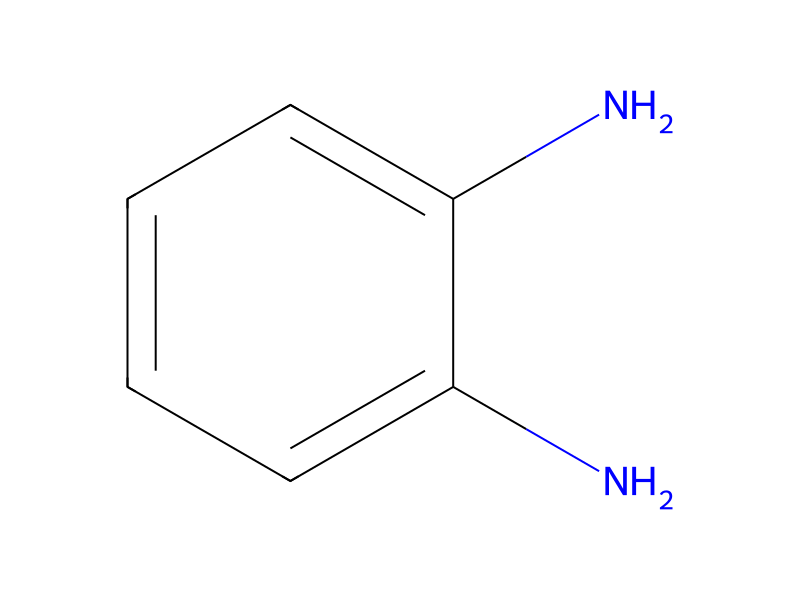
HCID 58012-AminophenolHCID 7243O-PhenylenediamineHCID 130007012-(2'-Hydroxyphenyl)-5-aminobenzotriazoleHCID 136334387NitrophenylazophenolHCID 178418361HCID 178418361, compound

Product 1

HCID 101982202-(2H-Benzotriazole-2-yl)phenol

Procedure

2-(2'-Hydroxyphenyl)benzotriazoles are known as light stabilizers for plastics (U.S. Pat. No. 3,004,896, Heller et al., Oct. 17, 1961). One method of making these compounds involves reducing an azo compound with powdered zinc (U.S. Pat. No. 3,214,436, Boyle et al., Oct. 26, 1965) but this method presents a problem of separation of large amounts of zinc oxide from the product. Another method involves oxidizing a diaminohydroxyazobenzene to form a 5-amino-2-(2'-hydroxyphenyl)benzotriazole which must then be subjected to an undesirable diazotization step. It would be desirable to use the cheapest and most convenient reducing agent, hydrogen gas, but, unfortunately, instead of the desired benzotriazole, the usual products of catalytic hydrogenation of a nitrophenylazophenol are the corresponding o-phenylenediamine and o-aminophenol in nearly quantitative yield [W. F. Whitmore and A. J. Revukus, J. Am. Chem. Soc., 62, 1687 (1940)]. The present invention is based on the surprising discovery that in an alkaline medium, the catalytic hydrogenation does not produce the previously observed cleavage of azobenzene N=N bond but instead yields the desired 2-(hydroxyphenyl)benzotriazole.

Workup

  1. customthe catalytic hydrogenation does not produce the previously observed cleavage of azobenzene N=N bond

Sources & evidence

ORD record
ord-7f60917eefa74024bf824574e44cde18
Source dataset
uspto-grants-1978_05
DOI
10.6084/m9.figshare.5104873.v1
Patent number
US04089839

Reaction notes

On this pageParticipantsProcedureWorkupSources & evidenceReaction notes