Reaction equation

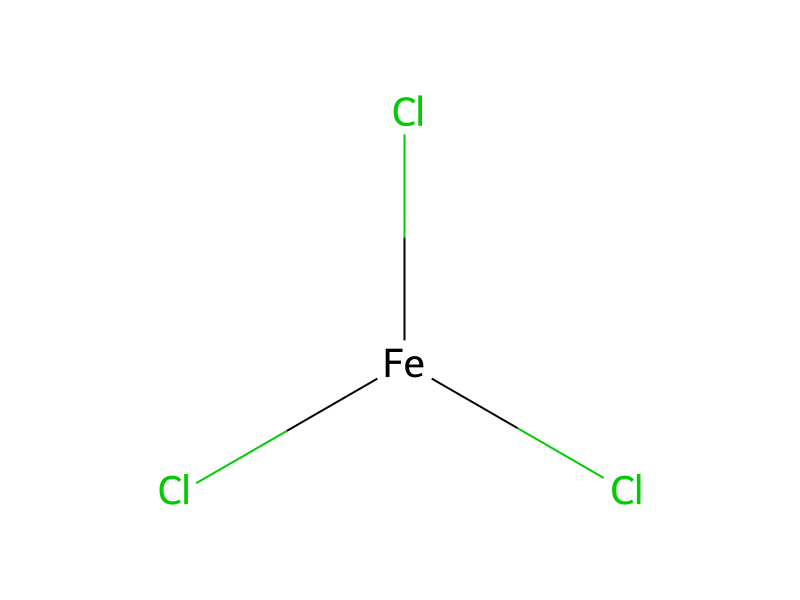
[F:1][C:2]([F:18])([F:17])[CH2:3][C:4]1([C:13]([F:16])([F:15])[F:14])[O:8][C:7]2[CH:9]=[CH:10][CH:11]=[CH:12][C:6]=2[O:5]1.[Br:19]Br>C(Cl)(Cl)(Cl)Cl.[Fe](Cl)(Cl)Cl>[Br:19][C:11]1[CH:10]=[CH:9][C:7]2[O:8][C:4]([CH2:3][C:2]([F:1])([F:17])[F:18])([C:13]([F:15])([F:14])[F:16])[O:5][C:6]=2[CH:12]=1Participants




Procedure
54.4 g of 2-(2,2,2-trifluoroethyl)-2-trifluoromethyl-1,3-benzodioxole were dissolved in 300 ml of carbon tetrachloride, and 0.4 g of anhydrous iron(III) chloride was added. 32 g of bromine were then added dropwise at the reflux temperature and the mixture was subsequently stirred until conversion was complete (monitoring by gas chromatography). The reaction mixture was then left to cool, washed with 10% by weight aqueous sodium hydrogen-sulphite solution and water, dried over magnesium sulphate and concentrated. The residue was distilled under vacuum. The yield was 58 g (83% of theory) and the boiling point was 80° C. at 14 mbar. The characteristic absorptions in the NMR spectra were as follows: 19F NMR: -59.2 and -84.9 ppm. 1H NMR: 3.02 ppm.
Workup
- waitThe reaction mixture was then left
- temperatureto cool
- washwashed with 10% by weight aqueous sodium hydrogen-sulphite solution and water
- dry with materialdried over magnesium sulphate
- concentrationconcentrated
- distillationThe residue was distilled under vacuum
Sources & evidence
- ORD record
- ord-bca8bdde44ea4507bab4fb4770d7637a
- Source dataset
- uspto-grants-1995_05
- Patent number
- US05420309
Linked notes
Loading…