Reaction equation

Cl[S:2]([N:5]=[C:6]=[O:7])(=[O:4])=[O:3].[C:8]1([N:14]2[C:18]([NH2:19])=[C:17]([C:20]#[N:21])[CH:16]=[N:15]2)[CH:13]=[CH:12][CH:11]=[CH:10][CH:9]=1.C(N(CC)CC)C.[CH:29]1([NH:35][CH:36]2[CH2:41][CH2:40][CH2:39][CH2:38][CH2:37]2)[CH2:34][CH2:33][CH2:32][CH2:31][CH2:30]1>C(Cl)Cl.O>[C:8]1([N:14]2[C:18]([NH:19][C:6]([NH:5][S:2]([N:35]([CH:36]3[CH2:37][CH2:38][CH2:39][CH2:40][CH2:41]3)[CH:29]3[CH2:34][CH2:33][CH2:32][CH2:31][CH2:30]3)(=[O:4])=[O:3])=[O:7])=[C:17]([C:20]#[N:21])[CH:16]=[N:15]2)[CH:9]=[CH:10][CH:11]=[CH:12][CH:13]=1Participants
7
Reactant 4



Product 1

Reagents, catalysts & solvents 2


Procedure
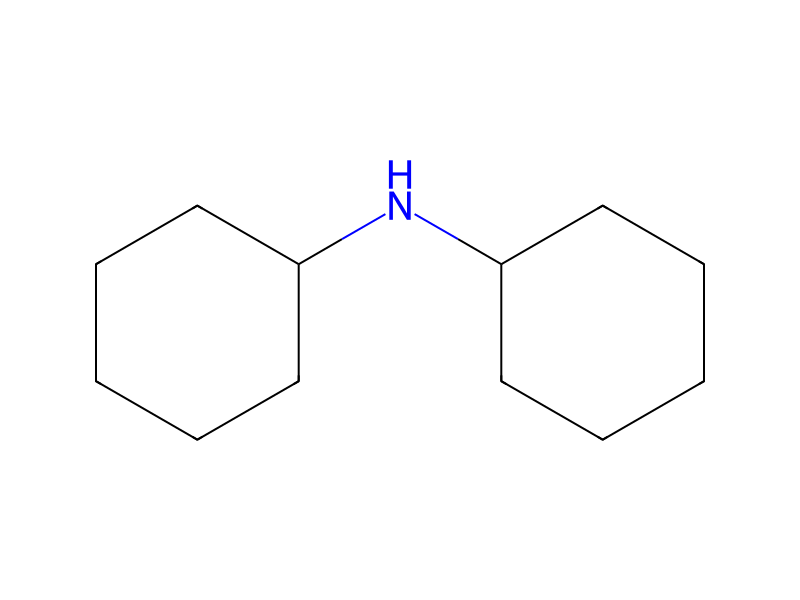
4.4 ml (50 mmol) of chlorosulfonyl isocyanate were added to a solution of 9.2 g (50 mmol) of 1-phenyl-4-cyano-5-aminopyrazole in 100 ml of methylene chloride. Stirring was carried out for 30 minutes at about 20° C., after which a solution of 7.5 ml (60 mmol) of triethylamine and 10 ml (50 mmol) of dicyclohexylamine in 50 ml of methylene chloride was slowly added dropwise. After the end of the addition, stirring was continued for a further hour and hydrolysis was then carried out with 200 ml of water. The organic phase was separated off and was worked up in a conventional manner to give the product. Yield: 87%.
Workup
- additionAfter the end of the addition
- stirringstirring
- waitwas continued for a further hour
- customhydrolysis
- customThe organic phase was separated off
- customto give the product
Sources & evidence
- ORD record
- ord-892ac24930964938b65e8098dccb8a46
- Source dataset
- uspto-grants-1996_01
- Patent number
- US05486618
Linked notes
Loading…