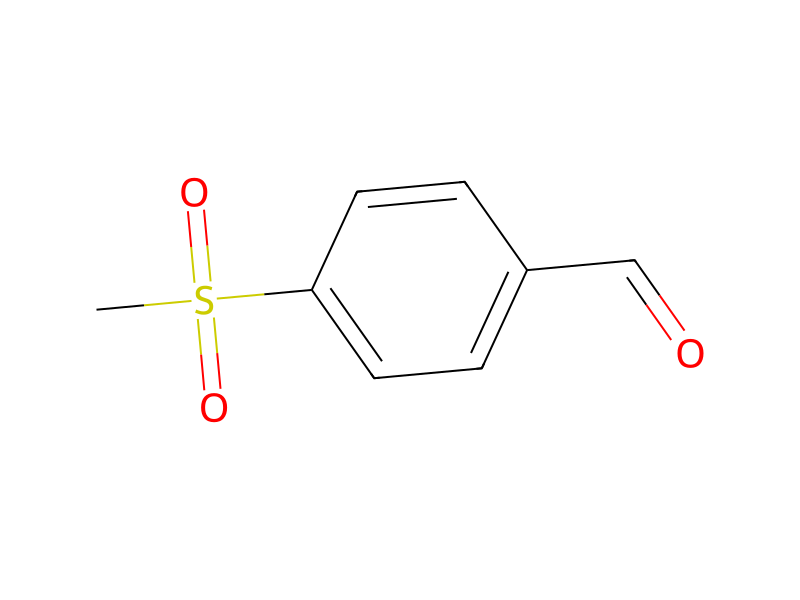
[F:1][C:2]1[CH:3]=[C:4]2[C:8](=[CH:9][C:10]=1[F:11])[CH2:7][C:6]([CH3:12])=[C:5]2[CH2:13][C:14]([O:16]C)=[O:15].[CH3:18][S:19]([C:22]1[CH:29]=[CH:28][C:25]([CH:26]=O)=[CH:24][CH:23]=1)(=[O:21])=[O:20].O>N1C=CC=CC=1>[F:1][C:2]1[CH:3]=[C:4]2[C:8](=[CH:9][C:10]=1[F:11])/[C:7](=[CH:26]\[C:25]1[CH:24]=[CH:23][C:22]([S:19]([CH3:18])(=[O:21])=[O:20])=[CH:29][CH:28]=1)/[C:6]([CH3:12])=[C:5]2[CH2:13][C:14]([OH:16])=[O:15]Methyl 5,6-difluoro-2-methylindene-3-acetate (1.19 g, 5.0 mmol) from Example 2, Part E and of p-methylsulfonylbenzaldehyde (0.76 g, 5.0 mmol) in dry pyridine (10 ml) are treated under nitrogen with Triton B (5.0 g, 5.1 mmol). The deeply colored solution is kept overnight. Water (2 ml) is added, the solution is stirred for 15 minutes and is poured into excess water. The mixture is extracted with ether (2×50 ml). The aqueous phase is added to 10% HCl-ice. The solution of the precipitate is extracted into methylene chloride and is dried (MgSO4). The solvent is evaporated to leave an orange solid which is recrystallized from benzene to give (Z)-5,6-difluoro-2-methyl-1-(p-methylsulfonylbenzylidene)-indene-3-acetic acid.
Loading…