Reaction equation
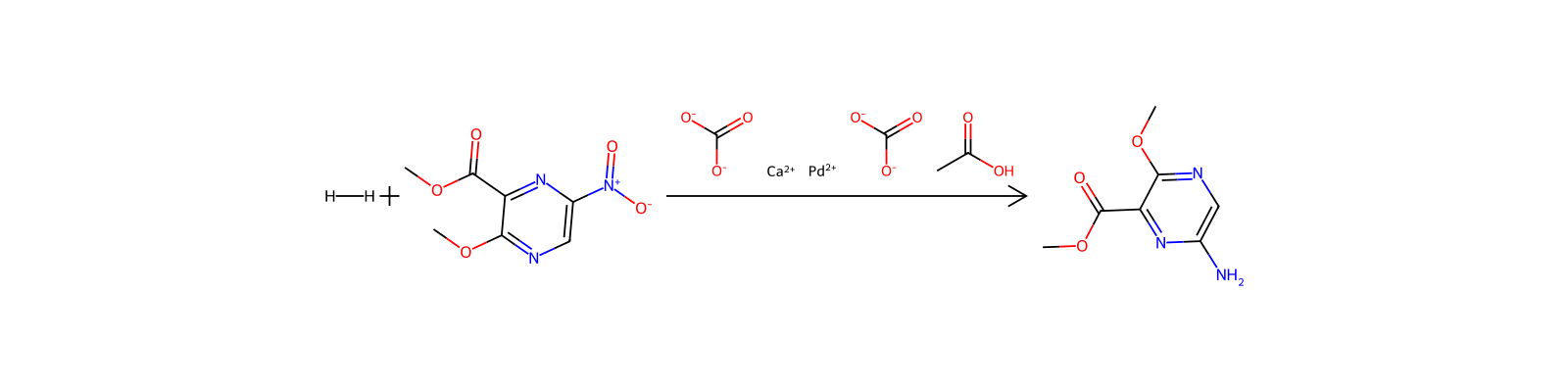
[H][H].[CH3:3][O:4][C:5]1[C:6]([C:14]([O:16][CH3:17])=[O:15])=[N:7][C:8]([N+:11]([O-])=O)=[CH:9][N:10]=1>C(=O)([O-])[O-].[Ca+2].[Pd+2].C(=O)([O-])[O-].C(O)(=O)C>[NH2:11][C:8]1[N:7]=[C:6]([C:14]([O:16][CH3:17])=[O:15])[C:5]([O:4][CH3:3])=[N:10][CH:9]=1Participants




Procedure
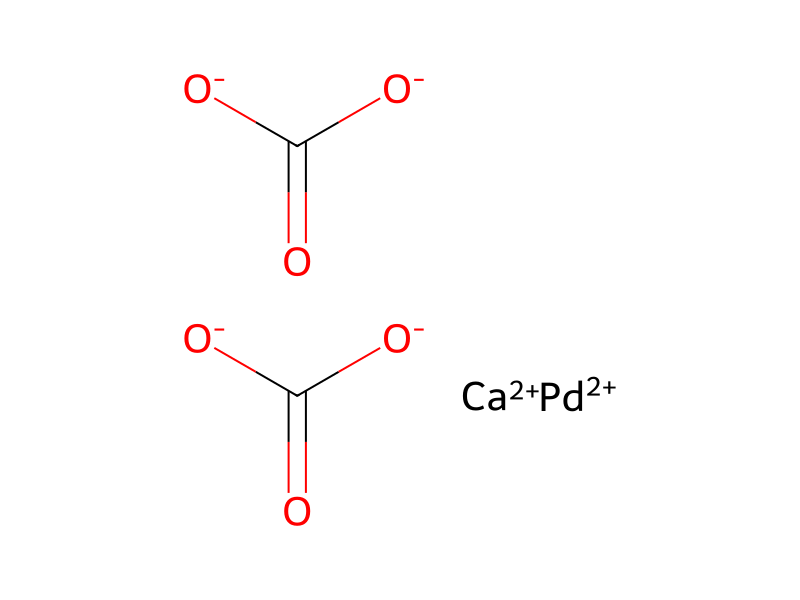
At room temperature and under a pressure of 1 atmosphere, hydrogen gas was introduced into a mixture of 24.3 g of methyl 3-methoxy-6-nitro-2-pyrazinecarboxylate, 480 mL of acetic acid and 1.2 g of lead-poisoned palladium-calcium carbonate until the mixture became showing no further absorption of hydrogen. After filtering off insoluble matter from the reaction mixture, the solvent was removed under reduced pressure, and the solid product thus obtained was washed with ethyl acetate and diethyl ether. Thus, 15.0 g of methyl 6-amino-3-metoxy-2-pyrazinecarboxylate was obtained as a solid product. Furthermore, the solvent was removed from the filtrate under reduced pressure to obtain a solid product, and the solid product was washed with ethyl acetate to obtain 2.3 g of methyl 6-amino-3-methoxy-2-pyrazinecarboxylate as a solid product.
Workup
- customno further absorption of hydrogen
- filtrationAfter filtering off insoluble matter from the reaction mixture
- customthe solvent was removed under reduced pressure
- customthe solid product thus obtained
- washwas washed with ethyl acetate and diethyl ether
Sources & evidence
- ORD record
- ord-d607e4676fc845f4bdd82f325eb24bc2
- Source dataset
- uspto-grants-2004_10
- Patent number
- US06800629B2
Linked notes
Loading…