Reaction equation
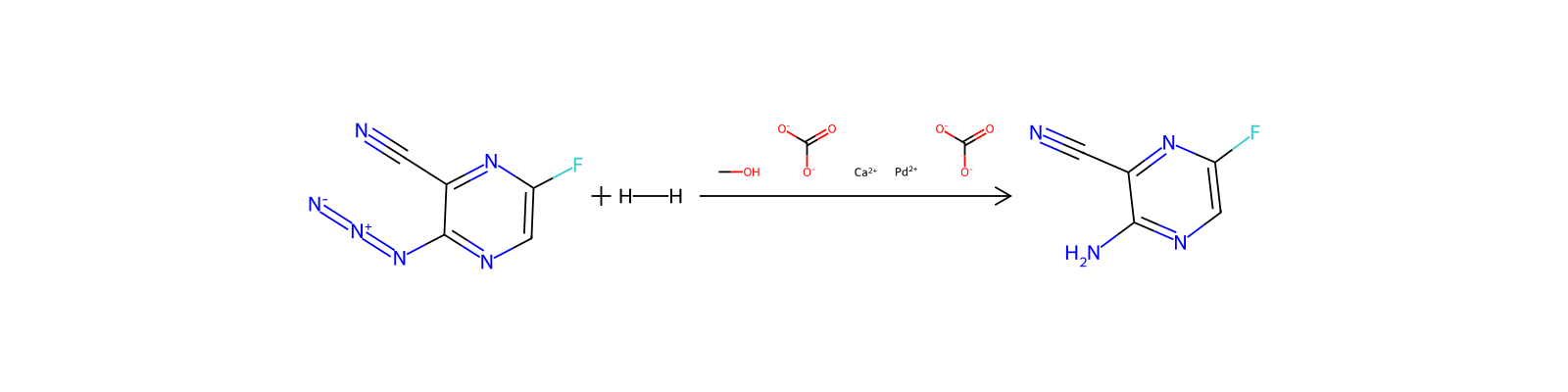
[N:1]([C:4]1[C:5]([C:11]#[N:12])=[N:6][C:7]([F:10])=[CH:8][N:9]=1)=[N+]=[N-].[H][H]>CO.C(=O)([O-])[O-].[Ca+2].[Pd+2].C(=O)([O-])[O-]>[NH2:1][C:4]1[C:5]([C:11]#[N:12])=[N:6][C:7]([F:10])=[CH:8][N:9]=1Participants
5




Procedure
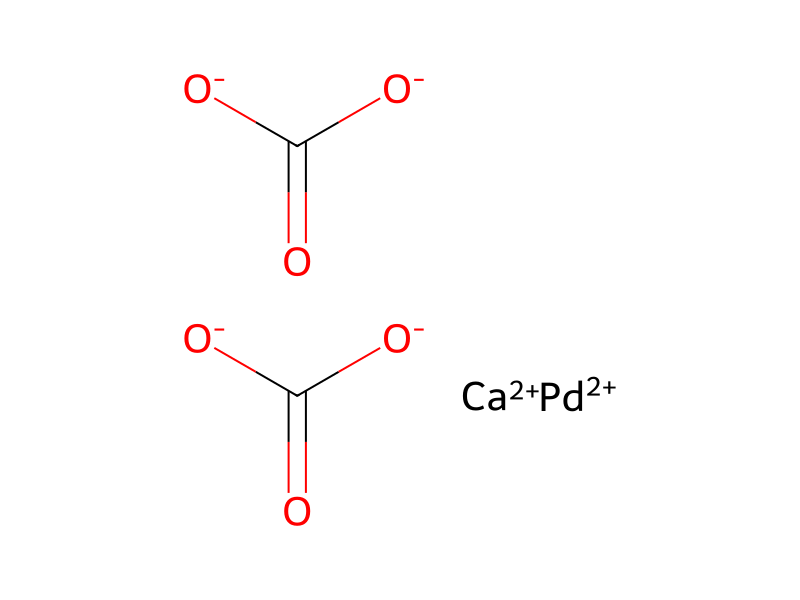
In 5.0 mL of methanol was dissolved 0.24 g of 3-azido-6-fluoro-2-pyrazinecarbonitrile. After adding 0.075 g of lead-poisoned palladium-calcium carbonate at room temperature, hydrogen gas was introduced into the mixture at room temperature under a pressure of 1 atmosphere until the mixture became showing no further adsorption of hydrogen. After filtering off the insoluble matter from the reaction mixture, the filtrate was concentrated under reduced pressure. The residue thus obtained was purified by silica gel column chromatography [eluent: chloroform] to obtain 0.078 g of 3-amino-6-fluoro-2-pyrazinecarbonitrile as a yellow-colored solid product.
Workup
- filtrationAfter filtering off the insoluble matter from the reaction mixture
- concentrationthe filtrate was concentrated under reduced pressure
- customThe residue thus obtained
- customwas purified by silica gel column chromatography [eluent: chloroform]
Sources & evidence
- ORD record
- ord-4480d28c37a24f63a3f2cd8e179bbf7d
- Source dataset
- uspto-grants-2004_10
- Patent number
- US06800629B2
Linked notes
Loading…